



As South Australia’s mining sector gains momentum, Agile Mining Services is helping junior miners unlock value through operational expertise, technology integration, and capital-backed end-to-end project delivery. Kerry Mudge, Founder and Managing Director, tells us more.
AGILITY IN MOTION
“The mining industry in South Australia (SA) is on the cusp of something special – we have not been able to say that honestly for a long time.”
The opening words of Kerry Mudge, Founder and Managing Director of South Australian iron ore contractor Agile Mining Services (Agile), reflect a wider sentiment of optimism that can be felt across the region.
With a mature project pipeline and a commodity mix consisting of iron, copper, gold, uranium, and rare earths working in the state’s favour, SA’s mining status is on the rise.
Following 20 years with iron ore at the pinnacle, copper is now emerging as a leading asset for major mining houses such as BHP.
Indeed, junior mining companies in SA are now well placed to attract capital – not just chase it – which is why operationally credible delivery partners are becoming increasingly crucial.
“The bottleneck is delivery, not deposits,” he points out.
Challenges within the industry continue to persist, however, with more expensive capital, stretched lead times, and a lack of skilled operators.
In this context, Agile recognises that the opportunity is bigger than the challenge, which is why it has spent six years acting as the conduit between deposits and capital.
“Our core service is end-to-end open-pit mining – and end-to-end means three things: project intelligence, operational excellence, and capital conduit,” Mudge outlines.
For Agile, project intelligence is where its engagement starts – working alongside the resource owner’s geology team, pressure-testing the resource model against the orebody, and rebuilding the mine plan based on reality rather than feasibility.
“Pit design, life-of-mine, short-interval planning, drill-and-blast pattern design tuned to the rock rather than the equipment – all of it sits in the intelligence layer,” he explains.
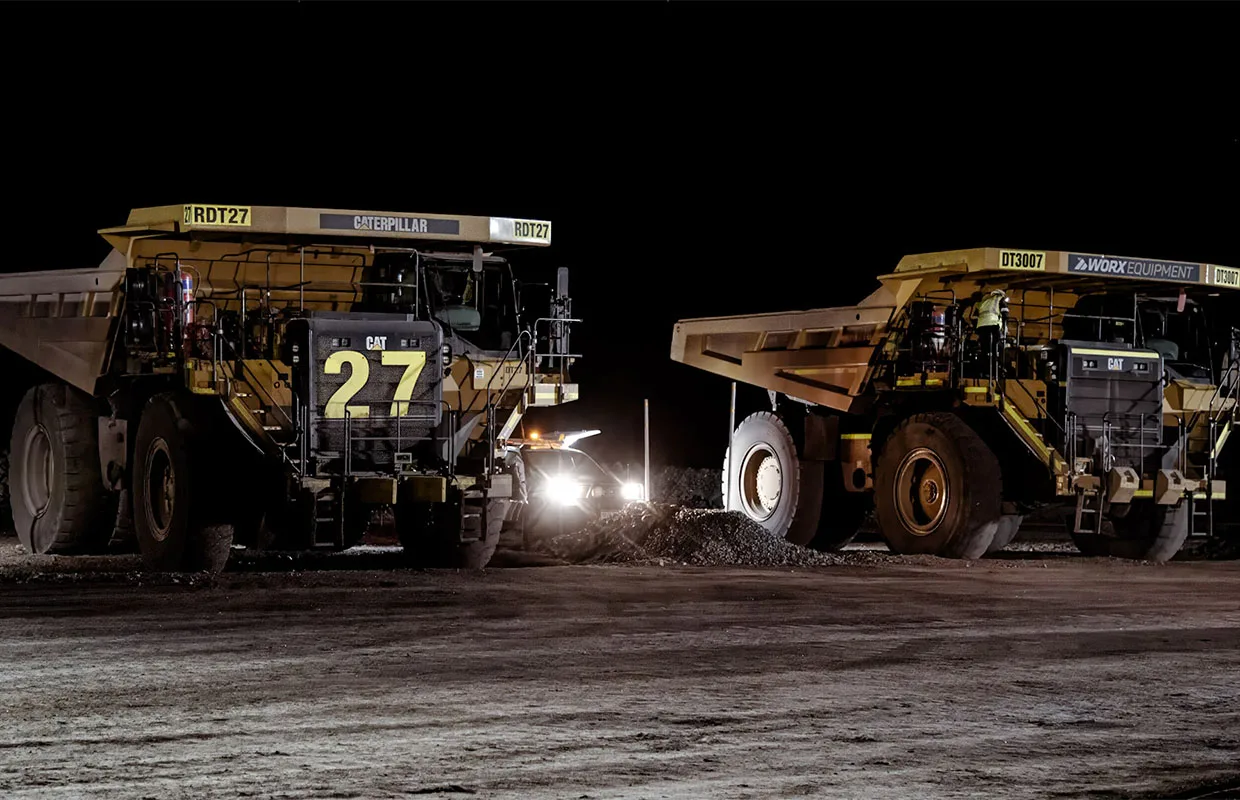
Operational excellence is the part the market sees, with one operator assuming full accountability and one delivery partner running the full chain.
Capital conduit is what Agile believes matters most to its resource partners as it entails investing in assets via structured offtaker finance, equipment finance, and working capital packages.
“Agile-operated assets attract capital that unmanaged or piecemeal-operated assets cannot,” Mudge prides.
PROLIFIC PROJECTS
Two iron ore projects are the heart of Agile’s story.
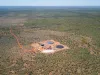
The first had been in care and maintenance for a decade before the company came in, restarted the mine, and lifted production from 1.2 million tonnes per annum (tpa) to 3.2 million tpa.
Having executed the plan end-to-end – which saw the ramp up and stabilise stages selling 9 million (t) of iron ore into seaborne markets – Agile’s team then transitioned to its second project.
A greenfield deposit, the second project was built from scratch under the company’s end-to-end model.
“Once running, the reserve started to grow, which came from understanding the deposit, investing in it, and turning new resources into reserves through in-house engineering,” Mudge details.
As a result, the reserve has grown to 14 million t during operations, with Agile now targeting 20 million t.
“That is a near-tripling of the asset’s enterprise value, earned through project intelligence – geology, exploration, and engineering – not just operations,” he emphasises.
“You cannot deliver that as a contractor who only loads and hauls. You have to be inside the geology and the planning, which is what the project intelligence does for the asset owner.”
On the global market, SA’s favourable characteristics comprise world-class geology, lower geopolitical complexity, and a growing mid-tier producer base that is genuinely accountable for what it ships.
“For much of the market, this kind of accountability is the only reason to consider SA hematite at all. It is therefore our job to be the most reliable name in that group,” Mudge asserts.
BUILDING A STORY
Alongside its two core iron ore projects, Agile has also demonstrated its capabilities to move quickly when the market conditions are right.
“Our third iron ore project was sitting in care and maintenance with a small footprint and a complicated history. Then, the iron ore price spiked” Mudge informs.
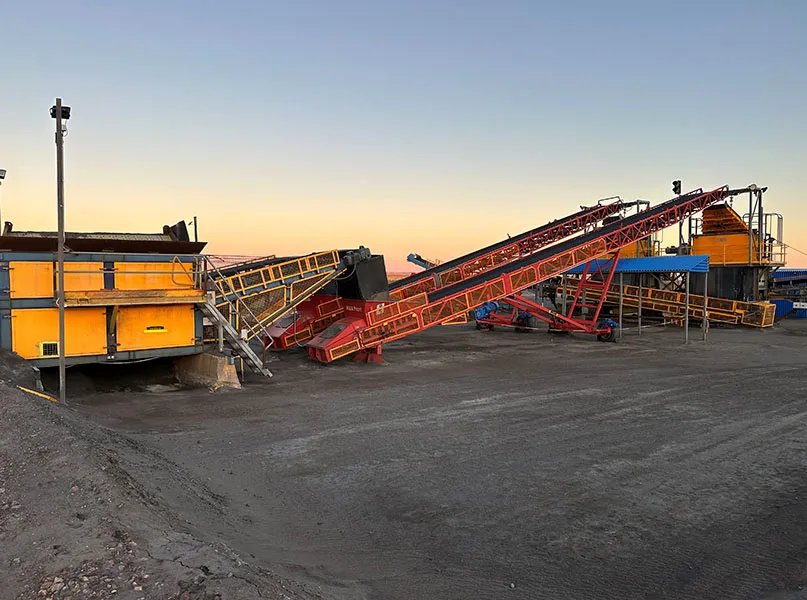
Agile restarted the site quickly to catch the rising iron ore price whilst the window was open, bringing in dry magnetic separation technology to lift the product specifications to where the deposit required it.
The company also engineered a flexible logistics solution that moved ore to port without getting caught by rail and port-slot bottlenecks that would have killed the economics.
Although a small job, the speed of turnaround was a challenge as the market window would not wait.
“In a price cycle like that one, sometimes you only get one chance, and it can be easily missed. We mined the deposit well and moved on once the work was done,” he highlights.
This third project proved Agile can move quickly, deploy specialised technology, and engineer commercial flexibility when the window is open and the operating environment demands it.
“That capability is exactly what the next generation of SA producers – and the capital that backs them – is looking for,” Mudge points out.
Whilst its active operation continues, the company is working with several clients to unlock the whole province around the project, which includes further hematite and magnetite deposits and copper, mineral sands, and gold resources – a multi-year, multi-asset opportunity.
Beyond this, Agile is progressing a pipeline with junior and mid-tier resource owners across Australia, including both restart candidates and greenfield sites.
“There is a real opportunity to replicate what we have achieved in SA – owners with proven deposits who need a partner that can rapidly set up an operation, run it smoothly and profitably, and build a story the capital markets will underwrite,” he surmises.
POWER OF TECHNOLOGY
Whilst mining technology is often sold as a transformation story, Agile believes that, when properly deployed, it lets a smaller operator behave like a larger one without inheriting the overhead.
“That is the lever we are pulling – and we have pulled it harder than most contractors of our size would,” Mudge confirms.
The clearest example is Agile’s partnership with Perth-based mining technology business, RaptorTech.
RaptorTech’s fleet management, collision avoidance, and high-precision GPS guidance solutions all run through one ecosystem, and Agile deployed and integrated the RaptorOS fleet management platform into its operations.
In practice, this involves live visibility, machine location, and asset status all mapped in a 3D digital twin of the pit.
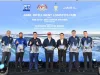
As a result, in 2024 the partnership won the Premier’s Award for Productivity Improvement (Resources), issued by the South Australian Department for Energy and Mining.
“Agile and RaptorTech took the prize jointly, which is the right way for that award to land – the technology and the operator both have to deliver for it to mean anything,” he asserts.
The productivity gains afforded by RaptorTech across Agile’s operations have been significant and the Premier’s Award is a valuable third-party validation.
Elsewhere, the Agile Operating System is the company’s internal integrated platform – the data spine, workflow planner, and connective tissue that takes live data from the fleet and turns it into real-time decisions.
“Most smaller operators integrate vendor tools loosely and call it a system – we have gone further,” Mudge prides.
When it comes to automation and artificial intelligence (AI) more broadly, the early gains have been in maintenance scheduling, drill pattern optimisation, dispatch logic, and document handling.
“We are not running an autonomous fleet – we are using machine intelligence to take the cognitive load off our planners and supervisors so they can spend their day on the decisions that actually move the cost line,” he tells us.
As such, the Agile Operating System is what positions the company well to absorb the next wave of AI and automation as it lands.
“Our philosophy is if a tool does not pay back inside 12 months, we do not deploy it. The companies that get hurt by technology are the ones who buy the brochure instead of the outcome,” Mudge states.
RESPONSIBLE OPERATOR
With a holistic view of sustainability at its core, Agile is dedicated to protecting the environment, land, people, and cultures around it.
Environmentally, the company believes it should be able to leave a site and return it to the community in better shape than it found it.
“We plan to rehabilitate the mine from the outset – both because it is operationally right and because it shortens the rehabilitation tail that capital and regulators both watch,” Mudge outlines.
When it comes to people, sustainability means overseeing a workforce that can do the job for 30+ years without burning out, getting hurt, or giving up the family life that brought them to a regional operation.
“This shows up in our roster design, safety leading indicators, and turnover numbers. It is also the part of sustainability we are most disciplined about because it drives operating performance,” he points out.
In terms of culture and country, Agile takes the responsibility of operating on Aboriginal land seriously – as any SA-owned operator should.
It works with Traditional Owners on every site and treats heritage management as a core part of its operations, rather than a compliance function.
“There is no version of long-term mining in this state that does not start with that relationship being right,” Mudge impassions.
More than holding itself to high standards as an environmental, social, and governance (ESG) leader, Agile sees itself as a contractor that intends to still be here in 20 years.
“That ambition forces sustainability into every decision, whether we label it that way or not,” he assures.
Indeed, Agile’s perspective on community development and corporate social responsibility (CSR) in regional SA is consistent.
“One of the institutions that works hardest for our people here is the Royal Flying Doctor Service (RFDS) – every operator at every one of our sites is one bad day away from needing the RFDS,” Mudge reflects.
Therefore, when a client came to Agile with an opportunity to contribute to RFDS, the answer was immediately yes.
Beyond this initiative, Agile is proud to buy local, employ local, and back the regional supply chain that keeps small SA towns viable.
“That kind of contribution compounds, because it builds the economic base of the place rather than the visibility of the brand,” he posits.
A BRIGHT FUTURE
Looking ahead, Agile intends to be the most capable end-to-end mining services business in Australia.
“Not the biggest: the most capable. Capability and scale are different paths, and we are not interested in scaling past our ability to operate well,” Mudge confidently says.
The macro context defines this year, with SA on the cusp of a generational shift in terms of its pipeline maturity, commodity mix, and plethora of well-led junior miners attracting capital.
Agile is well-placed to deliver in this context, acting as the conduit between the credibility on the ground and the capital that wants to back it.
The company plans to grow its active iron ore operation towards its reserve target through disciplined operations.
Agile is also looking to convert the next opportunity in its pipeline – either a restart or greenfield project – without dropping the ball on existing operations.
Elsewhere, the company intends to continue investing in its people, particularly in operators and supervisors developed from within.
“We will also extend the Agile Operating System so we can run more sites without losing the operating signal and build the capital relationships that allow Agile-operated assets to access the funding the moment is creating,” he tells us.
The company’s medium-term ambition is to be the contractor Australian junior and mid-tier miners think of first when they have a deposit and a decision to make – and the contractor that capital managers and overseas investors think of when they are underwriting a producer.
“Whether the deposit is in care and maintenance or has never been mined, or whether the commodity is iron ore, copper, or something further down the periodic table – we are well on the way,” Mudge passionately concludes.
This company profile was produced by the editorial team at APAC Outlook, a publication within the Outlook Publishing global network of B2B industry magazines.
Outlook Publishing showcases organisations and leadership teams shaping sectors including manufacturing, mining, construction, healthcare, supply chains, food production, and sustainability.
APAC Outlook highlights organisations driving innovation, investment, and industry development across the Asia-Pacific region.