



Phygital International redefines what sport looks like in a digital-first world. John Hewitt, International Marketing and Communications Director, previews the Games of the Future 2026 taking place in Astana, Kazakhstan.
PHYGITAL PHENOMENON
“Traditionally, sport has existed in a single environment, either through physical competition on the field or digital competition in gaming. We are breaking that boundary by fusing the two.”
Phygital International (PI) is the global promoter of phygital sport, a unified format where athletes compete across both environments, with performance in each directly impacting the outcome.
This shift fundamentally changes how sport is structured, athletes train, and competition is understood.
“We are also expanding where sport takes place and who can participate. By bringing gaming into structured competition, phygital sport creates new entry points for those outside traditional pathways, without compromising elite standards,” adds John Hewitt, International Marketing and Communications Director.
“It reflects how younger generations already engage with sport, moving fluidly across physical and digital environments in one connected experience.”
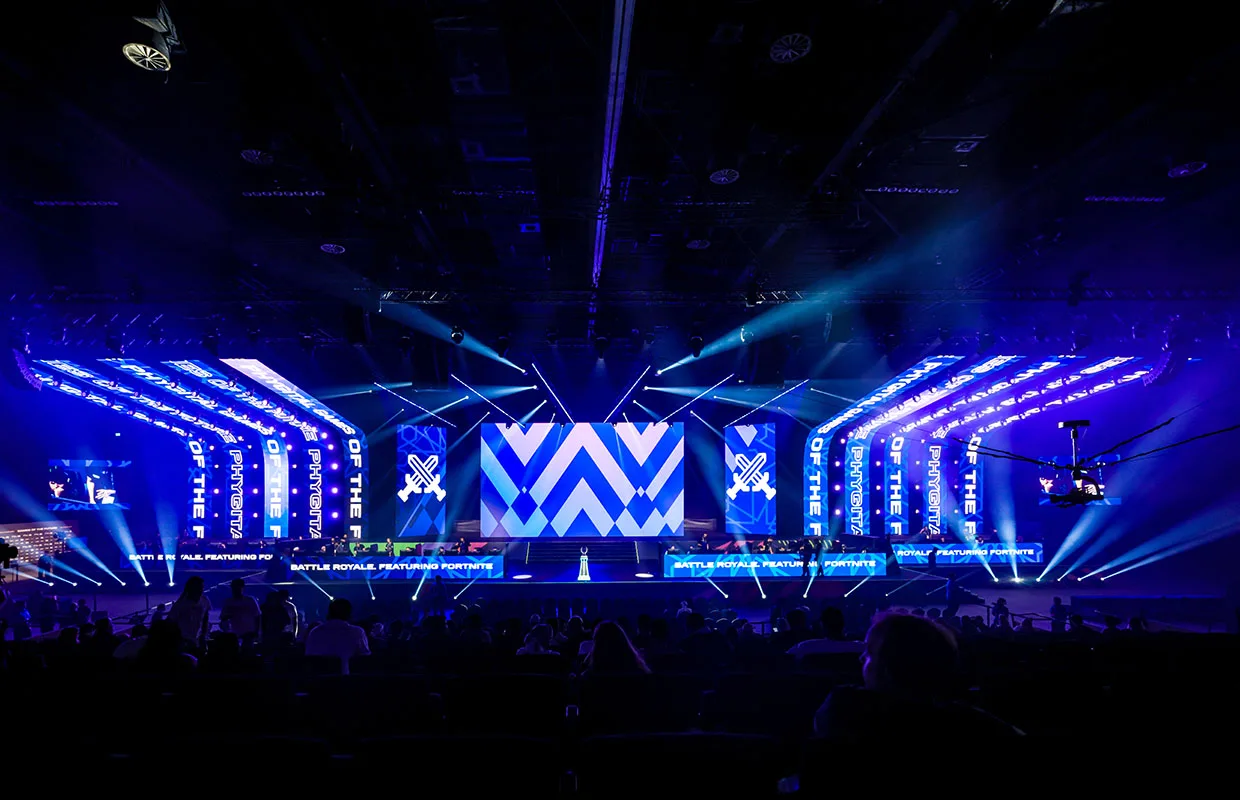
This is brought to life through the Games of the Future (GOTF), PI’s groundbreaking international tournament that unites physical sport and cutting-edge esports on one stage, where athletes and gamers from around the world compete in fast-paced, hybrid disciplines.
More than a competition, it demonstrates how sport, entertainment, and technology can come together to create a more immersive and culturally relevant experience.
“At a system level, we are building a new sporting framework. This includes standardised formats, global qualification pathways, and enabling clubs and communities – rather than nations – to compete on the world stage, creating a more open model where access and participation are broadened,” outlines Hewitt.
“Ultimately, we are not modifying existing sport – we are building a new category from the ground up that reflects how people play, compete, and connect today, and where sport is heading next.”

DYNAMIC FORMAT
GOTF is built around a simple but powerful idea: sport no longer needs to exist in either a physical or a digital format – it can be both, fully integrated into a single competition.
At its core, each discipline combines two stages. Athletes first compete in a digital version of their sport, before immediately transitioning to the physical arena to face the same opponent.
The final result is determined by the combined performance across both stages, creating a seamless link between gameplay and real-world athleticism where success depends on mastering both environments.
“What makes this blend unique is that the two elements are not separate – they are interdependent,” Hewitt highlights.
“Digital performance influences the physical match, and vice versa, which adds a new layer of strategy, adaptability, and pressure. It demands a different kind of competitor, one who can think tactically in-game whilst also delivering physically under real-world conditions.”

The result is a faster-paced, more dynamic format that reflects how today’s audiences already engage with sport and gaming.
It also broadens the appeal of competition, bringing together athletes and gamers from around the world in disciplines that feel both familiar and entirely new.
More broadly, this blend allows GOTF to go beyond traditional competition.
“It becomes a platform where sport, technology, and entertainment intersect, creating a more immersive experience for fans and versatile pathway for athletes,” explains Hewitt.
“In that sense, the blend is not just about the format, but about redefining how sport is played, experienced, and understood.”

WELCOME TO ASTANA
This year’s GOTF will be held in Astana, Kazakhstan, whose bid stood out not just for its infrastructure, but also the depth of commitment behind it.
The Qazaq Cybersport Federation, Kazakhstan’s World Phygital Community (WPC) member, already runs domestic phygital tournaments, with clear plans to expand through dedicated centres ahead of GOTF.
That long-term approach to developing phygital sport was a key factor in awarding the 2026 edition to Astana.
“The city also brings a strong and recent track record in hosting major international events. From the World Nomad Games in 2024 to the FIFA Series 2026 and a growing calendar of global competitions across boxing, wrestling, and other Olympic disciplines, Astana has consistently demonstrated its ability to deliver complex events at scale,” Hewitt notes.
“Its selection to host the World Athletics Indoor Championships further reinforces those credentials.”
The scale of what will be delivered in 2026 reflects that capability, as GOTF will take place across world-class venues including the Barys Arena, Qazaqstan Athletics Sports Complex, and Zhaksylyk Ushkempirov Martial Arts Palace, with more than 100,000 spectators expected.
Alongside elite competition, the city will host fan zones and immersive activations, creating a broader festival experience that brings together sport, technology, and entertainment.
“Ultimately, what makes Astana the right stage is its forward-looking approach. There is a clear ambition not only to host a world-class event, but to use the Games as a catalyst for long-term growth – developing talent, building infrastructure, and embedding phygital sport into the wider sporting landscape,” Hewitt sets out.

GROWTH PARTNER
Beyond Astana, PI has officially opened the host city bidding process for the 2028, 2029, and 2030 editions of GOTF.
More than just a city that can host a major event, it looks for a partner that can help grow the phygital movement over the long term.
“Infrastructure is, of course, essential. A host city needs the venues, connectivity, and operational capability to deliver a complex, multi-format event that integrates both physical and digital competition at scale – but that is only the starting point,” emphasises Hewitt.
“What matters most is vision. We look for cities that understand what phygital sport represents and have a clear idea of how they want to use the Games as a platform –whether that’s accelerating innovation, engaging younger audiences, or building a sport-tech ecosystem.
“Just as importantly, we look for a commitment to legacy: developing grassroots programmes, creating pathways for athletes and clubs, and embedding phygital sport into the local landscape beyond the event itself,” he affirms.
Recent bidding cycles have attracted strong candidates from across multiple regions, each bringing a distinct perspective and ambition.

REACHING THE NEXT GENERATION
90 percent of PI’s broadcast audience is aged 18 to 34, many of whom already live across physical and digital environments every day.
Phygital sport meets them exactly where they are, and that creates something genuinely valuable for brands, broadcasters, and partners trying to reach this generation in an authentic way.
“Brands have spent decades trying to reach Gen Z and millennials, and phygital delivers that audience with a precision that most sports properties simply cannot match,” Hewitt points out.
“We also have the infrastructure to scale this. Through the WPC, we work with 120 member organisations across 116 countries, each developing phygital sport in their market and building structured competition pathways that feed directly into GOTF. That gives us a global footprint that very few sports properties at any stage can match and means the audience and athlete pipeline are growing in parallel.”
The bigger picture is that phygital represents where the sports industry is heading. The convergence of physical competition, technology, and digital entertainment is not a trend – it is a structural shift, and PI is building the platform that sits at the centre of it.
“For anyone in sport, media, or brand marketing who is thinking about where the next generation of fans and athletes will be, this is the space to watch,” he enthusiastically concludes.
This article was produced by the editorial team at APAC Outlook and published as part of the Outlook Publishing global network of B2B industry magazines.
Outlook Publishing delivers industry insights, company stories, and sector coverage across manufacturing, mining, construction, healthcare, supply chains, food production, and sustainability.
APAC Outlook provides ongoing coverage of organisations and developments shaping industries across the Asia-Pacific region.