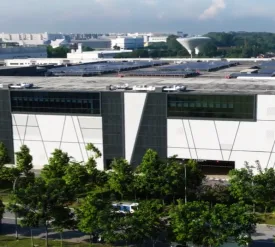




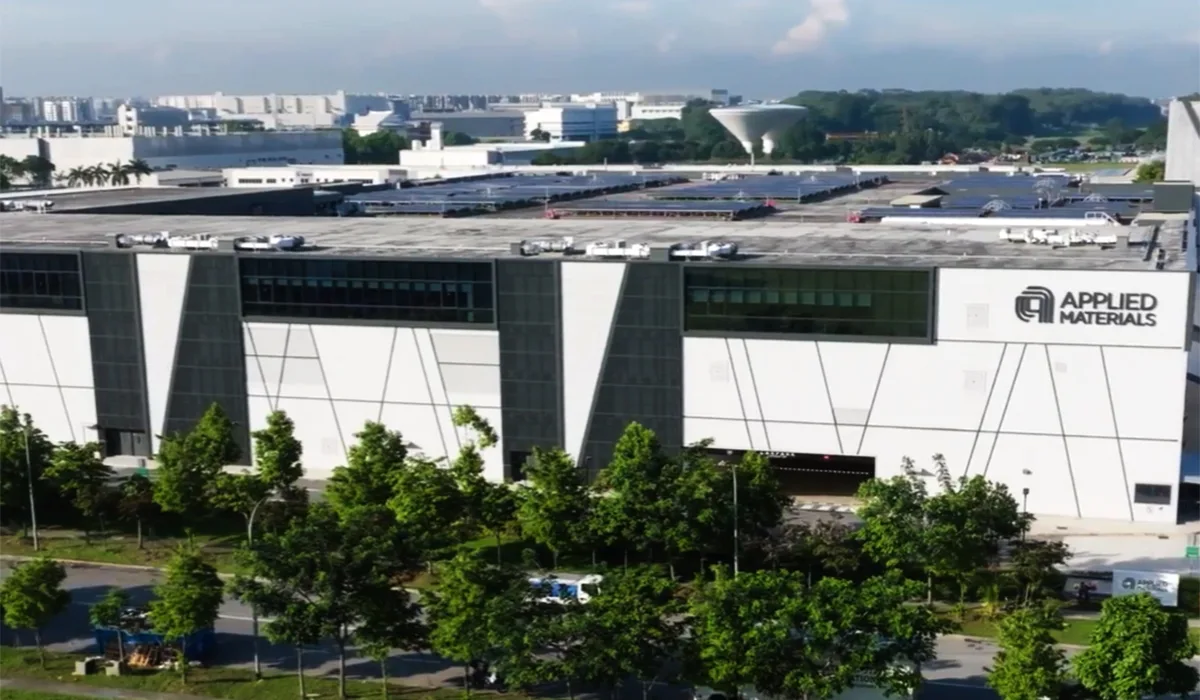
Supporting the global build-out of AI infrastructure, Applied Materials, Inc. has announced its expanded USD$500 million Tampines Campus in Singapore to further strengthen the company’s global footprint.
INNOVATIVE MANUFACTURING OPERATIONS
Applied Materials, Inc. (Applied Materials) – a leader in materials engineering solutions for the semiconductor industry – is expanding its manufacturing and R&D operations at its Tampines Campus in Singapore.
This campus will more than double the company’s advanced cleanroom capacity within the country and ultimately strengthen Applied Materials’ global manufacturing footprint, which spans locations in the US, Europe, Taiwan, and other regions. Specifically, the Tampines Campus’ priority is to serve chipmakers that are expanding production to meet the increasing demand for artificial intelligence (AI).

“AI is transforming every industry, creating unprecedented demand for advanced semiconductors. Our expanded manufacturing operations in Singapore strengthen Applied Materials’ ability to deliver semiconductor manufacturing equipment that chipmakers need to bring next-generation chips to market faster,” notes Gary Dickerson, President and CEO of Applied Materials.
Through this expansion, the company is able to take a major step forward in its Singapore 2030 plan, which comprises strengthening global manufacturing and R&D capabilities, broadening technology ecosystem partnerships, and promoting local workforce development, such as adding approximately 1,000 new local jobs.
“Singapore has been a strategic hub of Applied Materials’ global operations for 35 years, and our expansion here is a testament to the world-class semiconductor ecosystem, infrastructure, and talent this country has built. Our new AI-enabled automation-ready facility represents the next era of advanced manufacturing optimised for speed, precision, and quality,” explains KC Ong, Group Vice President of Worldwide Manufacturing at Applied Materials.
EXPANDING GLOBAL R&D
By deploying autonomous mobile robots, autonomous assembly and testing systems, and AI-assisted quality inspection, the Tampines Campus is setting a benchmark for sustainable, intelligent semiconductor equipment production.

“Applied Materials’ use of advanced automation and AI technologies in the new facility will accelerate product development and push the envelope of advanced manufacturing capabilities in Singapore. We welcome this expansion that will strengthen our vibrant semiconductor ecosystem, creating quality jobs and opportunities for Singaporeans,” says Png Cheong Boon, Chairman of Singapore’s Economic Development Board.
The campus has been designed to adhere to the Building and Construction Authority (BCA) Green Mark Platinum Certification, which is the highest tier of Singapore’s green building rating system. This is in addition to the campus’s other features, including an on-site solar panel system, LED lighting, low-carbon concrete construction, a closed-loop water reclamation system for zero water waste, and a smart building management system to monitor in real-time energy and water consumption.
In order to expand its global R&D and manufacturing footprint, Applied Materials has worked over the past few years to nearly double its global manufacturing capacity. The company has also invested over USD$400 million in its US equipment manufacturing infrastructure over the course of the past five years, with its new USD$5 billion EPEC Center in Silicon Valley representing the largest-ever US investment in advanced semiconductor equipment R&D.
Ultimately, Applied Materials’ new state-of-the-art Tampines Campus is designed to drive resilience and scalability, setting a landmark precedent for sustainable, intelligent semiconductor equipment production.
This article was produced by the editorial team at APAC Outlook and published as part of the Outlook Publishing global network of B2B industry magazines.
Outlook Publishing delivers industry insights, company stories, and sector coverage across manufacturing, mining, construction, healthcare, supply chains, food production, and sustainability.
APAC Outlook provides ongoing coverage of organisations and developments shaping industries across the Asia-Pacific region.