




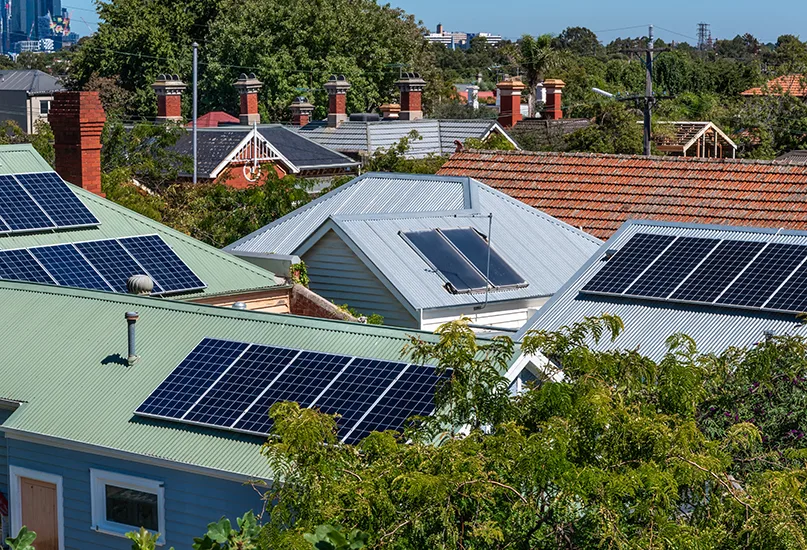
As it seeks to implement sustainability more widely, Australia’s construction sector is leveraging influential green policies and new technologies to reframe how the industry can contribute to achieving the nation’s net zero goals.
SPOTLIGHT ON CONSTRUCTION IN AUSTRALIA
Today’s Australian construction landscape is undergoing a notable shift, with sustainability, regulation, and technological innovation reshaping construction processes.
Historically characterised by traditional, carbon-intensive methods, the sector is increasingly embracing greener practices and data-driven approaches in response to evolving environmental expectations.
A key catalyst for recent industry change was the introduction of the National Construction Code (NCC) 2022, which raised the minimum energy efficiency standard for new homes to a seven-star rating in line with the Trajectory for Low Energy Buildings – a government plan to achieve lower carbon structures.
The move has encouraged developers and designers to re-think building performance – from improved insulation to more efficient material choices.
At the same time, the industry is turning its attention to reducing embodied carbon – the emissions associated with the production and construction of building resources.
This growing focus is driving interest in construction materials such as sustainable timber, recycled alternatives, and low-carbon steel, whilst new policies are beginning to require large infrastructure projects to actively manage their upfront carbon.
Technological innovation is also playing a transformative role, with digital tools such as building information modelling (BIM) and artificial intelligence (AI) enabling companies to improve planning accuracy, optimise material use, and reduce waste.
Modern methods of construction, meanwhile, are helping to streamline delivery and enhance quality control, such as volumetric modular construction and precast concrete elements.
Despite these advances, the sector continues to navigate a challenging operating environment.
Rising material costs and inflationary pressures are placing strain on residential developments, whilst a persistent shortage of skilled labour remains a continued obstacle to growth within the industry.
Nevertheless, with sustainability now firmly embedded in the nation’s long-term agenda, Australia’s construction sector is steadily laying the foundations for a more efficient, resilient, and environmentally conscious future, particularly as it seeks to achieve net zero greenhouse gas (GHG) emissions by 2050.
Q&A WITH TARYN CORNELL, SENIOR MANAGER – STRATEGY AND DEVELOPMENT, THE GREEN BUILDING COUNCIL OF AUSTRALIA
We sit down with Taryn Cornell, Senior Manager – Strategy and Development for the Green Building Council of Australia, who discusses for the organisation’s role in advocating on behalf of its members and supporting a sustainable future for the nation’s construction sector.
Firstly, could you talk us through the origins and primary goals of the Green Building Council of Australia?
Taryn Cornell, Senior Manager – Strategy and Development (TC): The Green Building Council of Australia (GBCA) was founded in 2002 by industry leaders who recognised the need for a unified, consensus-driven, and science-based approach to transforming Australia’s built environment and shifting towards sustainability.
Our primary goal is to deliver better buildings and places to live, work, and play – by ‘better’ we mean lower-carbon, healthier, and more climate-resilient environments. These are things we’re driven to improve not just at scale, but also on a granular level.
We do that by working across a lot of different building types, from workplaces and sports facilities to schools, universities, railway stations, and retail spaces.
Our purpose is to drive ambition whilst building capability across the construction industry.
What is your take on today’s Australian construction landscape, and how have you seen it evolve over the course of your career?
TC: I would say it’s both exciting and challenging. Australia has a strong track record when it comes to sustainability in the built environment.
One of the biggest shifts has been the rise of upfront carbon as a mainstream conversation. Five years ago, very few people understood it; today, governments are backing the concept and discussing its inclusion in the NCC. That represents a rapid and significant change.
We’re also seeing growing momentum around designing and building for circularity. This involves treating buildings as a ‘kit of parts’ and finding ways to extend the life of materials within our built environment, which requires a shift away from traditional construction approaches towards more modular and durable design.
Another important change is leadership across the construction supply and value chain.
Where sustainability was once seen as an optional extra, today construction companies and contractors are increasingly using it as a point of difference, and proposing ways to reduce upfront carbon, electrify buildings, connect projects with better suppliers, and rethink material choices to improve construction outcomes.
This kind of leadership evolution is particularly exciting because the construction sector has not always been seen as a driver of change.
In fact, I began my career as an interior designer, where the goal was enriching people’s lives through design.
But, at the time, sustainability rarely entered the conversation – unless there was extra budget, which seldom happened.
So, seeing these sustainability concepts scale across the industry is what drew me to GBCA – real change requires an entire industry supported by clear targets and pathways to achieve them.

How important is your Green Star rating system in helping Australia to deliver sustainable, resilient, and healthy built environments?
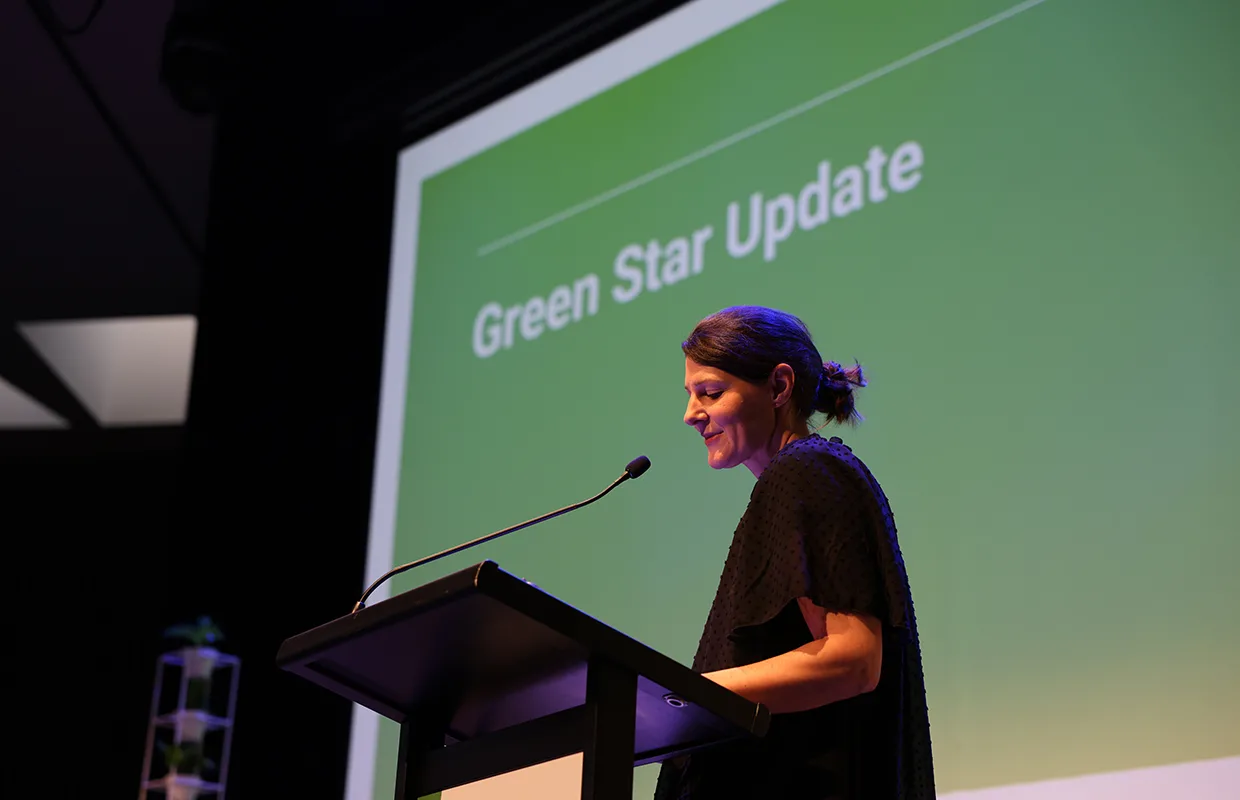
TC: Green Star is built by industry, for industry. We undertake extensive consultation and consensus-building to identify what leadership looks like in this regard, whilst ensuring we don’t move so far ahead that people are left behind.
The aim is not only to set leadership benchmarks but also to help raise minimum standards across the industry, as we believe sustainability shouldn’t be limited to high-end developments.
Green Star provides a clear set of targets and requirements for the industry, establishing best-practice benchmarks for areas such as energy efficiency, carbon reduction, and climate resilience.
It’s a holistic rating tool that considers the broader sustainability picture rather than focusing on a single issue.
Projects inevitably need to balance competing priorities, so Green Star provides a framework and shared definition of what strong sustainability outcomes look like.
Because it is a certification scheme, it also verifies claims, and any sustainability outcomes put forwards by a project must be independently audited before certification is awarded.
We now have more than 7,500 Green Star-certified projects across Australia, representing billions of square metres of space.
That scale demonstrates both industry leadership and the growing commitment to improving the built environment for all.
As an association that serves as a key advocate for the construction industry, how extensively is GBCA involved in contributing to policy and regulatory frameworks which may affect Australia’s construction landscape?
TC: We play a very active role in advocacy across all levels of government.
At the local level, we work with councils on planning provisions and the ways they can influence sustainable development outcomes.
We also engage closely with state and federal governments to ensure policy frameworks support sustainable, resilient, and healthy buildings.
Our advocacy is guided by five key priorities:
- Climate action – Ensuring buildings meet net zero targets and are resilient to future climate conditions.
- Adaptability – Helping communities to withstand climate events and recover quickly.
- Affordability, health, and low-carbon housing – This has become particularly prevalent as housing remains a critical national issue. However, if homes are being delivered quickly, they must also be delivered well.
- Circular economy and resource efficiency – Key priorities in ensuring responsible material sourcing and use across the construction process.
- The broader urban system – Not just buildings themselves but the infrastructure and connections that make cities function effectively.

“Buildings don’t exist in isolation; they are part of a broader ecosystem, and nature provides an important connection point”
Taryn Cornell, Senior Manager – Strategy and Development, Green Building Council of Australia
Your 2025 federal election policy priorities saw you working with elected representatives and parties that place a strong emphasis on lowering the cost of living, enhancing efficiency, and unlocking economic opportunities. What progress have you made towards these so far?
TC: Our advocacy is anchored by a policy framework called Every Building Counts, which has been guiding our work since 2019.
We collaborate closely with organisations such as Property Council of Australia and other industry partners to deliver it, because progress requires collective effort.
Through the framework, we work with the Australian government on initiatives such as doubling the country’s circularity rate by 2035 and establishing a wider national circular economy.
Recent developments include a built environment sector plan, which provides funding and support for programmes such as the Nationwide House Energy Rating Scheme (NatHERS) for residential energy efficiency, and updates to the Greenhouse and Energy Minimum Standards Act 2012 – initiatives which form the foundation of our broader sustainability progress.
We also work closely with the Australian Building Codes Board (ABCB), which develops the NCC. Green Star provides a recognised pathway for projects to demonstrate leadership in these instances, whilst also helping build an evidence base for stronger minimum standards.
Another key development is progress around embodied carbon. Five years ago, the concept felt too complex for many stakeholders. Through industry collaboration and funding initiatives, a National Australian Built Environment Rating System (NABERS) tool was launched in late 2024 to measure embodied carbon and provide a consistent, nationally recognised approach to reducing upfront carbon.
We are also involved in the Australian Sustainable Finance Taxonomy (ASFI), where Green Star can help link project finance with verified sustainability outcomes – the type of independent verification that is critical for ensuring credibility and transparency.
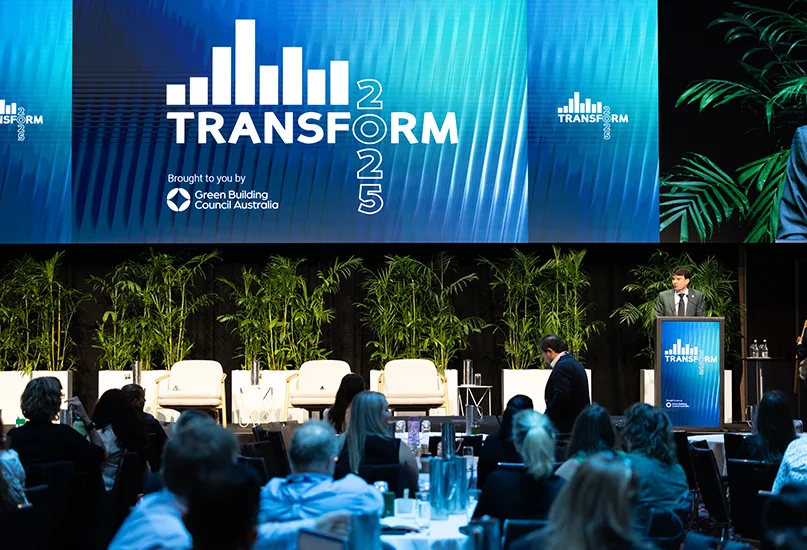
You recently participated at TRANSFORM in Sydney – the premier event for sustainability leaders and practitioners working across the built environment. What key topics were on the agenda?
TC: TRANSFORM is a fantastic conference because it brings together a wide range of people involved in the built environment. It’s a space where big ideas are discussed, but also where practical implementation is explored.
An area I was particularly excited about this year is our work on nature, biodiversity, and regenerative design.
Buildings don’t exist in isolation; they are part of a broader ecosystem, and nature provides an important connection point.
We launched a roadmap for nature-positive buildings, which will help guide the integration of biodiversity outcomes into the built environment.
This work also intersects with our Design for Country principles, which recognise the value of Indigenous knowledge systems that have supported communities for tens of thousands of years.
Another key milestone at the conference was the launch of the Green Star Fitouts rating tool – something I’ve personally been keen to see for several years.
Fitouts operate differently from base buildings, and they offer unique sustainability opportunities – particularly around material selection and circularity.
Whilst individual fitouts may be smaller in scale, their collective impact across the built environment is significant, and launching this tool will help building owners and contractors achieve better sustainability outcomes across those projects.
“Ultimately, our goal is to drive meaningful change whilst supporting the industry in delivering a better, more sustainable built environment”
Taryn Cornell, Senior Manager – Strategy and Development, Green Building Council of Australia
Finally, what are GBCA’s key priorities for the future, and how do you see Australia’s energy landscape evolving in coming years?
TC: Resilience will remain a central priority. It’s a broad concept, but the challenge lies in defining what resilience means at project level and developing consistent ways to measure and demonstrate it.
Nature and biodiversity will also continue to grow in importance, alongside circularity. These three areas – resilience, nature, and circularity – together form a powerful framework for transforming the built environment.
Carbon will remain a core focus, but we are also seeing new discussion points emerge such as data centres.
In our annual membership survey of more than 600 organisations, data centres were identified as the main topic members wanted to better understand – despite barely appearing in the survey the year prior.
Data centres’ rapid growth raises important questions about energy use, sustainability, and infrastructure.
In response, we have already hosted training courses and launched pilot programmes to explore how the sector can achieve stronger sustainability outcomes.
At the same time, we must continue advancing existing priorities such as energy efficiency and electrification, addressing how buildings interact with the grid.
These transitions can be disruptive, so collaboration between government and industry will be essential to ensuring they are implemented effectively.
Ultimately, our goal is to drive meaningful change whilst supporting the industry in delivering a better, more sustainable built environment.
GREEN BUILDING COUNCIL OF AUSTRALIA PARTNER