



We sit down with Dr Omera Khan, Chief of Staff, Strategy and ESG Lead at DHL Supply Chain Asia Pacific, who discusses the rise of artificial intelligence in today’s supply chain sector, the resilience required to thrive, and why human judgement remains crucial.
SHAPING INTELLIGENT SUPPLY CHAINS
As artificial intelligence (AI) rapidly reshapes global supply chains, businesses across the Asia Pacific (APAC) region face a new challenge – how to balance intelligent automation with human adaptability, ethical judgement, and resilience.
From predictive analytics and digital twins to increasingly complex geopolitical and environmental disruptions, the supply chain and logistics sector is evolving faster than ever before.
However, whilst technology is transforming operational capabilities, many organisations are still grappling with the skills, leadership, and cultural shifts required to fully realise its value.
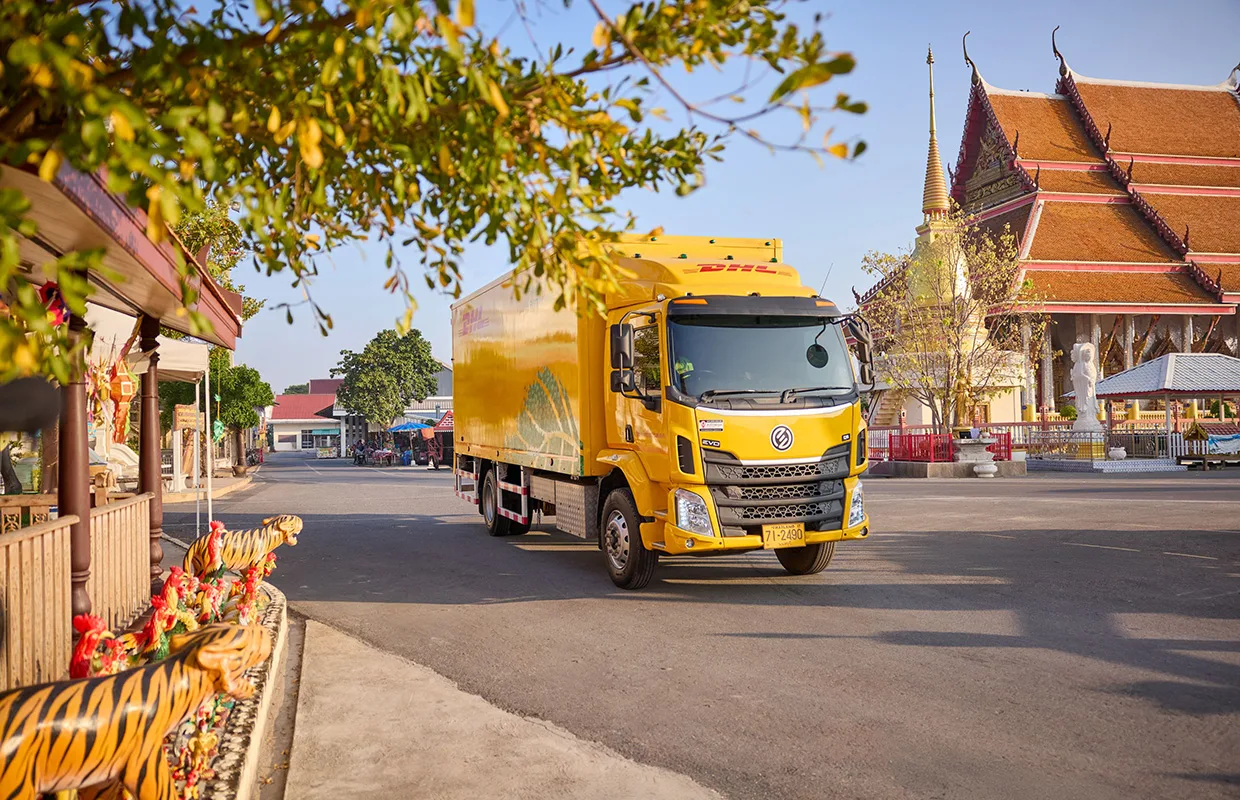
At the forefront of these conversations is DHL Supply Chain Asia Pacific, who continues to help businesses design more responsive, resilient, and sustainable supply chains through digital innovation, customer centric strategies, and forward-thinking operational models.
Instrumental to this effort is Dr Omera Khan, Chief of Staff, Strategy and ESG Lead, whose career spans academia, design procurement, and global supply chain risk management.
Today, she works closely with DHL Supply Chain Asia Pacific’s leadership teams and customers to develop strategies that balance resilience, responsiveness, sustainability, and long-term business performance in an increasingly volatile environment.
From developing workforce capabilities to embedding ethics into AI-powered systems, DHL Supply Chain Asia Pacific is helping organisations move beyond traditional operational models and prepare for the next era of supply chain excellence.
We speak with Dr Khan about what she calls a growing ‘skills paradox’, the evolving relationship between humans and intelligent systems, and how businesses can build resilient, future-ready supply chains across the APAC region.
Q&A WITH DR OMERA KHAN, CHIEF OF STAFF, STRATEGY AND ESG LEAD, DHL SUPPLY CHAIN ASIA PACIFIC
Firstly, could you tell us about your career to date and how you became a leading professor in supply chain risk management?
Dr Omera Khan, Chief of Staff, Strategy and ESG Lead (OK): At first glance, my path to logistics may have seemed unlikely. I began by studying textiles with the intention of joining the family business, before later undertaking a Master of Philosophy (MPhil) in Design Procurement. But in many ways, the foundations of my career in supply chain were being laid from the very beginning.
Whilst writing a chapter on creativity and product innovation at the University of Manchester Institute of Science and Technology (UMIST), my curiosity began to shift.
I found myself asking bigger questions: where does innovation really come from? How do we procure design in a way that truly meets customer demand? And how can we know, at the earliest design stage, whether the product designs we commit too will succeed in the marketplace 12 to 18 months later? Long before the hype of fast fashion and Zara, we had lengthy fashion lifecycles and seasons!
That work led to recognition, and I was awarded a fully funded scholarship for my PhD at Alliance Manchester Business School. There I was able to explore questions that were, in essence, about designing end-to-end supply chains, risk and sustainability, and, eventually, customer-centric supply chains.
A key contribution of my PhD was the recognition that supply chains begin on the drawing board, and that the decisions we make at that early stage have a profound impact on risk, resilience, and responsiveness.
Looking back, I can see that I was connecting these dots all along: why certain products succeed, how customer-centric cycles work, and, crucially, how resilience underpins it all. Having grown up in a family of textile manufacturers, I was closer to supply chains than I first realised.
My creative side was drawn to design, but I wanted to understand the systems behind it: the logistics, supply chain decisions, and operational disciplines that bring ideas to market successfully and ultimately improve business performance.
At the time, I did not set out to build a career in supply chain risk management; I simply followed that curiosity.
It eventually led me to become a professor in the field and is the same perspective I now bring to DHL Supply Chain Asia Pacific: helping to shape responsive, customer-backed strategies that balance resilience, reliability, responsiveness, and sustainability in a far more volatile world.

Can you explain the ‘skills paradox’ in the context of the APAC region, and how some organisations still lag when it comes to preparing people to guide, interpret, and challenge intelligent technology systems today?
OK: Despite the promises of AI, I’m detecting a growing unease beneath the surface, something I call the ‘skills paradox’.
On the one hand, AI is streamlining and automating many of the technical tasks that once defined supply chain expertise: data cleansing, forecasting, and even scenario modelling. However, on the other, it’s creating new demands for capabilities that few organisation are truly prepared for, such as data fluency, critical interpretation, and the ability to collaborate effectively with intelligent systems.
In many ways, our education and training models haven’t kept up. We’re still equipping professionals to do the work that AI is increasingly automating, rather than equipping them to direct and amplify it.
In the APAC region, the pace of digitalisation is extraordinary, but capability-building hasn’t always kept up. We continue to prize experience over adaptability and technical know-how over conceptual thinking; the result is a widening gap between what our systems can do and what our people understand about them.
The gap is not only technical, but also cultural. Many organisations still promote based on the old metrics of mastery rather than curiosity, when the real advantage now lies with those who ask better ‘what if’ questions, translate complex insights, and balance efficiency with ethics.
Left unaddressed, this creates fragility – a sophisticated tech stack guided by insufficiently prepared human judgment.
Could you provide us with insight into the next era of supply chain excellence, where you anticipate adaptability, critical thinking, and ethical judgement become competitive advantages?
OK: We’re at an inflection point. Excellence used to be measured by accuracy, efficiency, and control; more recently, it’s by speed, resilience, and alignment to strategic goals like sustainability.
Yet, with AI embedded, what now sets organisations apart is how effectively their people adapt, interpret, and challenge intelligent systems.
AI can surface patterns and possibilities, but only humans can determine priorities, weigh trade-offs, and make decisions that balance efficiency with responsibility.
In practice, that means the future supply chain professional must bridge algorithmic insight with business judgment – part analyst, part strategist, and part storyteller, translating digital intelligence into meaningful action.
Technology is no longer the differentiator – it’s people who can guide, question, and shape technology that will define true supply chain excellence.
Given APAC’s rapid digitalisation and ongoing talent transformation in logistics, how can businesses best use AI to elevate – not replace – the human role?
OK: The goal isn’t a purely human or purely digital supply chain – it’s a thoughtful partnership. AI should push humans up the value chain, from executing tasks and making short-cycle decisions to shaping systems for long‑horizon design.
This requires three habits:
- Treating AI as a co-pilot that we routinely interrogate.
- Using predictive and prescriptive analytics to augment planner foresight.
- Hard-wiring ethics and purpose into decision frameworks so optimisation never outpaces responsibility.
At DHL Supply Chain Asia Pacific, we design with our customers in mind, building networks that are responsive, not just efficient.
Resilience and efficiency go hand‑in‑hand – diversify where it matters, standardise processes to avoid complexity, leverage real‑time visibility to act early, and scale capacity flexibly.
AI strengthens each lever, but humans set the objectives, define acceptable risk, and choose when to bend and when to build buffers.
What practical guidance do you have for businesses looking to build an AI-ready workforce, including rethinking education models, capability development, and leadership culture?
OK: To build an AI-ready workforce, organisations need to rethink how people learn, develop, and lead.
It starts with modernising education – moving beyond pre-AI process training to curricula that blend technical fluency, such as data ethics, bias, and model limitations, with strategic skills like problem framing and scenario design. The goal is to teach people to interrogate intelligent systems, not merely operate them.
Learning must also shift from theory to experience by employing immersive methods such as digital simulations, AI sandboxes, and scenario planning exercises.
The aim isn’t to create data scientists everywhere, but to build confidence and fluency in engaging with intelligent tools.
At the organisational level, businesses need to replace role-based training with capability-based development. Skills like curiosity, critical thinking, and ethical reasoning enable people to adapt as technology evolves.
This must be supported by leaders who model AI literacy, reward thoughtful questioning, and foster a culture of continuous learning.
Finally, organisations should embed clear ethical governance. That means checking models for bias, ensuring transparency, defining when humans must override automated outputs, and maintaining accountability for decisions, no matter how intelligent the system becomes.
Lastly, what does the future hold for DHL Supply Chain Asia Pacific? How do you plan to continue enabling a both a more digital and sustainable future?
OK: Supply chains now operate in a polycrisis world with interconnected geopolitical, environmental, social, and technological risks.
Our strategy is to build networks that can bend without breaking by diversifying intelligently, standardising globally, and leveraging real‑time visibility to act before risks become crises.
When the Red Sea crisis forced rerouting via the Cape of Good Hope in 2023, it was a vivid example of how geopolitics cascades into cost, lead time, and emissions challenges, underscoring why resilience and sustainability must advance together.
At DHL Supply Chain Asia Pacific, we continue to partner and design customer-centric supply chains, integrating predictive analytics, digital twins, and operational playbooks with clear sustainability goals.
In practical terms, this means scenario‑ready capacity, multi‑user facilities for flexible scaling, and governance that balances speed with responsibility.
Trade, like water, will always find a way. Our role is to build the channels, both digital and physical, that keep it flowing – reliably and responsibly.
This article was produced by the editorial team at APAC Outlook and published as part of the Outlook Publishing global network of B2B industry magazines.
Outlook Publishing delivers industry insights, company stories, and sector coverage across manufacturing, mining, construction, healthcare, supply chains, food production, and sustainability.
APAC Outlook provides ongoing coverage of organisations and developments shaping industries across the Asia-Pacific region.