Emmanuel Yeboah is a Project Manager for Outlook Publishing. Emmanuel is responsible for showcasing corporate stories in our digital B2B magazines and Digital Platforms, and sourcing...
Sam Thomas is a Project Manager for Outlook Publishing. Sam is responsible for showcasing corporate stories in our digital B2B magazines + Digital Platforms, and sourcing...
Lucy Pilgrim is an in-house writer for APAC Outlook Magazine, where she is responsible for interviewing corporate executives and crafting original features for the magazine, corporate...
Share
Shaun Mah, General Manager – Electronic Imaging and Optical Devices Divisions at FUJIFILM Australia, provides his insight into the global imaging and digital content landscape, highlighting the evolution of experiential retail and human creativity.
The global imaging and digital content creation industry is moving into a very different era of storytelling where three major forces are simultaneously converging.
First, the rise of artificial intelligence (AI) is dramatically increasing both the volume and speed of the sector.
Second, barriers to the creation of high-quality visuals are being removed as the industry evolves, making it far more accessible – evidenced by the sector’s shift from being a space with millions of creators to potentially billions.
Third, as digital content becomes increasingly abundant, authenticity becomes more valuable.
“This will be a big change as creators will have to focus more now on quality as opposed to quantity. When content becomes infinite, meaning becomes scarce, and scarcity drives value,” opens Shaun Mah, General Manager – Electronic Imaging and Optical Devices Divisions at FUJIFILM Australia, one of the world’s largest organisations in imaging and healthcare.
In light of this, there is greater consideration around how AI impacts authentic, human-created content.
However, Mah believes that AI may be one of the best things to happen to content creators and brands in a generation, pushing them to increasingly place authenticity at the centre.
“As platforms are flooded with beautifully polished but emotionally empty content, authenticity and meaning will become more valuable. My view is that people will increasingly care whether a piece of work was made by a real person, in a real moment, with real meaning.
“AI itself is not the danger; using AI to produce more noise instead of more meaning is. The brands and creators that win in the next era will be those that understand this,” he insights.
“AI itself is not the danger; using AI to produce more noise instead of more meaning is. The brands and creators that win in the next era will be those that understand this”
Although potentially seen as counterintuitive to the digital camera and imaging space, the growth of smartphones has in fact been the industry’s best friend.
The widely used devices have made visual storytelling more accessible than ever, turning image and video creation into daily behaviour.
“Smartphones helped us create the creator economy as we know it today.
“The people who discovered a genuine passion for storytelling through their phone and wanted more control, depth, and intentional creative experiences naturally progressed to dedicated digital cameras as their imaging tool of choice,” Mah explains.
Furthermore, the growing number of creators is the most important structural shift in the category – it has changed who the customer is, what they value, and how businesses need to serve them.
“The future customer is not only a professional photographer; they may be a content entrepreneur, hybrid creator, or someone building an audience and a business at the same time.
“As such, our specifications alone will matter less. Showing up as genuine partners in their creative journey is what matters more.”
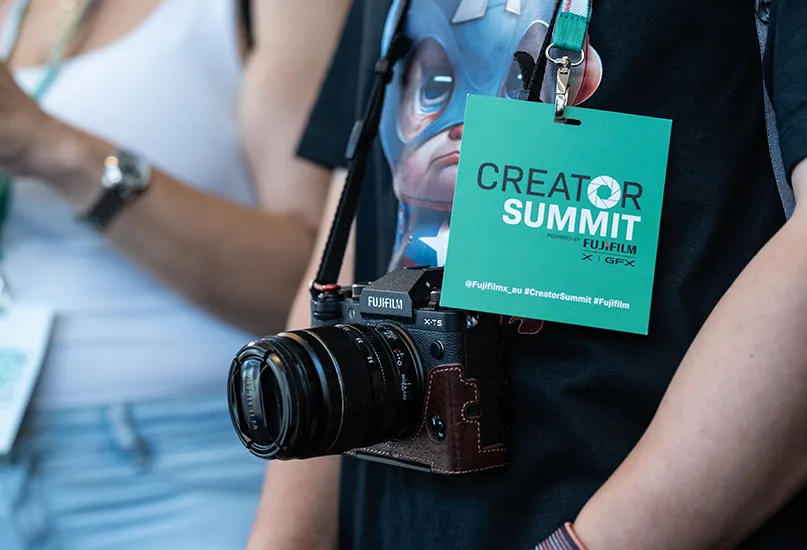
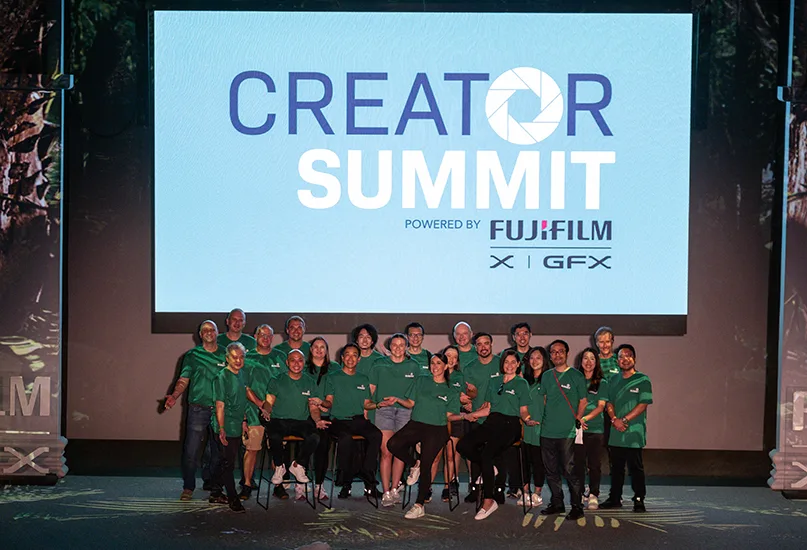
It is this vision that drives everything the company has built with the FUJIFILM House of Photography experience centre and the annual Creator Summit: Powered by Fujifilm X | GF (Creator Summit), which have both been designed and developed with the singular purpose of serving and partnering with the creator community.
FROM DISTRIBUTION TO INSPIRATION
The concept of the FUJIFILM House of Photography was built from a single belief: in categories shaped by creativity and self-expression, people want more than a transaction.
Indeed, the experience centre revolves around the idea that consumers want to touch the product, understand the craft, learn from experts, spend time in an inspiring environment, and feel part of a creative community.
“What it has revealed is that consumers increasingly want a deeper relationship with brands built on experience, education, and belonging, not just purchases.
“In many ways, the role of retail is shifting from distribution to inspiration. That is especially true in categories where identity, creativity, and meaning are part of the purchase decision,” Mah divulges.
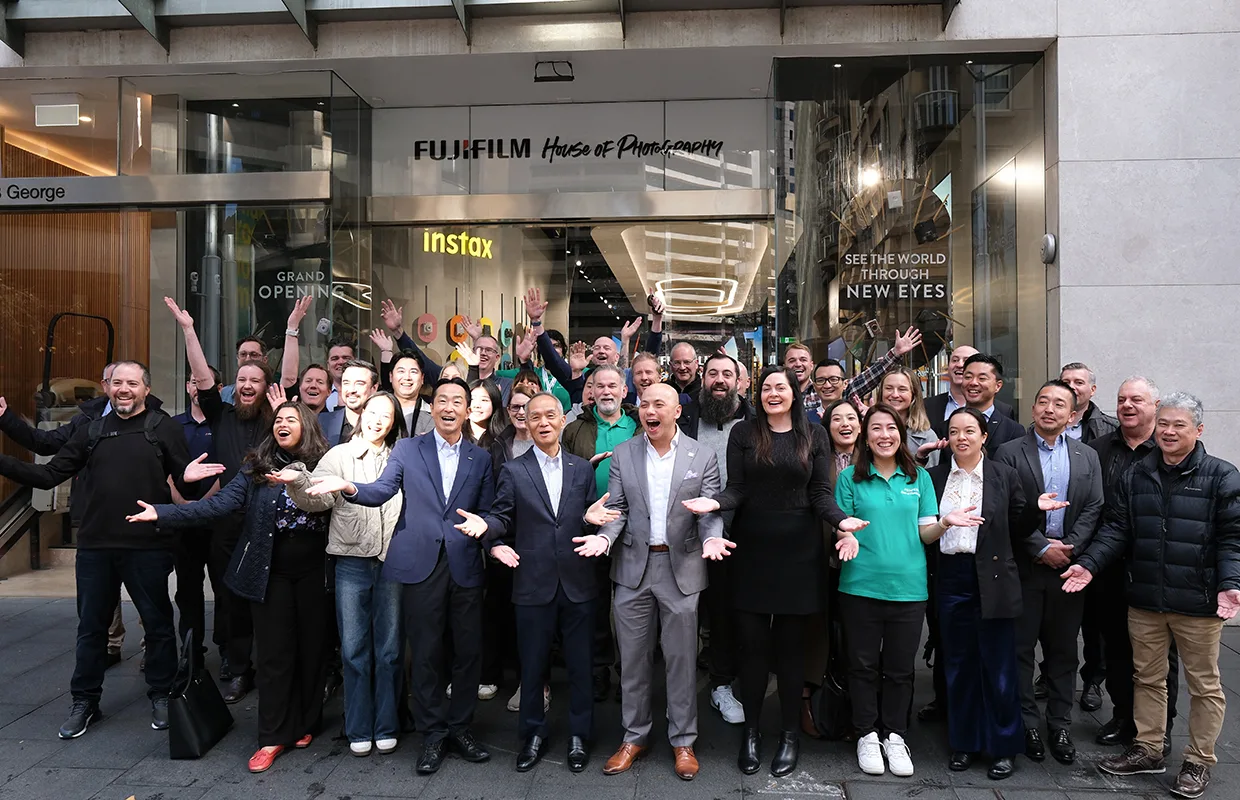
Between 2020 and 2021, at the peak of the COVID-19 pandemic lockdowns when it was widely believed physical retail was dying, FUJIFILM Australia went in the opposite direction by opening its first Fujifilm House of Photography in the country.
Mah cites this as one of the decisions he is most proud of in his career.
“At the height of the lockdowns, many concluded that physical brick and mortar retail was dying. I saw something different: as more of life moved online, the physical experiences that remained would need to become more meaningful, not less.
“The world was not becoming less physical; it was just becoming more selective about what physical should be.”
For a category built around creativity, storytelling, and self-expression, Mah refused to believe people wanted a digital-only relationship with the brand; rather, people would still want to feel the product, learn in an environment built around their craft, and connect with others who share that passion.
“My conviction was that when restrictions lifted, the demand for real experience and human connection would surge. The FUJIFILM House of Photography was built on the vision that retail needed to evolve into something far more experiential and relevant.”
After 18 months of planning, in July 2022, the company opened the doors to its Fujifilm House of Photography in Sydney – the first in the Southern Hemisphere.
“In many ways, the role of retail is shifting from distribution to inspiration. That is especially true in categories where identity, creativity, and meaning are part of the purchase decision”
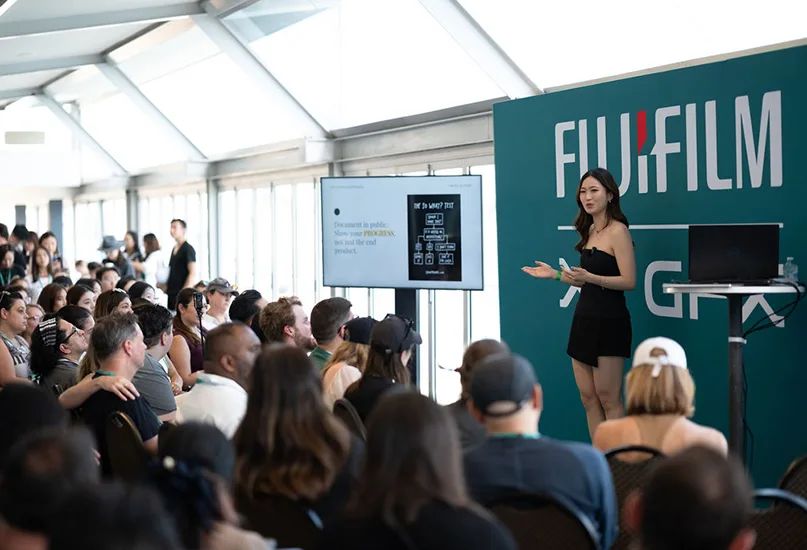
The Creator Summit was developed around a simple idea: today’s creators are looking for something more – access, learning, community, collaboration, and platforms that help them grow.
Moreover, the summit strived to serve the creative community in a way that hadn’t been done before, helping visual storytellers, videographers, and photographers build a brand and audience.
Launched in 2025, few events at the time were speaking directly to these realities. As such, the programme was built around the real needs of creators – growth, strategy, partnership, and long-term development.
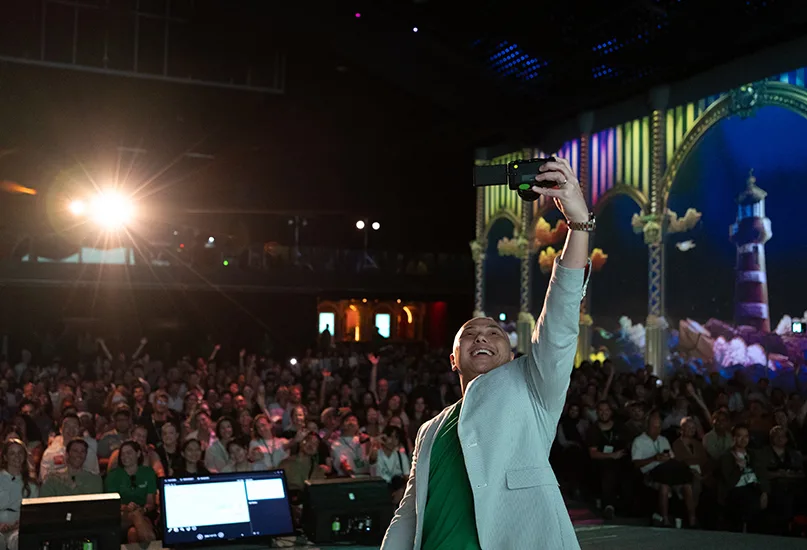
Positive response to the inaugural Creator Summit in Sydney last year was immediate and overwhelming, with the second on 9th May 2026 equally building on the same philosophy of deeper content and broader reach.
“The vision was to build something more than just an event; it was to build a platform that strengthens the creative community over time.
“Its reception has reinforced something important; creators want substance – to be taken seriously, invested in meaningfully, and given value that helps them build something bigger,” Mah prides.
CAPTURING GENUINE RELATIONSHIPS
The digital camera and imaging sector is set to experience major progression in the next five years, particularly when it comes to its relationship with both brands and creators.
For example, Mah anticipates that there will be a premium on genuine and authentic human creativity, whilst audiences will become even more selective about what they trust and who they connect with.
“Audiences today are highly sophisticated and can spot genuine relationships versus transactional ones.
“The brands that will win are those who invest in real, long-term partnerships where relationships with creators are genuine and where the brand is a natural part of the story rather than a sponsor badge in the corner.”
Furthermore, AI will become more imbedded in the creative workflow, accelerating production and lowering technical barriers even further.
In order to stay relevant in an AI-driven world, businesses must view the technology as a critical efficiency tool.
With this in mind, Mah believes the next generation of business leaders will need broader context and knowledge across a wider range of topics, including technology, culture, consumer behaviour, and business models – no longer exclusively operating and thinking within their functional silo or historical experience.
“The leaders of tomorrow will be more curious, aware, and open to unconventional talent and ideas.”
This alludes to the broader acceleration of technology that is not only streamlining business operations but is also compressing time.
“Indeed, each technological advancement can create a greater competitive edge, which is altering how companies need to operate and leaders think.”
“Businesses must become more agile, adaptive, and responsive. A good strategy is still important, but the ability to move, learn, and adjust now matters just as much.
“My view is that it’s better to be fast, fail, learn, and start again, rather than waiting for the full picture to form,” Mah concludes.
This company profile was produced by the editorial team at APAC Outlook, a publication within the Outlook Publishing global network of B2B industry magazines.
Outlook Publishing showcases organisations and leadership teams shaping sectors including manufacturing, mining, construction, healthcare, supply chains, food production, and sustainability.
APAC Outlook highlights organisations driving innovation, investment, and industry development across the Asia-Pacific region.
Emmanuel Yeboah is a Project Manager for Outlook Publishing. Emmanuel is responsible for showcasing corporate stories in our digital B2B magazines and Digital Platforms, and sourcing collaborations with Business Leaders, Brands, and C-suite Executives to feature in future editions.
Sam Thomas is a Project Manager for Outlook Publishing. Sam is responsible for showcasing corporate stories in our digital B2B magazines + Digital Platforms, and sourcing collaborations with Business Leaders, Brands, and C-suite Executives to feature in future editions.Sam is actively seeking opportunities to collaborate. Reach out to Sam to discover how you and your business could be our next cover story.
Lucy Pilgrim is an in-house writer for APAC Outlook Magazine, where she is responsible for interviewing corporate executives and crafting original features for the magazine, corporate brochures, and the digital platform.