



Bringing to life a new wave of innovative food and farming practices, Coles Group has awarded more than AUD$3.5 million in grants to eight small to medium-sized enterprises across Australia. We delve into the Coles Nurture Fund and its game-changing effects.
TRANSFORMING PRODUCER IDEAS INTO REALITY
Coles Group (Coles) is an established household name across Australia thanks to its network of 860+ grocery stores that have been keeping the country fed since 1914.
As the environmental, social, and governance (ESG) arm of the group, the Coles Nurture Fund provides funding to an abundance of small to medium-sized enterprises (SMEs) across Australia to drive innovation, boost sustainability benefits, and promote the development of industry-leading products.
Over a decade into the programme, the fund has awarded a total of AUD$43 million in financial support to 127 farmers and food producers nationwide.
In its latest round of funding, the programme provided over AUD$3.5 million in grants to eight SMEs in Queensland (QLD), New South Wales (NSW), Victoria (VIC), and Tasmania (TAS), each reflecting the ambition and ingenuity of Australian local producers.
Anna Croft, Coles Chief Commercial and Sustainability Officer, believes the projects show the breadth of innovation happening across the country – from cutting-edge zucchini grading technology and Indigenous-led aquaculture to turning imperfect ginger and turmeric into Australian-grown pantry products.
Indeed, the Coles Nurture Fund supports communities in order to tackle real business and industry challenges for each of its recipients – whether reducing waste, improving efficiency, creating new opportunities for regional communities, or developing more sustainable ways to produce food.
LINKING AQUACULTURE AND AGRICULTURE
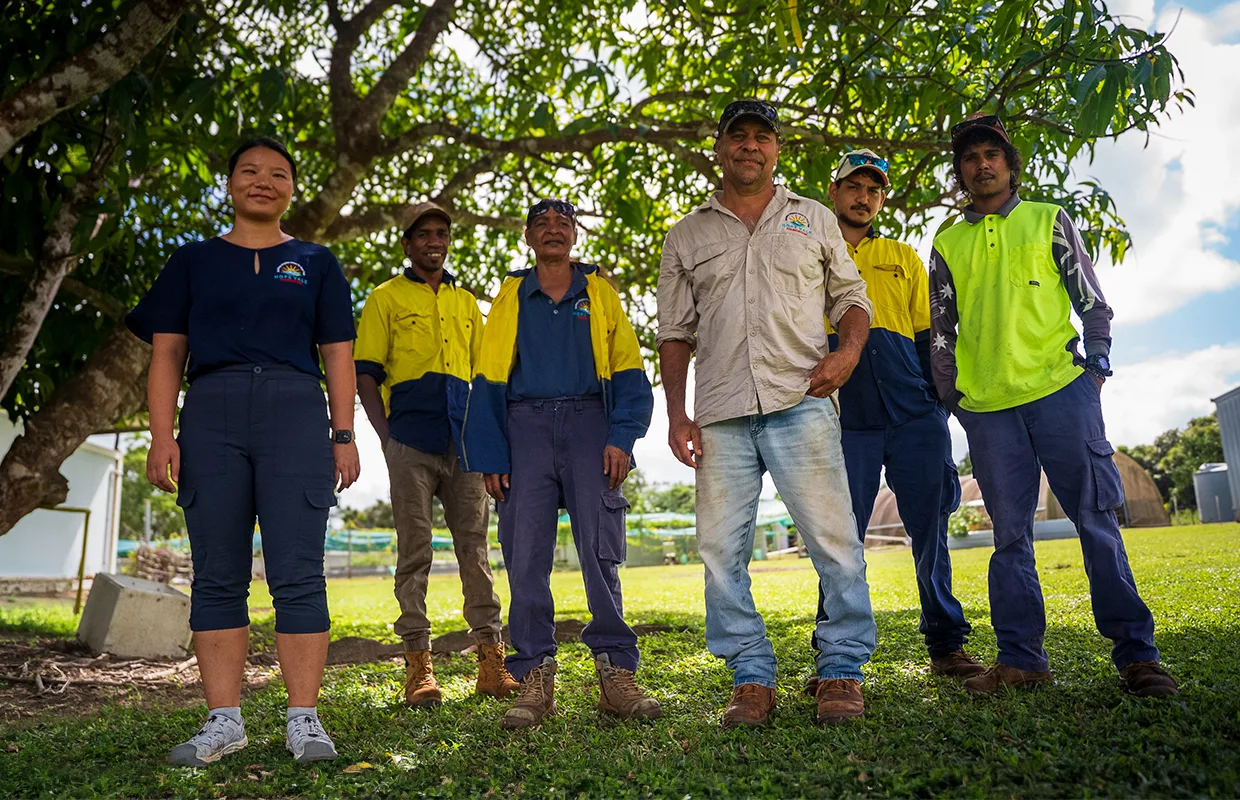
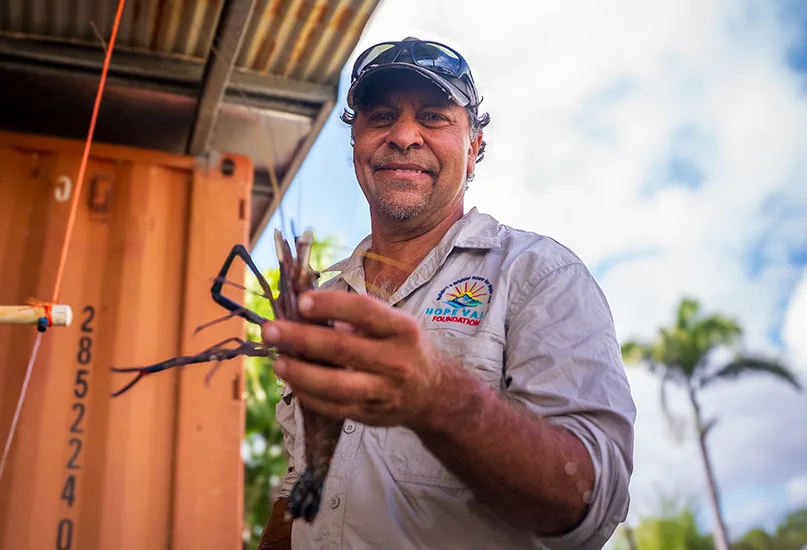
One of the eight recipients was the Hope Vale Foundation in QLD, a 100 percent Indigenous-owned not-for-profit, which is using the awarded AUD$500,000 Coles Nurture Fund to develop its giant freshwater prawn project.
Following a successful hatchery initiative that produced over 200,000 juvenile prawns, the grant will help the business build its own hatchery and create ponds on its 19-hectare R&D farm near Cooktown.
This venture is expected to scale the Australian-grown native protein, Cherabin – a beloved protein source of the Hope Vale Aboriginal community – across the country.
The funding will also be used to create meaningful jobs for the surrounding community, opening up opportunities for local people to be part of the wider supply chain.
Additionally, the waste pond water can be reused to irrigate farm crops and cultivate a connected system that links aquaculture and agriculture.
FROM NOVELTY TO MAINSTREAM
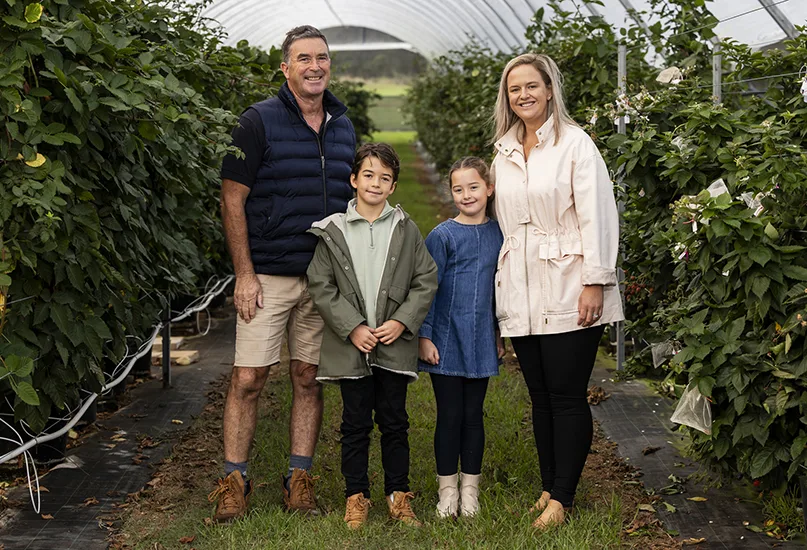
Second-generation blueberry farmer Tallogum Berries was also awarded AUD$495,000 from the Coles Nurture Fund.
The market-leading, Northern Rivers-based business hailing from NSW will allocate the funding to growing its kiwi berries from a novelty product to a more commercially viable berry crop for exportation across Australia.
For this to materialise, Tallogum Berries is acquiring a commercial plot to house its state-of-the-art kiwi berry genetic programme, enabling it to test selected varieties on a larger scale and extend the fruit’s short supply window.
Relatively underrepresented in the country’s fruit market, kiwi berries can be described as a small snackable version of a kiwi fruit with a smooth, edible skin.
Indeed, the funding will help build the foundations for a more robust kiwi berry supply chain and allow more Australians to sample its delicious, underrated taste for the first time.
Thus, with Coles’ support, Tallogum Berries can take the next step towards making kiwi berries a fruit more Australians can try and buy regularly.
ADDITIONAL COLES NURTURE FUND RECIPIENTS
Zest Element, Sunshine Coast, QLD – Awarded AUD$500,000 to build its inaugural mobile dehydration hub, comprising a solar-powered heat-pump system built into an upcycled semi-trailer. This will help farmers turn excess and out-of-spec produce into 100 percent, Australian-grown fruit powders.
Pirrone Brothers, Ayr, QLD – Received AUD$500,000 to install an artificial intelligence (AI) zucchini grading system, enabling the third-generation farm to grade the crop more effectively, reduce waste, and make better use of the vegetable as it grows.
Wintergreen Farm, Somerton, NSW – Recipient of AUD$500,000 to construct a 30 megalitre above-ground water storage system using interconnected water bladders. This supports the family-owned broiler chicken farm in creating a closed and controlled water supply for its growing poultry operation.
EcoHarvest, Liffey Valley, TAS – Given AUD$90,000 to develop its irrigation system, automate soil moisture monitoring and mowing, and support soil health across the first-generation certified organic berry farm.
TRANSFORMING DAILY WASTE
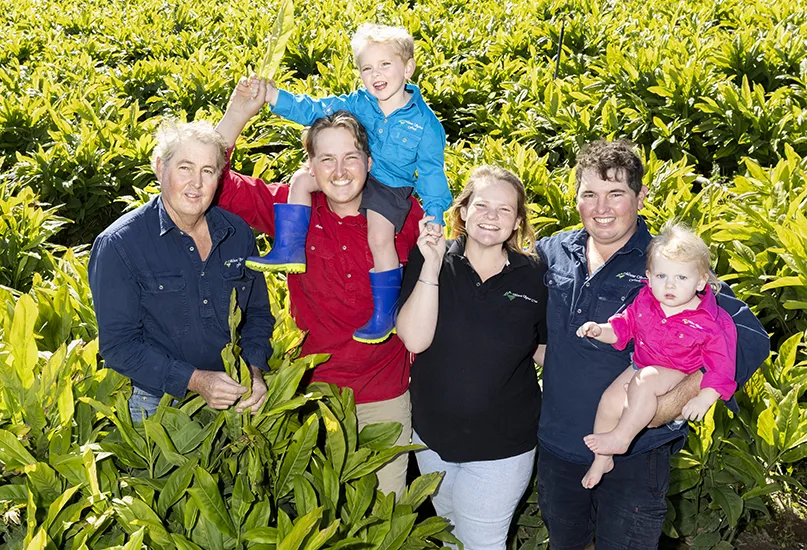
From sweet berries to earthy spices, half a million dollars has been awarded to Mount Sylvia Fresh (Mount Sylvia) – a three-generation family business building an on-farm food manufacturing facility for ginger paste and turmeric powder.
The business has been growing the two aromatic spices since its inception in 1967, and the new facility will help optimise its produce even further.
More specifically, the funding will be allocated to helping reduce farm waste and creating new value from crops that aren’t ordinarily sold as fresh produce.
Currently, only around half of Mount Sylvia’s turmeric crop and three quarters of its ginger can be sold as fresh produce. Therefore, the facility creates the optimum environment to turn imperfect and excess produce into something customers can use every day. This will also help reduce food waste and improve water and energy usage for growing crops.
Mount Sylvia is a case study for the ways in which the Coles Nurture Fund gives farmers the confidence and capital to bring big ideas to life whilst creating convenient Australian-grown products.
DRIVING FARMING TECHNOLOGY FORWARDS
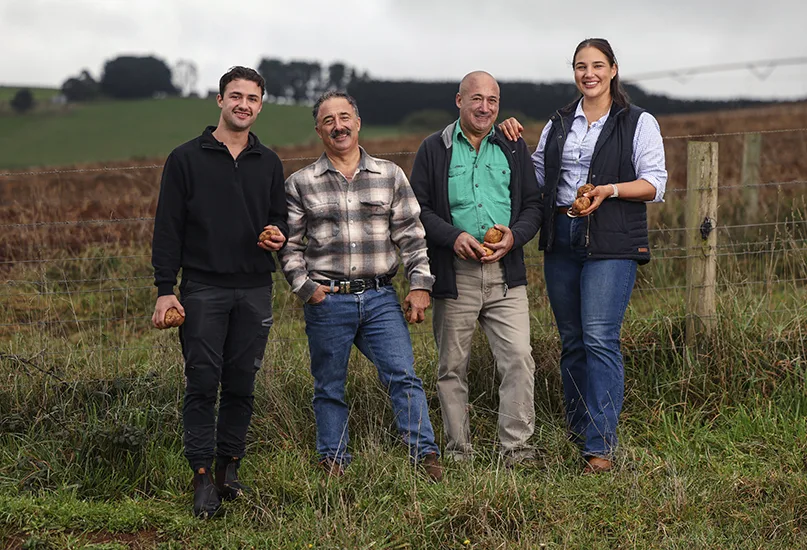
Cummaudo Farms, a VIC-based potato and onion producer, has received AUD$500,000 to support the development of next-generation driverless tractor technology on its farm in Mirboo North.
Run by three generations of potato farmers, the family business has been a core pillar of the Gippsland farming community for over half a century, having evolved from growing potatoes to onions.
The driverless tractor technology will transport the farm into a new era, highlighting how automation can support local growers by alleviating some of the farm’s most repetitive and time-consuming tasks.
The equipment is ultimately increasing efficiency as it controls itself using GPS and pre-programmed computer systems.
As a result, the autonomous tractor can work consistently and accurately on long, repetitive tasks, which will help reduce fatigue, limit human error, and make better use of the team’s time.
Without the Coles Nurture Fund, investments such as these are difficult to pursue, proving how it can help producers explore practical innovations that improve farm efficiency, support growers well beyond their own business, and ultimately transform farming in Australia.
This article was produced by the editorial team at APAC Outlook and published as part of the Outlook Publishing global network of B2B industry magazines.
Outlook Publishing delivers industry insights, company stories, and sector coverage across manufacturing, mining, construction, healthcare, supply chains, food production, and sustainability.
APAC Outlook provides ongoing coverage of organisations and developments shaping industries across the Asia-Pacific region.