




Thermo Fisher Scientific’s progress over the last two years has reinforced its position as a trusted biologics manufacturing partner by expanding its sovereign capability, strengthening ecosystem partnerships, and supporting the delivery of advanced medicines from Australia to the world. We catch up with Kym Baker, General Manager, Brisbane Biologics.
BIOLOGICS MANUFACTURING OF TOMORROW
Since we last spoke with Thermo Fisher Scientific (Thermo Fisher) in 2024, its evolution continues to be defined by disciplined growth and technical excellence at its site in Brisbane, Queensland (QLD), underpinned by a very clear purpose – to help its customers bring important biologic medicines to their patients.
The site specialises in clinical and commercial manufacturing and single-use biologics technology and sits within Thermo Fisher’s global biologics manufacturing network alongside other major sites in the US and Europe.
“My role is to ensure we keep delivering for our customers whilst also building the capability, culture, and resilience of the site for the long-term,” introduces Kym Baker, General Manager, Brisbane Biologics.
For Baker, this means balancing day-to-day operational performance with strategic priorities such as workforce development, quality, maturity, digital enablement, safety, customer engagement, and continued future growth.
“Over the past two years, our focus here in Brisbane has been on strengthening the site’s role as a trusted advanced manufacturing partner,” she insights.
As such, the company’s activities in the QLD capital have continued to support Thermo Fisher’s wider scale-up and the organic growth of its advanced manufacturing services for recombinant proteins and monoclonal antibodies.
The site also reinforces the systems, talent, and cross-functional collaboration required to operate in a highly regulated biologics environment, alongside seeking multiple regulatory approvals to support its commercial programmes.
With Brisbane located in a highly collaborative biomedical ecosystem, it benefits from its proximity to research institutes, hospitals, universities, and translational partners.
These local institutions give Thermo Fisher a real opportunity to contribute not only as a manufacturer, but as a partner in Australia’s broader life sciences and sovereign capability agenda.
“A major part of our work has been building stronger ecosystem connections,” Baker confirms.
HEALTHIER, CLEANER, SAFER
On a mission to enable its customers to make the world healthier, cleaner, and safer, Thermo Fisher continues to provide scientific technologies across the life sciences, healthcare, applied sciences, diagnostics, environmental, industrial, and research markets in Australia.
Through the Patheon™ pharma services brand, the company offers contract development and manufacturing services across the drug development journey.
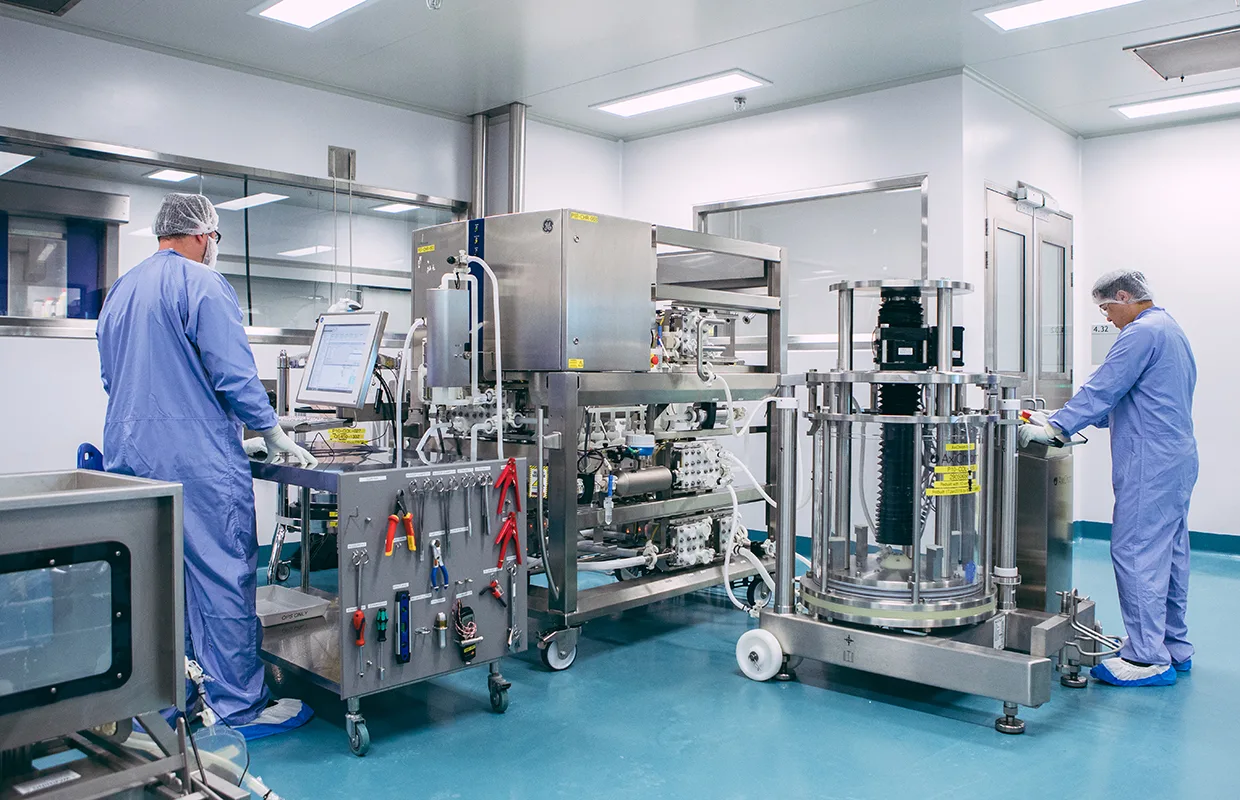
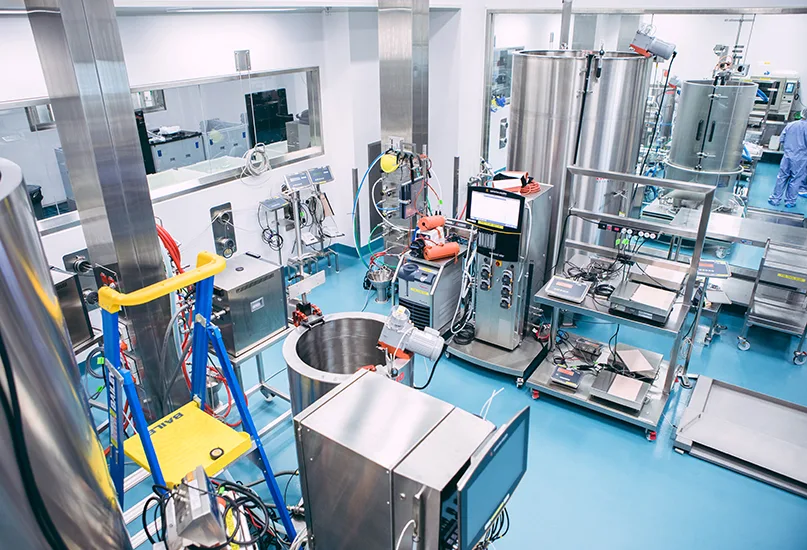
Indeed, the Brisbane site is specifically focused on biologics manufacturing, including clinical and commercial manufacturing, single-use technologies, and scale-up services for recombinant proteins and monoclonal antibodies.
“Our client base includes pharmaceutical and biotechnology (biotech) companies, emerging biotech innovators, research organisations, universities, government agencies, and customers working across research and applied science, clinical development, and commercial manufacturing,” Baker specifies.
More than 50 percent of Thermo Fisher’s Brisbane client base is Asia Pacific (APAC)-focused, though global clients are increasingly choosing Australia to leverage the R&D tax incentives and Clinical Trial Notification scheme, alongside Thermo Fisher’s PPD™ clinical research business, which supports trials across the entire development lifecycle.
“Together, these incentives can offer substantial savings for companies looking to take their products into the clinic at cost-competitive rates within Australia, with the added security of a strong regulatory framework,” she emphasises.
The Brisbane biologics site, therefore, forms part of a wider global network, allowing customers to access both Australian expertise and Thermo Fisher’s international scale.
“Our focus is to remain close to customers, understand their programmes deeply, and partner with them to provide solutions that support both immediate milestones and long-term product strategies”
Kym Baker, General Manager, Brisbane Biologics, Thermo Fisher Scientific
GROWING DEMAND
Having continued to evolve rapidly over the past few years, Australia’s healthcare and life sciences industry has witnessed a growing demand for advanced therapies, biologics, personalised precision medicines, diagnostics, digital health, and more resilient supply chains post the COVID-19 pandemic.
At the same time, the healthcare system faces ongoing challenges when it comes to workforce shortages, rising demand, cost pressures, digital disruption, and the need to modernise infrastructure and care models.
From a biopharmaceutical manufacturing perspective, the opportunity is clear – Australia has world-class research, strong clinical capability supporting 10 percent of global Phase 1 clinical trials, a trusted regulatory environment, and a growing appetite to translate discovery into commercial and clinical outcomes.
“The challenge now is ensuring that promising scientific discoveries do not stall because of gaps in scale-ups, manufacturing capabilities, capital, or workforce capacity,” Baker urges.
Australia’s sovereign capability has also become more prominent in recent years, with ongoing global disruptions reinforcing the importance of being able to manufacture critical medicines, vaccines, diagnostics, and other health technologies closer to home.
Indeed, the National Reconstruction Fund Corporation has highlighted how sovereign control over vaccine platforms, diagnostic reagents, and medical device manufacturing helps Australia be better prepared for health crises and less dependent on fragile global supply chains.
“For QLD specifically, the opportunity is significant,” she reflects.
Equipped with a highly integrated biomedical sector, the state brings together clinical care, research, manufacturing, and global industry partners with health precincts, connecting hospitals, universities, research institutes, and industry.
“That is exactly the kind of environment where advanced manufacturing can thrive,” Baker adds.
CULTURE AND COLLABORATION
Guided by Thermo Fisher’s ethos that culture and collaboration can provide the ideal infrastructure for advanced manufacturing success, Baker believes they are the ‘secret sauce’ to how the company has operated and conducted business successfully so far.
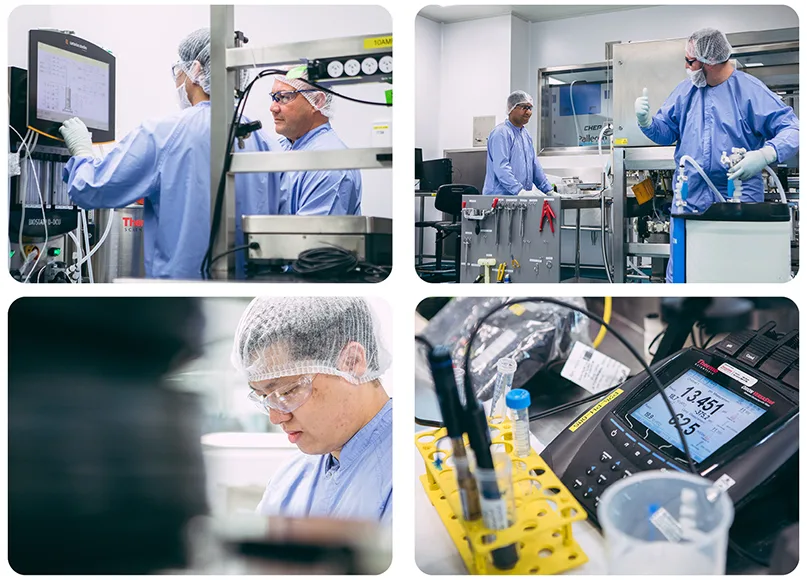
“Advanced manufacturing is often discussed in terms of equipment, facilities, automation, and technology. Whilst these are critical, they are not enough on their own. The real infrastructure is culture – how people communicate, solve problems, make decisions, escalate risks, learn from mistakes, and work across functions,” she highlights.
Being situated on a hospital campus only adds to this culture, with the company’s staff reminded every day of why they come to work – to make a difference and manufacture lifesaving medicines for its clients’ patients.
“In biologics manufacturing, success depends on quality, consistency, discipline, and trust. A strong culture ensures that every person understands the importance of the work – from the production floor to quality assurance, engineering, supply chain, technical operations, and customer-facing teams.”
This kind of collaboration also reduces friction, as Baker believes that when they are relationship-driven, teams can move faster without compromising on quality.
“They can identify risks earlier, respond to customer needs more effectively, and maintain the level of transparency required in a highly regulated environment,” she points out.
At Thermo Fisher’s Brisbane site, culture is not separate from performance, but the enabler of it – helping the company operate safely, meet customer expectations, support compliance, and continue improving.
CONNECTED TO THE CAUSE
With a leadership structure built around cross-functional accountability, at Thermo Fisher’s biologics manufacturing site, no single function can succeed in isolation.
“Manufacturing, quality, engineering, supply chain, technical operations, environment, health, and safety (EHS), finance, human resources (HR), and customer-facing and commercial teams all need to be aligned,” Baker details.
As General Manager, her role is to create clarity around priorities, remove barriers, and ensure teams are connected to both the site strategy and Thermo Fisher’s broader mission.
“We rely on leaders who are technically strong, commercially aware, client and quality-focused, and people-centred,” she states.
A relationship-driven culture has been essential to the company’s lasting success because it encourages open communication and trust, and has been critical in helping Thermo Fisher to develop future leaders.
“In a complex manufacturing environment, issues need to be raised early and solved collaboratively. That requires psychological safety, mutual respect, and a shared commitment to doing the right thing for both our customers and patients.
“When people feel connected to the purpose of the work and supported by their teams, they are more willing to learn, contribute ideas, and step into greater responsibility,” Baker continues.
She goes on to highlight Thermo Fisher’s ongoing efforts in workforce development, STEM engagement, internships, work-integrated learning, and university collaborations.
“These initiatives are critical to building the skills Australia needs for advanced manufacturing and biopharmaceutical innovation,” Baker prides.
“When people feel connected to the purpose of the work and supported by their teams, they are more willing to learn, contribute ideas, and step into greater responsibility”
Kym Baker, General Manager, Brisbane Biologics, Thermo Fisher Scientific
STRONG REPUTATION
Historically, Thermo Fisher’s Brisbane site has made a continuous and widely acknowledged contribution to biologics manufacturing in Australia.
“The site has a strong reputation, including its recognition as the International Society for Pharmaceutical Engineering’s 2014 Facility of the Year award for Process Innovation early in its lifecycle,” she smiles.
More recent accolades include the facility being awarded Best Biologics contract manufacturing organisations (CMO) in Australasia by IMAPAC in 2023 during the Asia Pacific Biologics CMO Excellence Awards.
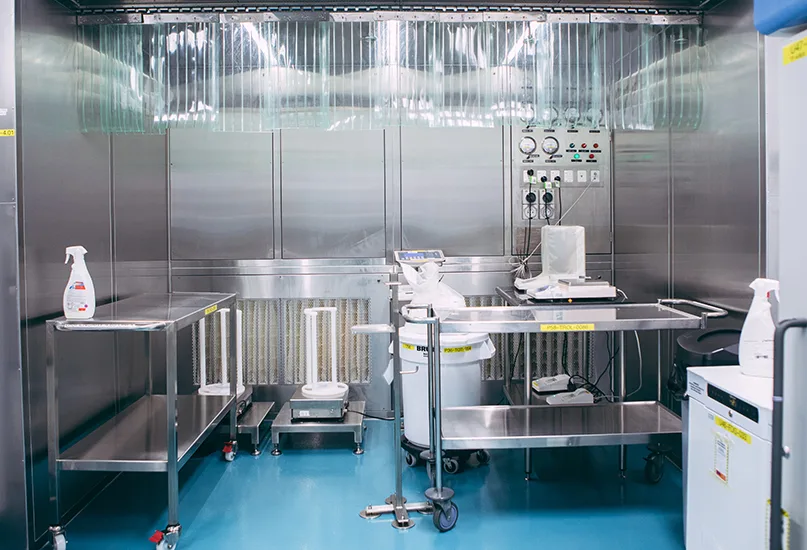
In this way, the company remains focused on clinical and commercial biologics manufacturing using single-use technology.
Another important theme to highlight, Thermo Fisher’s location alongside the Translational Research Institute (TRI) on the campus of the Princess Alexandra Hospital – QLD’s second-largest hospital – places the company within one of Australia’s leading health and medical research environments.
Funded by the QLD government and TRI, the adjacent ENTRI facility adds flexible current good manufacturing practice (cGMP) capability and will further strengthen the ecosystem’s translational manufacturing output, helping to accelerate the translation of new therapies into clinical trials.
“That proximity reflects the strength of the local biomedical precinct and the importance of connecting research, clinical translation, and manufacturing from research through to translation and commercial manufacturing,” Baker emphasises.
The APAC region continues to be strategically important to Thermo Fisher’s overall scientific growth trajectory due to its scientific growth, expanding healthcare needs, strong clinical research activity, and increasing demand for high-quality biopharmaceutical development and manufacturing services.
“For customers, the priorities are consistent – quality, reliability, speed, regulatory confidence, technical expertise, supply chain resilience, and transparent communication,” she distinguishes.
Indeed, emerging biotechs need partners who can help them scale, whilst larger pharmaceutical companies require dependable networks that can support complex global programmes and research organisations that need access to technologies and services that help move science forwards.
FUTURE PRIORITIES
Due to its combination of local capability and global scale, Thermo Fisher possesses a distinct advantage.
“The Brisbane site provides highly specialised biologics manufacturing capability in Australia, whilst our broader network gives customers access to international expertise, technologies, and pathways across development, manufacturing, clinical research, and commercialisation,” Baker insights.
Having grown significantly over the last two years, the company has increased capacity supply by 40 percent to meet continued client demand ahead.
“Our focus is to remain close to customers, understand their programmes deeply, and partner with them to provide solutions that support both immediate milestones and long-term product strategies,” she confirms.
Looking ahead, Thermo Fisher’s future priorities are centred on quality, customer success, operational excellence, talent development, and sustainable organic growth to meet the growing need for sovereign biomanufacturing.
For the Brisbane site, this means continuing to strengthen its position as a trusted biologics manufacturing partner of choice in the APAC region.
“We want to ensure the site remains ready to support complex customer programmes, from clinical development through to commercial manufacturing, whilst maintaining the highest standards of safety, quality, and compliance,” Baker asserts.
Thermo Fisher is also focused on building capability, which includes investing in its people, leadership, technical depth, digital tools, process improvement, and forging stronger connections with the wider Australian biomedical ecosystem.
More broadly, it will continue to support customers across the life sciences and healthcare value chain.
“Our goal is to help customers move faster and more confidently, whether they are conducting research, developing future medicines or diagnostics, running clinical trials, scaling biologics, or bringing medicines to patients,” she passionately concludes.
THERMO FISHER SCIENTIFIC PARTNER

This company profile was produced by the editorial team at APAC Outlook, a publication within the Outlook Publishing global network of B2B industry magazines.
Outlook Publishing showcases organisations and leadership teams shaping sectors including manufacturing, mining, construction, healthcare, supply chains, food production, and sustainability.
APAC Outlook highlights organisations driving innovation, investment, and industry development across the Asia-Pacific region.