




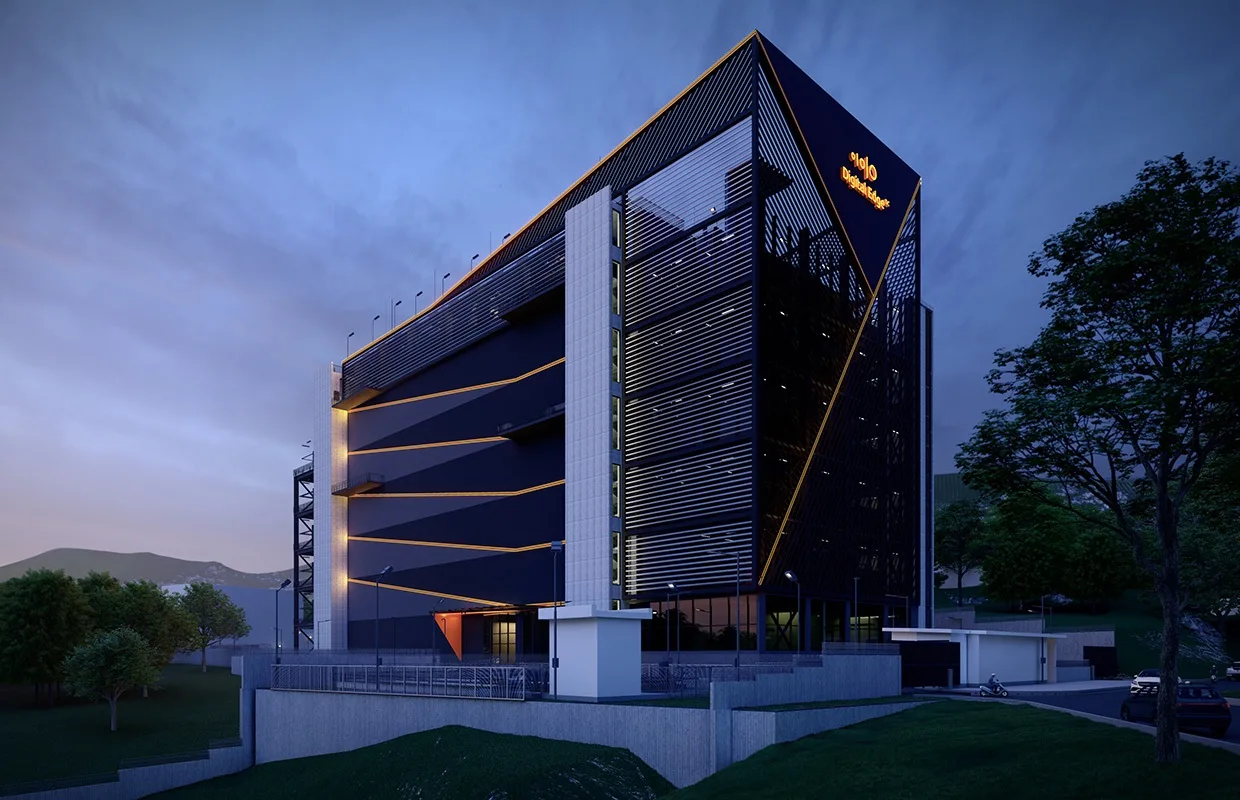
Our latest catch-up with Digital Edge DC and Group CEO, John Freeman, shifts the narrative to reflect on how the platform has evolved.
BUILDING APAC’S AI-READY DIGITAL INFRASTRUCTURE PLATFORM
“We’ve moved decisively from building a portfolio of individual assets to operating as an integrated regional platform capable of delivering AI-ready infrastructure sustainably at speed, at scale, and to consistent global standards.”
The evolution of Digital Edge DC (Digital Edge), who we last spoke to in August 2025, is important because the next generation of digital infrastructure cannot be delivered through isolated projects, according to Group CEO, John Freeman.
Rather, it requires a regional platform with repeatable capabilities across development, design, construction, operations, customer delivery, capital formation, and sustainability, combined with deep local execution in each market.
“We have invested in those capabilities at platform level whilst retaining strong local leadership in each market,” outlines Freeman.
“That allows us to apply common standards and institutional discipline without losing the market knowledge, relationships, and responsiveness required to execute successfully across Asia.”
The Singapore-headquartered digital infrastructure platform, backed by Stonepeak, is on a mission to build the foundation for the world’s digital future.
To fulfil this mission, Digital Edge needs to do more than grow quickly – it needs to create infrastructure that customers, lenders, governments, and communities can rely on for decades.
Sustainability is therefore integral to its licence to grow; the company is targeting 100 percent renewable or carbon-free electricity across its operations by 2030, expanding renewable energy procurement, advancing the use of recycled and reclaimed water, and linking its financing strategy to measurable environmental outcomes.
“Ultimately, platform maturity is demonstrated through consistency: delivering safely, meeting customer commitments, allocating capital responsibly, and creating sustainable value in every market in which we operate. That is the standard against which we measure our progress,” Freeman sets out.
INFRASTRUCTURE REQUIREMENTS
The Asia Pacific (APAC) data centre (DC) market continues to accelerate, but the conversation has moved beyond simply meeting demand for more capacity.
Now, the defining challenge is whether that capacity can be delivered at the scale, density, and speed required by artificial intelligence (AI).
“Cloud adoption remains a significant growth driver, but AI inference and increasingly large-scale AI factory deployments are reshaping infrastructure requirements,” insights Freeman.
“Customers need campuses with secure, scalable power, advanced cooling, resilient connectivity, and a credible path to expansion. Above all, they need certainty that capacity can be delivered when promised and operated reliably over the long term.”
This environment favours platforms with the capital, technical capability, and local market expertise to convert demand into operating infrastructure.
Over the past year, Digital Edge has demonstrated that capability through major customer commitments, the expansion of its campuses in South Korea, India, Thailand, and Indonesia, and more than USD$2 billion of financing raised across the platform.
“It’s a substantial opportunity, but scale without discipline creates risk. Our focus remains on staying ahead of customer needs whilst maintaining capital discipline, operational resilience, and responsible environmental stewardship,” Freeman assures.
“The companies that lead this next phase will not necessarily be those that announce the most capacity, but those that consistently deliver it.”

“We’ve moved decisively from building a portfolio of individual assets to operating as an integrated regional platform capable of delivering AI-ready infrastructure sustainably at speed, at scale, and to consistent global standards”
John Freeman, Group CEO, Digital Edge DC
ROUTE TO DEPLOYMENT
AI has made digital infrastructure a strategic constraint as well as a strategic enabler.
The availability of suitable land, power, cooling, and connectivity will increasingly influence where AI ecosystems can develop and how quickly countries and companies
can participate in the opportunity.
This is particularly significant in APAC; demand is regional, but infrastructure conditions are highly local.
“Power availability, permitting, land constraints, regulation, and sustainability expectations vary considerably from one market to another. Our role is to navigate that complexity with deep market knowledge, trusted local relationships, and platform-wide expertise, giving customers a scalable, credible route to deployment across APAC,” explains Freeman.
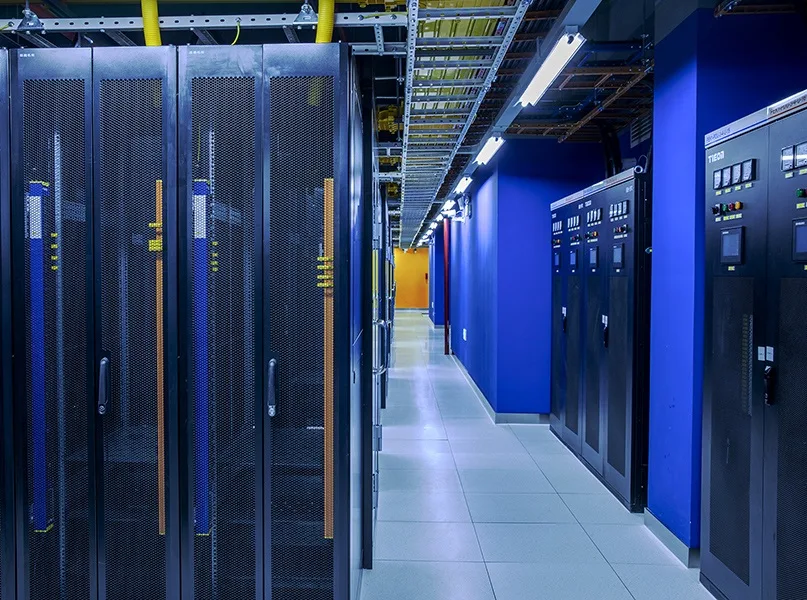
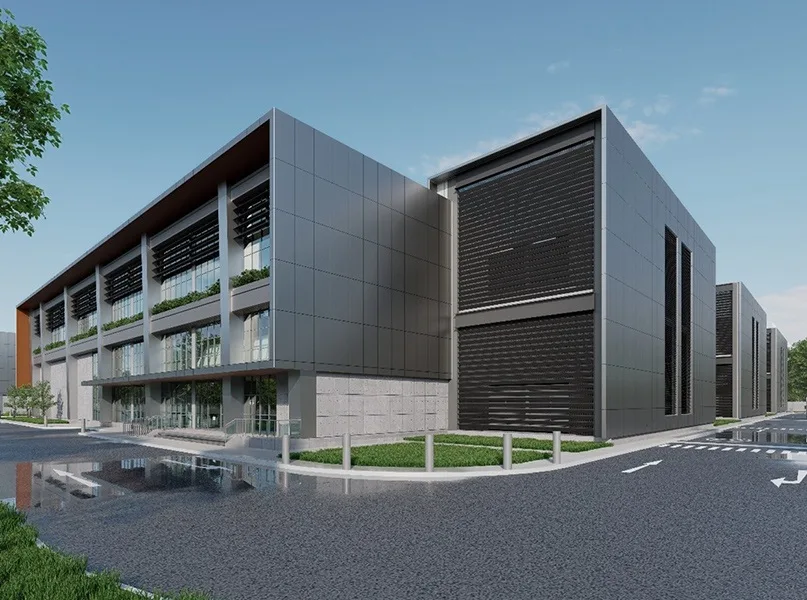
Digital Edge’s campuses are being designed for higher-density environments, including liquid cooling applications and next-generation AI workloads, whilst its recognition as an NVIDIA DC partner is also strategically important.
“It connects us more closely with the broader AI ecosystem and strengthens the technical foundation from which we can support customers as their requirements evolve,” he informs.
More widely, AI is only one part of the transformation taking place; DCs support cloud adoption, digital financial services, e-commerce, communications, enterprise modernisation, and public-sector digitisation.
As these services become more central to economic activity, DCs are increasingly being recognised as essential infrastructure.
“Digital Edge’s role is to build that infrastructure responsibly, enabling innovation whilst contributing to the long-term resilience and digital competitiveness of the markets we serve,” Freeman tells us.
DIFFERERENT DIMENSIONS OF GROWTH
India is one of APAC’s most strategically important DC markets, combining strong domestic digital growth, increasing international hyperscale demand, and access to a sophisticated renewable energy ecosystem.
The company’s existing BOM campus in Navi Mumbai has multiple buildings under construction and significant customer commitments already secured.
India, along with Thailand and Indonesia, each represent a different dimension to the company’s regional strategy.
However, all three demonstrate Digital Edge’s ability to identify long-term demand, secure the necessary infrastructure, and build platforms capable of scaling with customers.
In Thailand, the company’s BKK campus in Chonburi is being developed within the Eastern Economic Corridor as a major hyperscale and AI-ready destination.
The first two buildings represent 100 MW of committed capacity, with BKK1 scheduled to be ready for service in Q4 2026 and BKK2 to follow.
“Our partnership with B.Grimm Power combines its local energy expertise and institutional relationships with our regional DC capabilities,” Freeman notes.
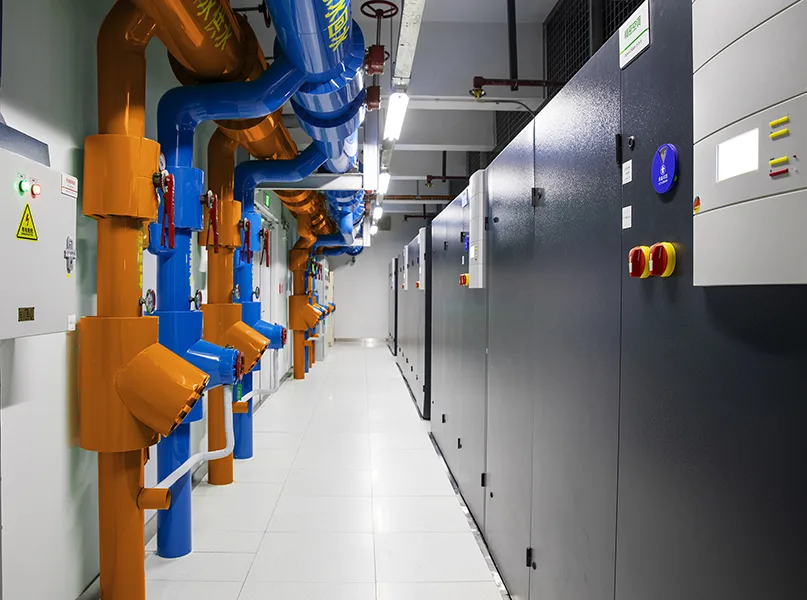
“The result is a campus designed for scale, resilience, and efficiency, including an annualised power usage effectiveness (PUE) target of 1.25, hybrid closed-loop cooling that helps minimise water consumption whilst maintaining operational efficiency, and infrastructure that supports long-term sustainability and increased renewable energy utilisation.”
Indonesia, meanwhile, illustrates the breadth of the company’s evolution particularly well. It began by establishing EDGE1 and EDGE2 in Central Jakarta, supported by Indonet’s fibre and connectivity network.
Indonet remains a significant differentiator; its network of more than 500 kilometres of fibre connects Jakarta’s principal DC hubs and allows Digital Edge to combine carrier-neutral colocation with highly reliable connectivity.
“As customers increasingly seek integrated infrastructure solutions, that combination strengthens our customer proposition and positions us to play a broader role in Indonesia’s digital development,” highlights Freeman.
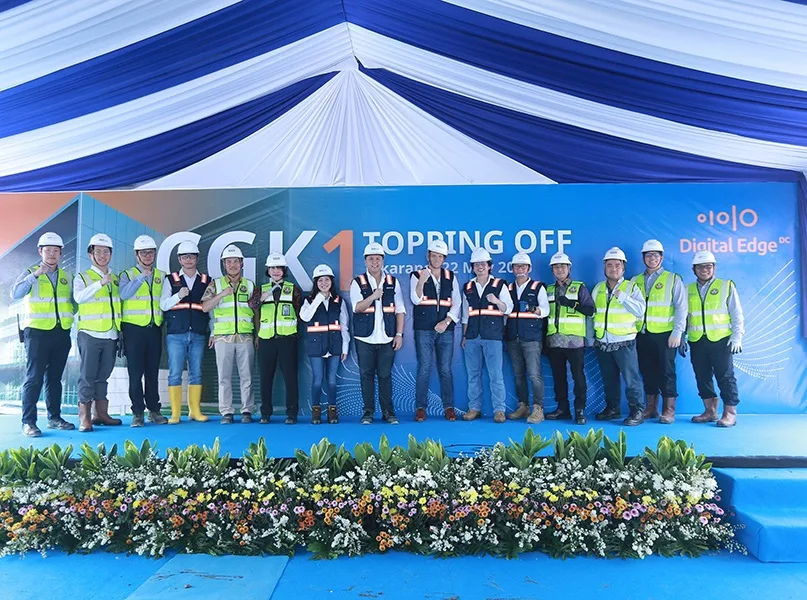
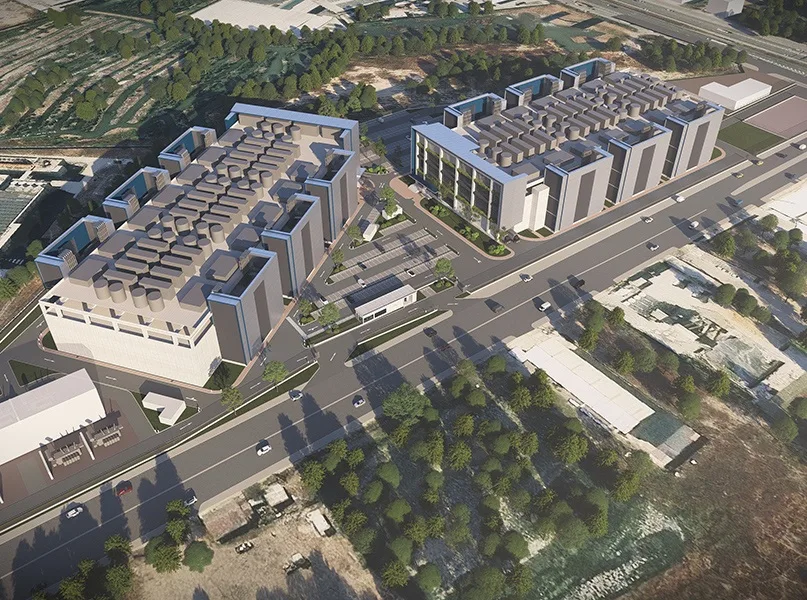
Digital Edge is now developing its CGK campus – a USD$4.5 billion, 500-MW, AI-ready hyperscale campus with the potential to scale to one gigawatt (GW) – located in the Greenland International Industrial Centre (GIIC) in the Bekasi Regency.
“The first building is targeted to be ready for service in Q4 2026. We have also entered into Indonesia’s largest single-campus power agreement with PLN, securing 1.45 GW of long-term power capacity,” he shares.
DISCIPLINED REGIONAL EXPANSION
Beyond India, Thailand, and Indonesia, Digital Edge continues to deepen its presence in APAC’s leading digital markets, including Japan, South Korea, and the Philippines.
These markets give it a balanced regional portfolio across established digital hubs and high-growth metro-adjacent locations.
“Our strategy is not to be everywhere – it is to build meaningful positions in markets where we can secure the right combination of customers, power, land, connectivity, and long-term scalability,” Freeman elaborates.
“That discipline allows us to offer customers a multi-market platform without compromising the quality or economics of individual projects.”
The company also continues to invest in the capabilities behind the physical infrastructure. As technology and customer requirements evolve, the ability to attract, develop, and retain exceptional people will be just as important as its access to land and power.
Digital Edge is therefore strengthening its leadership, technical expertise, operating systems, and organisational capacity across the platform.
The appointment of Andy Rigoli – who we previously interviewed a year ago – as Chief Sustainability Officer is part of that evolution.
Rigoli previously led Indonet and now has executive responsibility for the company’s platform-wide environmental, social, and governance (ESG) and corporate social responsibility (CSR) agenda.
“The creation of this role reflects our belief that responsible growth requires dedicated leadership, measurable objectives, and clear accountability,” affirms Freeman.
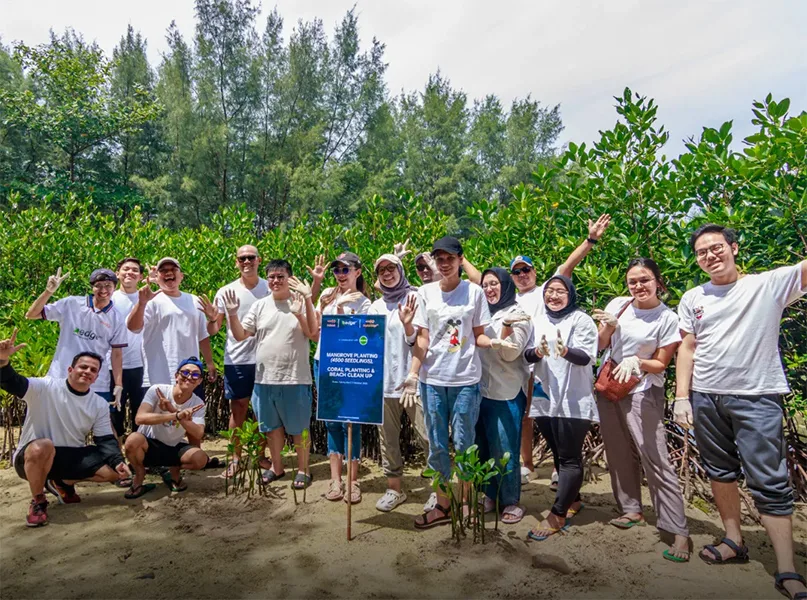
Under Rigoli’s leadership, Digital Edge is formalising its CSR programme around three principal areas: education; women in technology; and health, environment, and communities.
The objective is to move beyond individual initiatives and create programmes capable of delivering sustained, measurable impact across the communities in which the company operates.
“Our success should be judged by not only the capacity we develop, but also whether we help expand digital opportunity, develop future talent, and leave a positive, lasting contribution in our markets,” Freeman acknowledges.
“Our objective is not only to grow Digital Edge, but also demonstrate what responsible, institutionally managed digital infrastructure growth should look like in APAC”
John Freeman, Group CEO, Digital Edge DC
STRATEGIC ENABLER
Access to capital is essential in the DC industry, but the real competitive advantage is the ability to deploy it with discipline against secured demand, power, and executable projects.
In the first half of 2026, Digital Edge raised more than USD$2 billion across the platform through green financings and its inaugural HoldCo facility.
This provides the company with both the capacity and flexibility to fund its growth pipeline whilst maintaining a prudent and diversified capital structure.
Several of these transactions established new market benchmarks. For example, it secured a USD$665 million green loan for the first phase of the CGK campus, the largest green loan for a DC project in Indonesia.
Digital Edge and B.Grimm Power also completed a USD$880 million green loan for the BKK campus, the largest DC financing in Thailand and its greatest green loan to date.
In addition, its USD$575 million inaugural HoldCo facility provides greater flexibility to allocate capital efficiently across the platform.
“These financings are important not only because of their size. The support of leading international and domestic lenders demonstrates confidence in our strategy, governance, execution capability, and long-term customer proposition,” Freeman emphasises.
“We view capital as an enabler of our strategy rather than the strategy itself. Our objective is to match long-duration capital with high-quality, customer-led infrastructure opportunities and generate sustainable value by delivering those projects well.”
CAPTURING THE OPPORTUNITY
Ultimately, since our previous conversation with Digital Edge, the company’s ambition has not changed – it remains intent on being the leading provider of next-generation, AI-ready digital infrastructure across APAC.
What has changed, however, is the scale of the opportunity and level of execution now required to capture it.
“We have assembled a substantial development pipeline across our core markets, supported by secured land, power, and customer demand. The priority is now to convert that pipeline into operating capacity safely, sustainably, predictably, and efficiently,” asserts Freeman.
“That means delivering our committed projects on time and on budget, maintaining world-class operational performance, and continuing to secure the next generation of strategic sites and power positions.
“It also means standardising designs and processes where doing so improves safety, speed, and reliability, whilst retaining sufficient flexibility to meet different customer and market requirements,” he adds.
Digital Edge will continue investing in its people, technology, operating systems, and platform capabilities so the organisation scales with the same discipline as its physical portfolio – delivering consistent performance for customers whilst advancing sustainable growth across APAC.
It will also maintain capital discipline, because long-term leadership in this sector will be determined by the quality and returns of the infrastructure delivered, not simply the size of the development pipeline announced.
Sustainability will remain central to every aspect of that agenda, from renewable energy and water stewardship to green finance, community engagement, and governance.
“Our objective is not only to grow Digital Edge, but also demonstrate what responsible, institutionally managed digital infrastructure growth should look like in APAC,” Freeman closes.
DIGITAL EDGE DC PARTNERS

This company profile was produced by the editorial team at APAC Outlook, a publication within the Outlook Publishing global network of B2B industry magazines.
Outlook Publishing showcases organisations and leadership teams shaping sectors including manufacturing, mining, construction, healthcare, supply chains, food production, and sustainability.
APAC Outlook highlights organisations driving innovation, investment, and industry development across the Asia-Pacific region.