



ENACTING A STRATEGIC ENERGY LANDSCAPE
As industrial and commercial energy demands surge, businesses are increasingly recognising how electricity is no longer just a utility but a strategic lever.
Across the Asia Pacific (APAC) region, rising consumption, ageing electrical infrastructure, and the rapid expansion of power-intensive operations such as data centres are challenging traditional approaches to energy management.
ABB is at the forefront of helping organisations modernise and optimise their electrical systems whilst supporting sustainability, resilience, and operational efficiency.
Instrumental to these efforts is Stuart Thompson, President of ABB’s Electrification Service Division, who works closely with the division’s industrial and commercial operators to balance performance, cost, and decarbonisation efforts.
Today, the division is delivering targeted modernisation programmes, predictive asset management, and innovative service-based solutions, including digital monitoring, remote support, and battery energy storage systems (BESS)-as-a-service models.
These solutions empower organisations to move beyond reactive energy management and fully leverage electricity as a controllable, measurable, and optimisable resource.
We sit down with Thompson to discuss how industrial leaders are adapting to a new energy reality, the practical steps they are taking to strengthen resilience, and the future trajectory of ABB’s energy solutions.
Q&A WITH STUART THOMPSON, PRESIDENT – ELECTRIFICATION SERVICE DIVISION, ABB
Firstly, why do you think energy has moved from being a background utility to becoming one of the most important strategic levers companies have?
Stuart Thompson, President – Electrification Service Division (ST): For a long time, energy was treated as a ‘set-and-forget’ – reliable and predictable enough that you didn’t have to think about it.
That world is gone. Today, electricity is simultaneously a cost line, continuity risk, and decarbonisation constraint. And in many sectors, it has become the limiting factor to growth.
What we’re seeing now is demand rising structurally, driven by electrification and new, rapidly expanding high-load industries, such as data centres, in line with International Energy Agency (IEA) predictions for 2026.
At the same time, grids are increasingly under stress – extreme weather, congestion, and connection bottlenecks mean reliability is no longer guaranteed.
Additionally, boards are realising that carbon and cost must now come hand-in-hand – the cheapest kilowatt-hour is often the one you don’t consume, and the most expensive megawatt (MW) is the one you can reliably access when the market is tight.
This is why leaders are now being forced to treat energy like any other strategic asset that needs to be measured, optimised, but most of all, modernised.
What would you say 2026 demands from industrial leaders facing ageing electrical systems, a shrinking talent pool, and artificial intelligence (AI)-driven demand?
ST: Ultimately, 2026 demands realism from industrial leaders. For one, you can’t ‘transform’ what you can no longer keep running.
Across many advanced economies, a significant share of grid and industrial electrical assets are now operating beyond their original design life.
The IEA has highlighted that much of today’s grid infrastructure was built decades ago and requires urgent modernisation to handle electrification and digital load growth.
For industrial operators, that combination exposes a clear risk: assets that were designed for predictable, linear loads are now expected to handle volatile, high-density demand and often without a full modernisation strategy in place.
In 2026, moving beyond a ‘replace when it fails’ model to risk-based asset management is more crucial than ever, identifying where failure would cause the greatest operational or safety impact and prioritising those upgrades first.
At the same time, the talent equation is tightening. The World Economic Forum has emphasised that skills gaps remain amongst the most significant barriers to transformation, particularly in engineering and digital domains.
In electrification, this gap is especially acute – many experienced engineers are retiring, whilst fewer younger professionals are entering power systems roles.
This means leaders cannot rely solely on expanding headcount, they must embed digital diagnostics, remote monitoring, and standardised processes that scale expertise – reducing dependence on reactive, site-specific knowledge.
Moreover, AI-driven demand fundamentally changes the resilience equation. Data centre electricity consumption alone is expected to continue rising sharply through 2026 as AI workloads expand, and we’re seeing this take place across the globe as data centre investments and expansion accelerate both across developed and developing markets.
This doesn’t only strain national grids, but also creates competing priorities around energy accessibility, raising expectations across entire industrial ecosystems.
As such, power quality, uptime, and redundancy are becoming non-negotiable.
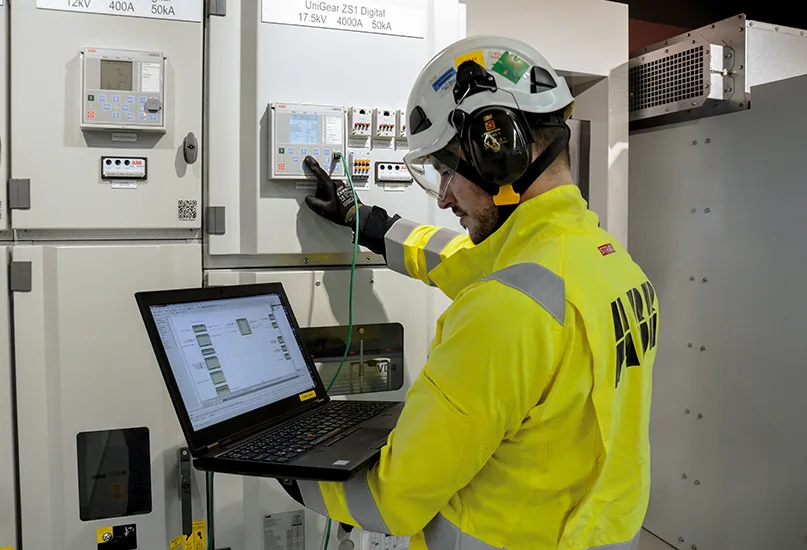
How are business leaders staying ahead of the curve, and what examples of smarter asset management, preventive maintenance, and service-based models have you seen them using to take control of their energy resilience?
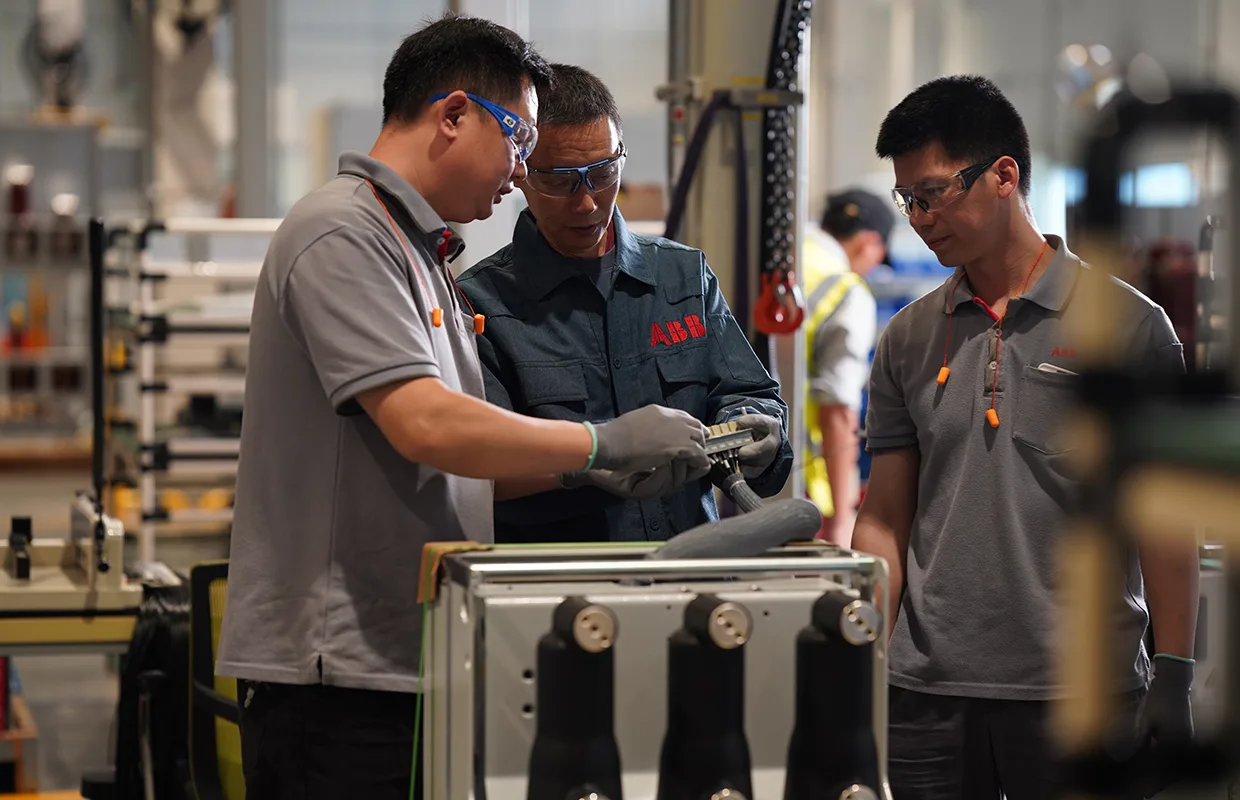
ST: One of the biggest shifts we’re seeing is the move from time-based maintenance to predictive, condition-based asset management.
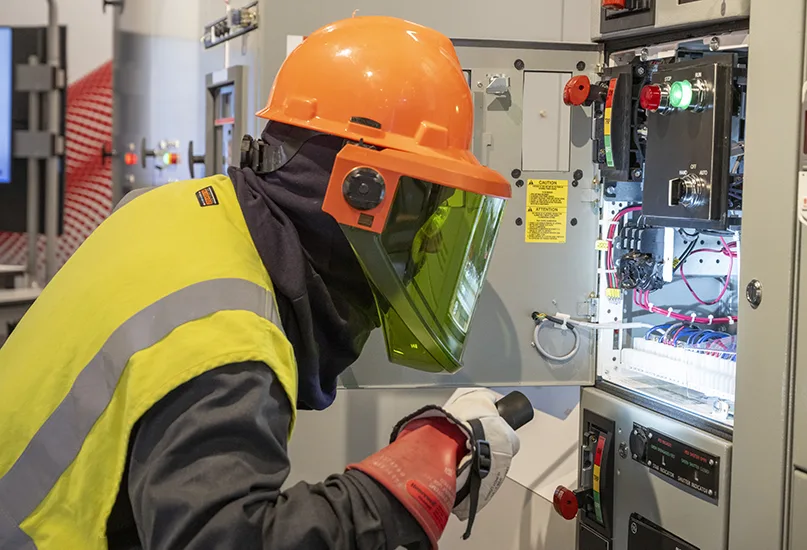
Rather than servicing equipment on fixed schedules or waiting for failure, operators are embedding smart sensors and digital monitoring platforms that provide real-time visibility of asset health.
A predictive asset management strategy can reduce maintenance frequency by around 30 percent and lower operational expenditure by up to 40 percent compared to traditional approaches. More importantly, this allows maintenance to be planned, avoiding the exponential cost and operational disruption of emergency failure.
When we speak to customers, we’re also seeing an increased emphasis on staged modernisation initiatives rather than wholesale replacement.
Many facilities simply can’t justify tearing out decades of installed infrastructure. Instead, they’re upgrading critical components such as switchgears and circuit breakers to digitally enable solutions that extend asset life by 20 to 30 years, improve energy capacity, and reduce total cost of ownership.
This approach supports circularity by preserving the value embedded in existing systems whilst introducing next-generation intelligence.
Finally, service-based operating models are becoming central to resilience strategies. With global STEM talent shortages and growing system complexity, industrial operators are scaling expertise through long-term service agreements and remote support models.
At ABB Electrification Service, our advanced augmented reality solutions such as Collaborative Operations for electrical systems (CLOSER) and Remote Assistance for electrical systems (RAISE) allow expert guidance to be delivered directly into the hands of field teams, cutting site visit times significantly and reducing associated carbon emissions.
All in all, the common thread across this is predictability. Leaders are building resilience through continuous visibility and lifecycle optimisation on the foundations of trusted performance partnerships.
Why is full grid dependency no longer a viable option for companies looking to remain cost-competitive whilst reducing their emissions?
ST: Full grid dependency assumes that energy will always be accessible and aligned with decarbonisation goals. Today, that assumption no longer holds.
The energy landscape is under sustained pressure from rising demand and ageing infrastructure, and because of this, grids must balance stability, flexibility, and adequacy in increasingly complex operating conditions.
At the same time, industries face volatile energy pricing and heightened scrutiny around carbon intensity. For companies that rely entirely on external supply, this creates exposure to outages, price spikes, and regulatory shifts.
Energy is no longer simply a utility cost; it’s a strategic variable that influences competitiveness and sustainability performance.
The response we are seeing is not disconnection from the grid, but smarter integration which involves investments in digital energy management, efficiency upgrades, targeted retrofits, and hybrid strategies that give operators greater control over how power is consumed and optimised.
In other words, resilience now requires active management. The companies that remain cost-competitive and credible on emissions reductions are those that optimise and modernise their infrastructure rather than passively relying on grid supply alone.

“Energy is no longer simply a utility cost; it’s a strategic variable that influences competitiveness and sustainability performance”
Stuart Thompson, President – Electrification Service Division, ABB
How are ABB Electrification Service’s cutting-edge electrification and digital solutions supporting companies across the APAC region who are navigating a new energy future?
ST: Across the region, navigating a new energy future means balancing three pressures at once: electrifying operations, decarbonising infrastructure, and strengthening resilience against climate volatility.
Our focus is helping customers modernise and optimise their existing electrical systems in ways that reduce emissions whilst improving performance.
One example that comes to mind is our work with InfraBuild, Australia’s largest integrated manufacturer and supplier of steel long products.
As steelmakers transition towards more electric-intensive production, electrical systems must handle higher loads whilst supporting sustainability targets.
By upgrading to our VD4-AF vacuum circuit breakers, InfraBuild eliminated sulphur hexafluoride (SF6) gas from the upgraded components, reduced maintenance intensity, and extended the life of critical infrastructure.
Rather than replacing entire systems, targeted modernisation preserved embedded materials and reduced lifecycle emissions, which demonstrates how decarbonisation and operational performance can move together.
Similarly, we embarked on a modernisation programme with Singapore’s KK Women’s and Children’s Hospital through cradle-in-cradle retrofits for its ageing switching technology.
This approach avoided the carbon and material footprint of a full replacement whilst introducing digitally enabled breakers connected to ABB Ability™ platforms.
The result was improved energy monitoring, predictive maintenance capability, and greater long-term efficiency – essential for mission-critical facilities seeking both reliability and sustainability gains.
Lastly, in the Philippines, when a severe tropical storm shut down Energy Development Corporation’s 110 MW Nasulo geothermal facility, our local engineering teams restored renewable generation within 48 hours.
Beyond operational recovery, this was about safeguarding clean energy supply for the Visayas region. Rapid relay repair ensured geothermal power returned to the grid quickly, reinforcing the resilience of renewable infrastructure in the face of extreme weather.
Across these projects, the common theme is circular electrification: upgrade over wholesale replacement, digital over manual, predictive over reactive.
By extending asset life by decades, reducing maintenance intensity, and eliminating high-impact materials such as SF6, we help customers decarbonise their operations whilst strengthening system reliability.
Navigating the new energy future goes beyond increasing renewable capacity – it also means modernising the infrastructure that supports it.
“Navigating the new energy future goes beyond increasing renewable capacity – it also means modernising the infrastructure that supports it”
Stuart Thompson, President – Electrification Service Division, ABB
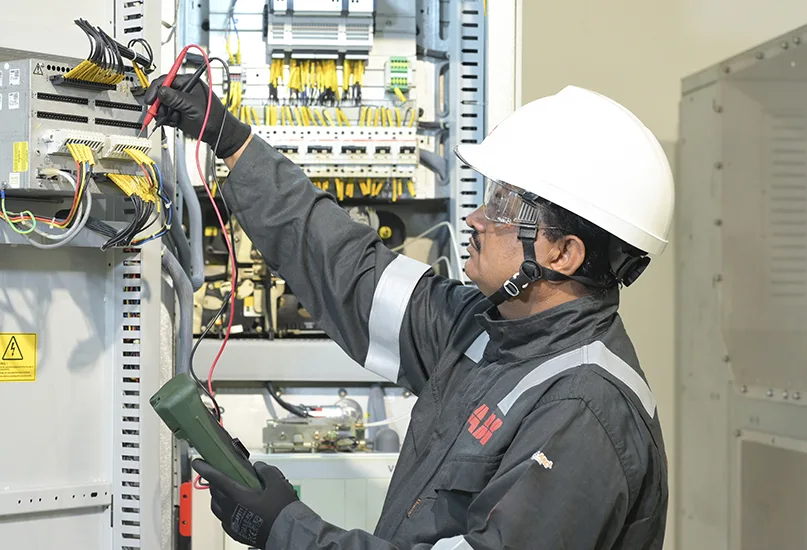
Finally, looking ahead, how does ABB plan to continue enabling a more sustainable and resource-efficient future?
ST: In my view, our future as ABB will depend on the next phase of the energy transition and how well-equipped companies and communities are to adapt to it.
Consider that whilst global electricity demand continues to rise, the IEA estimates that tripling renewable capacity by 2030 will require around 1,500 gigawatts of energy storage, which will largely come from batteries.
At the same time, global BESS demand jumped by over 50 percent in 2025, representing nearly 50 percent in year-on-year growth.
For ABB Electrification Service, this means evolving from servicing infrastructure to enabling performance-based energy ecosystems.
One way we’re doing this is through our BESS-as-a-service offering, which eliminates heavy upfront capital requirements and enables businesses to integrate storage for peak saving, renewable smoothing, and grid participation under predictable service-based agreements.
With AI-powered energy management optimising when to store, discharge, or trade energy, storage becomes both a resilience tool and value generator.
More broadly, we see our future moving towards outcome-based models – energy-as-a-Service, digital asset management, and performance guarantees – where reliability, cost control, and decarbonisation are delivered as measurable results, not just equipment installations.
This will continue to take place against a foundation of circular electrification, ensuring that customers can extend asset life, embed predictive maintenance strategies, and reduce material intensity through modernisation rather than replacement.
The energy system of the future will be increasingly decentralised, data-driven, and storage-enabled.
Our role is to ensure customers are not just connected to that system but engineered to outperform within it – leaner in capital, cleaner in carbon, and stronger in resilience.