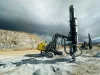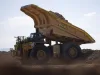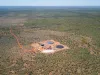





Hunter Valley Operations’ vision embodies economic, environmental, and community commitment as it plays a leading role in the Australian coal mining industry. General Manager, David Foster, explains how the company leverages its rich heritage and strategic joint venture expertise to drive innovation and sustainability.
HUNTING FOR COAL POTENTIAL
Coal is an essential and versatile resource that supports daily lives by providing a vital energy source and serving as a material for steel production, cement manufacturing, and chemical processes.
For instance, both thermal coal, which serves as the backbone of energy generation, providing the fuel for electricity production, and semi-soft metallurgical coal, a fundamental building block for construction and infrastructure development, play integral roles in sustaining modern society.
Moreover, these resources are essential for various industrial processes, further underscoring their importance.
Amongst the world’s premier coal miners is Hunter Valley Operations (HVO), situated in the picturesque Upper Hunter Valley of New South Wales (NSW), Australia.
The region is famous for its abundant geological deposits, and its history, heritage, and suburbs have been closely connected to coal mining for generations.
HVO contributes significantly to Hunter Valley’s energy security and economic stability as a major exporter of high-quality coal, mainly to Asian markets.
Spanning across two vast open-cut coal mines, recognised as one of the largest coal mining operations in NSW, the company’s impressive HVO North and HVO South pits are geographically divided by the meandering course of the Hunter River.
The mines are conveniently located near the historic towns of Singleton and Muswellbrook – lively communities where agriculture and mining drive local employment and leave a positive legacy.
HVO is a joint venture (JV) between two industry giants – Glencore and Yancoal – which acquired the company from Mitsubishi Development and Coal & Allied Industries, a Rio Tinto subsidiary, in 2017.
Glencore is one of the world’s largest natural resource companies, responsibly supplying fundamental commodities. It has operated in Australia for nearly 30 years and is today the country’s largest producer of coal, cobalt, nickel, lead and zinc.
Yancoal, meanwhile, is a specialised coal producer focused on maximising the value of Australian resources with a significant customer presence in the Asia Pacific region.
In this JV, Yancoal holds a majority share of 51 percent, with Glencore holding a 49 percent stake. Together, they harness their strengths to produce top-tier coal that fuels industry in various countries that are important trade partners for Australia.
“It’s an exciting time for HVO at the moment; there’s been a lot of recent developments with the JV. Our mining roots are in the Hunter Valley region, and our story began over 70 years ago, providing us with an extensive history,” opens David Foster, General Manager.
Over the years, HVO has evolved from several smaller, distinct operations that merged over time to form the large open-cut mine we see today.
“The last significant merger occurred around 2000 when three major operations – the Lemington open-cut, both Hunter Valley operations, and the Howick Mine – were combined into what we now refer to as HVO,” continues Foster.
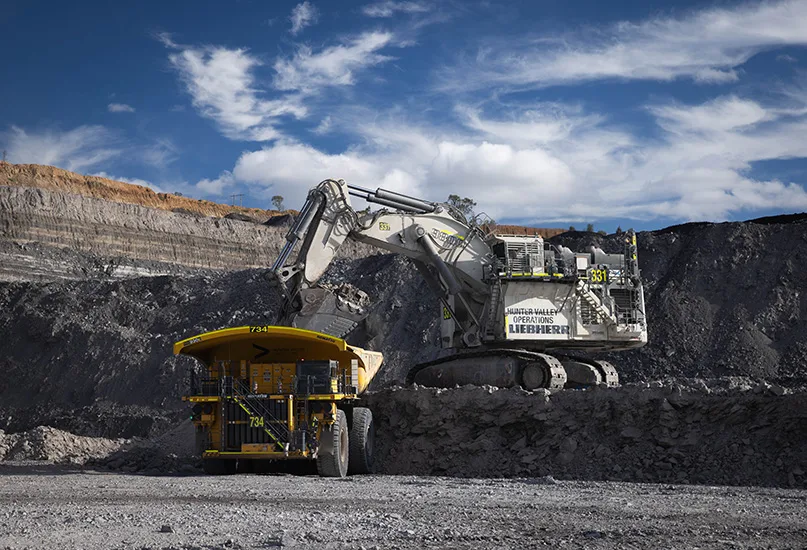
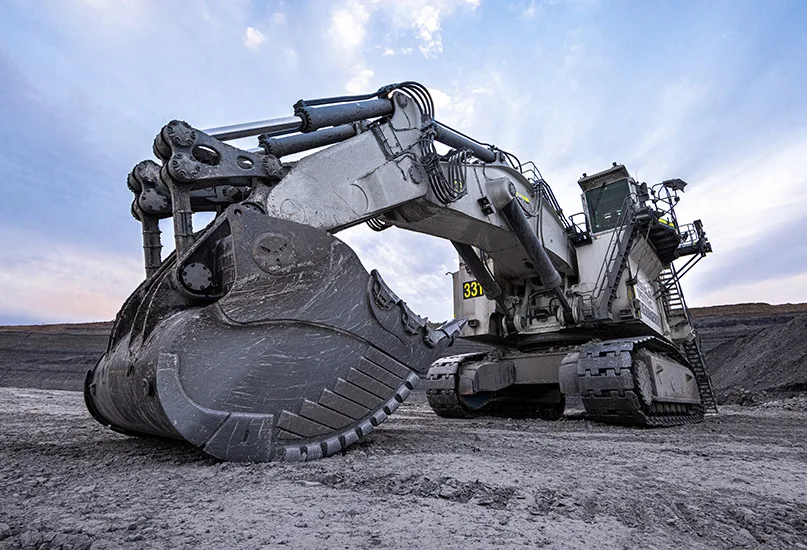
“Since that time, there’s been a significant amount of change to the mine. We’re now purely an excavator/shovel and truck operation. We did have two draglines operating, but the last of those was parked back in 2023, which we are currently dismantling.”
SUCCESSFULLY LEVERAGING EXPERTISE
As an independently operated JV, HVO enjoys several distinct advantages, particularly in terms of governance and operational flexibility.
The site has a dedicated board of directors that oversees it, enabling strategic decisions tailored to the mine’s unique needs.
For Foster, the primary focus is on maintaining the nimbleness and agility typically associated with smaller companies, as evidenced by his ability to manage such a large and complex operation.
This streamlined approach is further enhanced by a compact management committee, allowing HVO to make timely decisions without the delays that can often impede larger organisations.
As such, this structure fosters a responsive and adaptive operational environment, essential for meeting the dynamic demands of the market.
Moreover, HVO is commercially supported by two large mining companies, whose combined experience and expertise contribute to its success.
“Within the JV arrangements, the marketing of our product is specifically split into two jurisdictions, with Yancoal responsible for the marketing of coal in China as well as Taiwan, and Glencore specialising in the rest of our key markets in Asia, including Japan and Korea,” Foster clarifies.
There are several benefits associated with a strategic JV. For example, gaining access to resources and expertise can be crucial for development, particularly when entering new markets.
By leveraging connections, companies can navigate the complexities of unfamiliar markets more effectively.
Additionally, JVs can enhance a company’s competitive advantage, help mitigate risks, increase financial gains, and yield economies of scale by combining capabilities, thereby reducing costs and increasing efficiency.
The HVO JV between Glencore and Yancoal exemplifies these benefits, showcasing how a strategic alliance can revitalise operations and spur growth.
With these enhancements, HVO aims to embody safety, sustainability, and reliability to meet future energy demands.
BUILDING COMMUNITY TRUST
HVO is currently seeking NSW and Australian Government approval to continue operating until 2045.
This would enable it to continue providing over 1,500 direct jobs and supporting 750 businesses, many of which are located in the Hunter Valley. The HVO Continuation Project has achieved an impressive 91 percent approval rating from the local community.
Foster’s first job in the mining industry was at HVO, where he began as Mine Operations Engineer before moving into the Production Superintendent role. After leaving in 2010 to join Glencore, he eventually returned to HVO as General Manager three years ago.
“I’ve grown up in Singleton and lived in the community my whole life, so I’m heavily invested in the region. Through that time, HVO has had a very good reputation here, largely due to the size of the operation and the benefit it brings to so many local people.”
As an economic anchor in a relatively small community, the company’s data and analysis indicate there are significantly more indirect jobs attributed to HVO than just the direct 1,551 employed at the mine.
This is a major driver of the Hunter Valley mining community, particularly since 95 percent of its employees live locally.
“We’re not like some of the operations in Queensland, which have fly-in, fly-out workers that don’t really contribute to the local area. Wages directly go into the local community and businesses,” Foster distinguishes.
Additionally, according to its most recent analysis, HVO has contributed AUD$6.9 billion to the economy over the last four years. This includes its spend of AUD$3.8 billion on goods and services from 750 suppliers with nearly half of those located locally.
“There are probably not too many single companies, certainly within Hunter Valley, that contribute so much to the economy. There is a good reason why we’ve got a high level of support for our extension project,” he emphasises.
On top of that, HVO has a strong track record of compliance with its obligations to the community and the environment, minimising any negative impact on both.
“We have quite a number of residents who live close to the operation. Noise, dust, and air quality are therefore important to both of us, so we do a lot of work to minimise that impact,” assures Foster.
“In recent years, we have made significant efforts to further establish effective processes and improve our mining practices. Meanwhile, at the core of all this are our people; it is crucial to have dedicated individuals who genuinely care about the company they work for.”
Continuous improvement is crucial, especially in a large organisation like HVO, however, this can be quite challenging and requires significant effort.
“I have always been very passionate about fostering a positive culture in every workplace I’ve been part of, so this challenge has been particularly important to me over the past few years.”
Foster acknowledges that the key to a healthy workplace culture and achieving positive outcomes is strong on-site leadership.
“We need leaders who openly engage with and genuinely care for their team, but also hold them to account when required. Over the last three years, we’ve invested heavily in a leadership programme to really drive that,” he voices.
REVOLUTIONISING THE INDUSTRY
Innovation plays a crucial role in modern mining, and HVO is at the forefront, leveraging cutting-edge technologies and practices to enhance efficiency and safety.
“All of our mining fleets have technology on them these days. We monitor the location, the speed, and just about every aspect of the vehicles in real time,” Foster states.
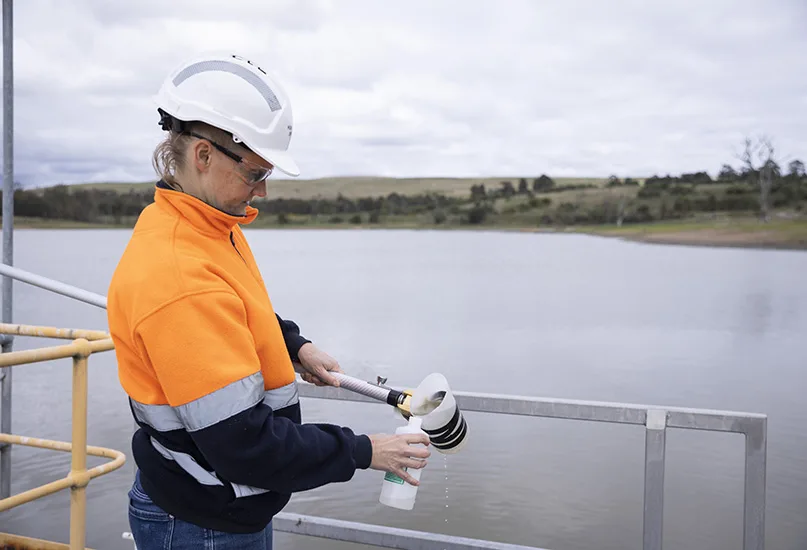
To support all HVO’s key environmental obligations, particularly regarding noise and dust, the company has a real-time monitoring network managed by its dispatch team.
“We also have a fatigue management system called Guardvant, a camera that monitors operator eye closure events. In terms of safety, fatigue is obviously one of the biggest risks in open-cut coal mining, particularly for our truck operators” he informs.
“Since we’ve had that system in place, it has really been a game-changer for fatigue management in our industry.”
In the next two years, HVO will install collision avoidance technology similar to that found in most modern vehicles.
This cutting-edge technology will enhance safety and efficiency by alerting operators of light and heavy vehicles of pending collisions, significantly improving the overall driving experience.
“Recently, we’ve really started to investigate the use of artificial intelligence (AI) technology to improve efficiency, particularly around truck spotting at diggers and with our excavators mining coal. Our goal is to ensure we obtain high-quality coal whilst minimising the inclusion of the surrounding waste material,” Foster implores.
POWERING PROGRESS
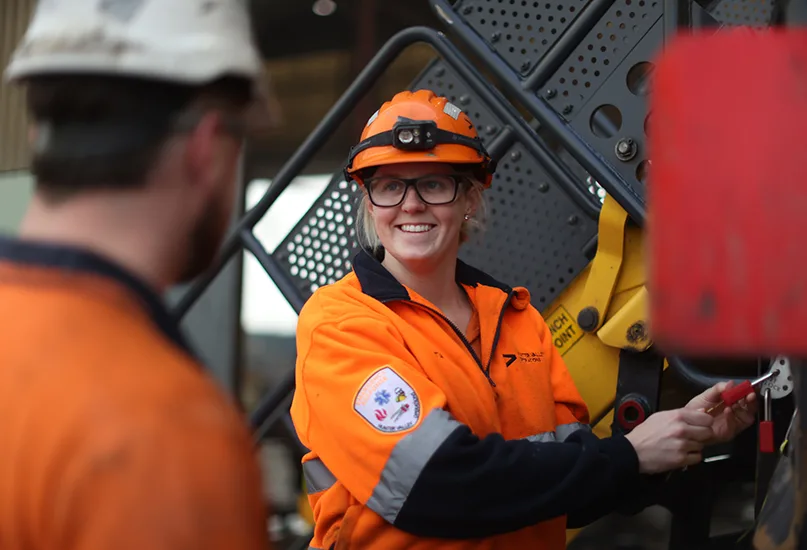
An important initiative for HVO is the Unearthing Leadership Program, which aims to enhance leadership skills and qualities for effective team management and operational success.
This programme has played a crucial role in improving performance and laying the groundwork for ongoing success by training leaders to become more efficient, responsible, and sustainable. It also encourages participants to think critically, engage deeply, and show care – values that are central to HVO.
In addition, the company is undertaking a second crucial mining efficiency project, Dig In, launched last year.
“Dig In has significantly improved our mining practices; this is especially true for the interactions between our excavator-and-shovel fleet and our trucks. The initiative has been a major contributor to our success over the past 12 months,” acclaims Foster.
“Aside from that, our efforts at the moment are focused on obtaining approval for the HVO Continuation Project. We’re just about to embark on a key stage in the approval process with the project‘s referral to the NSW Independent Planning Commission for determination.”
HVO is seeking to extend the life of its North operation until 2045 and its South operation until 2042. This plan has been developed and improved through significant consultation with government agencies, local residents, and community groups over several years.
There will be no increase to currently approved annual production rates and importantly, the Project is consistent with the NSW Government’s policy position on coal, the State’s emissions reduction targets and the Commonwealth Government’s Safeguard Mechanism.
Two unexpected benefits to the area are a proposed road realignment and a new bridge over the Hunter River to replace a flood-prone crossing, providing road users with a safer, faster passage during wet weather.
Continuing mining at the existing site offers numerous benefits to the local community. It provides both ongoing and temporary jobs, supports local businesses and charities, improves water management infrastructure, and generates royalties and taxes that can be used to build schools, roads, and hospitals.
In the last four years, HVO has paid more than AUD$1.7 billion in taxes and royalties to the Australian and NSW Governments.
Furthermore, the final land rehabilitation can be enhanced using the latest design principles to achieve a more natural outcome.
Coal has been mined on-site for more than 70 years, and high-quality coal remains in demand by other countries – the vast majority of whom have signed the Paris Agreement on climate change – to meet short to medium-term energy needs.
PAVING THE PATH TO SUSTAINABILITY
Sustainability has become an increasingly pressing issue within various sectors, with mining in particular facing intense scrutiny.
As the demand for natural resources around the world continues to rise, mining companies need to balance resource extraction with environmental stewardship and social responsibility.
However, HVO is integrating sustainable practices into its operations, aiming to reduce emissions whilst minimising ecological impact and promoting economic growth.
“Greenhouse gas (GHG) emissions have been a major consideration of ours through the project approval process. We support the global transition to net zero, but we also believe there needs to be a sustainable and pragmatic path to achieve it.
“That’s particularly important for areas like the Hunter Valley, which rely heavily on the mining industry for jobs and economic growth,” Foster points out.
As HVO is seeking mine extension approval through to 2045, the company strongly believes there will be a robust coal market for its product until then.
“We’ve also put a lot of effort into making sure our proposal – the extension to 2045 – meets the NSW government’s requirements to get to net zero by 2050. We recently made a significant change to the Continuation Project and restricted mining to 2045 instead of the original plan of 2050.
“This change means we will reduce the proposed mining footprint by 220 million tonnes of run-of-mine (ROM) coal and reduce total Scope 1 emissions by 43 percent,” he adds.
As part of its commitment, HVO is continuously exploring innovative solutions that could potentially enhance the company’s capabilities in reducing emissions.
“Firstly, we have committed to conducting a three-yearly formal review of available mining technologies, particularly low-emissions technologies for mining fleets. However, they are still quite new, and there is currently significant speculation about their economic viability. The three-yearly review will ensure that we stay abreast of the latest technology as it evolves,” says Foster.
This initiative is important given that HVO is currently facing significant challenges in obtaining approval for its Continuation Project, which is crucial for its mining operations beyond 2026.
“The approval process with the NSW government began back in 2019, but due to the lengthy planning requirements for large coal mines, progress has been slow.
“During this time, HVO has had to adapt to evolving legislation and increasing political pressure regarding GHG emissions,” Foster reveals.
As a result, the project has undergone several revisions, including the notable change nearly two years ago when HVO shortened its original timeline, seeking approval for 2045 rather than 2050.
This amendment included avoiding mining in particular areas known to contain high concentrations of methane, aligning more closely with the NSW government’s goals for achieving net zero by 2050.
HVO believes the revised project offers very substantial economic benefits to the community whilst also emphasising sustainability.
The company remains committed to minimising environmental impacts and reducing emissions, making this a strong, sustainable project for the future.
A NATURAL BALANCE
As HVO plans to extend mining operations until 2045, it is important to consider the potential impacts on local communities and the environment.
The company operates responsibly and sustainably, always striving to meet stringent environmental conditions.
To secure its Continuation Project, the company wants to highlight its importance as an economic anchor, particularly in the Hunter Valley.
Another large supplier of coal is the Mount Arthur Coal Mine. However, this BHP-operated facility has recently announced it will close in 2030, which is only four years away.
“If we don’t get our approval through, it will be such a huge hit to the local economy. So, straight away, the economic benefits of our project are quite obvious, particularly for the local community,” attests Foster.
“In terms of minimising the impact to the environment, you could not get a better plan for the size of our open-cut mine. With most of our mining areas for the next 19 years going back through previously disturbed areas, minimising the impact to ecological communities.”
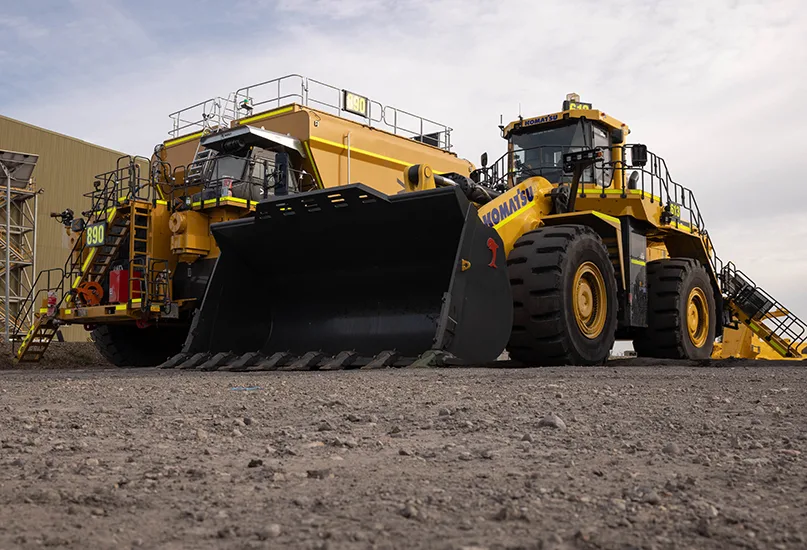
HVO now has a newer, larger, and more technologically advanced mining fleet, enabling it to mine much deeper and more economically than before.
Indeed, the company is mining back into areas that were previously mined out and is now mining the seams much deeper.
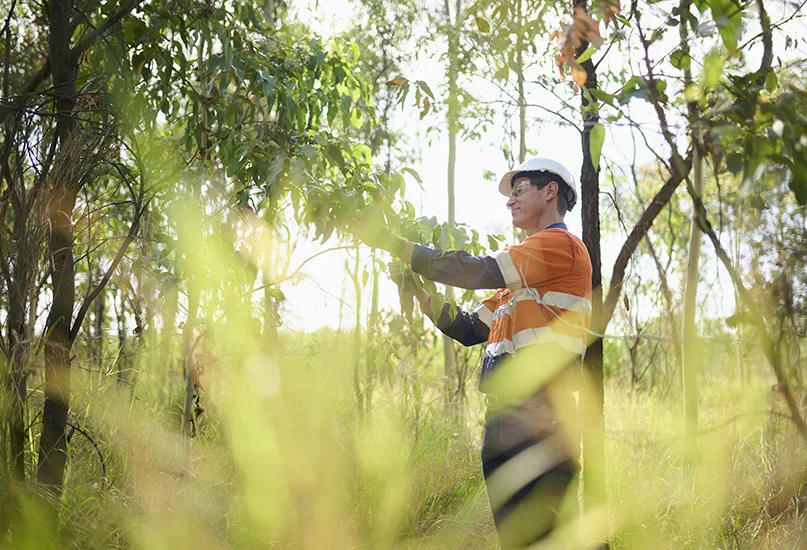
HVO consistently rehabilitates and maintains areas following the completion of mining activities through aerial seeding.
It uses a native woodland seed mix of locally sourced plant species to create habitats for local wildlife and implements a pasture and light woodland mix that is suitable for grazing in areas designated for agriculture.

CULTIVATING A CULTURE
Through targeted programmes and initiatives, HVO supports the workforce and helps team members grow and develop.
Foster is a strong advocate of the DuPont Bradley Curve, a measure of site culture that was highlighted by the Unearthing Leadership Program.
“It was originally developed by DuPont back in the 1990s as a measure of safety culture, but safety culture is just an overall measure of culture,” he insights.
The DuPont Bradley Curve is a model used in safety management to illustrate the relationship between safety performance and safety culture within an organisation.
The curve represents four stages of safety culture maturity, which influence the level of safety incidents in a workplace.
“There are four stages of the DuPont Bradley Curve. It’s all about moving towards what we call interdependence: personally motivated individuals who work really well as a team,” Foster sets out.
“Still, they can work independently without needing to be overly supervised, but when they do, they’re comfortable engaging with their supervisor and leadership team and challenging each other to be better every day.”
The stages within the DuPont Bradley Curve are:
- Reactive – Where safety is regarded as a hindrance to production. Compliance with safety regulations is minimal, and incidents are often ignored or underreported. Employees do not engage in safety practices, focusing primarily on production.
- Dependant – Where organisations respond to incidents after they occur. Whilst safety procedures may be in place, they are often seen as compliance requirements rather than an integral part of workplace culture. Employees may participate in safety processes, but often do so out of obligation rather than commitment.
- Independent – Where organisations have established systematic safety processes and standards. There is an acknowledgement of the importance of safety, and efforts are made to analyse incidents and implement improvements. Employees begin to feel more valued regarding safety and may actively engage in discussions about safety practices.
- Interdependent – Where safety is deeply embedded in the organisation’s culture, there is a strong focus on continuous improvement, and it is considered a shared responsibility amongst all employees. Workers are committed to safety, and there is a culture of open communication about potential hazards and risks.
The DuPont Bradley Curve emphasises that as an organisation advances through these stages, a decline in safety incidents should be observed, reflecting the positive impact of a strong safety culture.
The model encourages an assessment of the current safety culture and identifies strategies for improvement.
However, to Foster, the holy grail of culture is a fully interdependent workforce.
“We’re on the journey; we’re certainly not fully there yet, but the Unearthing Leadership Program really encourages our leaders to engage openly and honestly with their teams. Having the balance of being able to hold them to account when they need to is key to driving that culture towards interdependence,” he opines.
“We began nearly three years ago and originally used a consultant with a number of coaches on site to do the lion’s share of bringing our leadership team along.”
The Unearthing Leadership Program is now being run in-house by HVO’s own leaders, teaching its next round of leaders and their teams to continually improve.
HONOURING HEROES
HVO has implemented measures to define a workplace ‘win’ and acknowledge these successes across the company through various methods.
“If we can create a highly engaged and committed workforce, most employees will genuinely love the company they work for,” Foster impassions.
“Therefore, a win for them is a win for the business and for everyone. That’s why the success we had in 2025, meeting all our key performance indicators (KPIs), generated so much gratitude and excitement.”
HVO takes pride in celebrating achievements within its workforce. Recently, the company distributed a selection of high-quality belts, each imprinted with the HVO logo and its core values.
These handcrafted leather accessories are recognised for their timeless Australian style and exceptional quality.
“In 2025, we achieved excellent results, which was fantastic! I attended Anzac Day, a significant event in Singleton, and noticed many of our employees proudly wearing their HVO belts. It was truly a special moment; experiences like that remind me why I love my job!” he reflects.
Anzac Day is a national day of remembrance in Australia and New Zealand, observed annually on 25th April.
This day commemorates the members of the Australian and New Zealand Army Corps (ANZAC) who served and lost their lives in various military operations, particularly during World War I, beginning with the Gallipoli campaign in 1915.
Anzac Day honours not only those who died but also all veterans who have served in conflicts involving Australia and New Zealand.
Ceremonies are held across both countries, including dawn services, parades, and the laying of wreaths at memorials.
It is a time to reflect on the sacrifices made by soldiers and recognise the values of courage and sacrifice associated with their service.
VISION FOR THE FUTURE
After achieving impressive results in 2025, HVO’s year was marked with notable milestones that define its future.
“2025 was a marvellous year for the company and a real accumulation of our efforts over a number of years. It was the first time since the JV’s inception that the site had met every one of its important budgetary targets,” Foster states.
“Our goal is to establish ourselves as a mine with a strong reputation for providing a reliable supply of our product, which is crucial for both our JV owners. Naturally, we aim to generate steady profits and ensure we are a dependable supplier to our customers.”
The main action that HVO has taken during this timeframe is revising its mine plan.
“We’ve now got a mine plan that is achievable and gives us foresight for the longer term,” observes Foster.
“As we pursue our application process to extend or continue mining, it’s essential to have a long-term vision for the mine plan. This vision should align with our medium-term strategy and guide our short-term execution.”
The project plans must integrate seamlessly, which is why HVO has been diligently refining them over the past few years.
A major component of this effort has been the JV’s substantial investment in a new, modern, and reliable mining fleet, including trucks and excavators, as well as upgrades to the entire ancillary fleet over the last five years.
Crucially, this investment aligns with the core objectives of the Unearthing Leadership Program, which focuses on building an engaged and committed workforce essential for success.
“Our biggest achievement is the work we’ve done regarding leadership, and we certainly receive a lot of feedback from the workforce and the local community now that HVO is becoming an employer of choice in the local area,” Foster expands.
Whilst HVO’s primary goal is to secure approval for the Continuation Project, the subsequent step is to ensure the efforts made over the past three to four years have culminated in a successful and sustainable business.
“We’re nearly halfway through the year and quite a way ahead on our budget. For us, it is important to continue the effort of strengthening our culture and finding areas for improvement. Strong leadership is key to driving this”.
“HVO is such a large site that it can be challenging to get everyone to collaborate and move in the same direction. Last year, we successfully achieved that goal, and we now have continued to build and capitalise on that momentum” Foster earnestly concludes.
The company stands as a testament to the power of community, collaboration, and innovation in the mining industry.
HVO has not only adapted to the evolving demands of coal production but also prioritised the well-being and development of its workforce.
With a strong foundation built on a rich history and strategic partnerships, it continues to set benchmarks for sustainable growth whilst maintaining a remarkable connection with the local community.
As it navigates the complexities of modern mining, HVO’s unwavering commitment to its people and the environment positions it for a thriving future in the heart of the Hunter Valley.
HUNTER VALLEY OPERATIONS PARTNER

This company profile was produced by the editorial team at APAC Outlook, a publication within the Outlook Publishing global network of B2B industry magazines.
Outlook Publishing showcases organisations and leadership teams shaping sectors including manufacturing, mining, construction, healthcare, supply chains, food production, and sustainability.
APAC Outlook highlights organisations driving innovation, investment, and industry development across the Asia-Pacific region.