




Zula Luvsandorj, Advisor to the Deputy Prime Minister of Mongolia, is an energy strategist and infrastructure finance expert with over 15 years of global experience. We learn how she is helping to shape the country’s path to a low-carbon future.
MONGOLIA’S LOW CARBON FUTURE
Firstly, can you elaborate on your role of advising the Deputy Prime Minister of Mongolia on the clean energy transition?
Zula Luvsandorj, Advisor to the Deputy Prime Minister of Mongolia (ZL): I help guide Mongolia’s green transformation, advising on efforts to mobilise capital for large-scale renewables, accelerate clean technology deployment, and lead where beneficial, impactful partnerships can be found that are aligned with Mongolia’s net zero ambitions.
I draw on over 15 years of experience in international project finance and a record of closing major deals to help design and fund Mongolia’s clean energy transition. My work focuses on translating national policy into projects that attract real investment.
This involves shaping our renewable energy roadmap, supporting regulatory reforms that encourage private sector participation, and working closely with development banks and investors.
I also work with government teams to integrate renewable energy into regional infrastructure plans, such as grid expansion, energy storage, and cross-border power trading.
This approach ensures renewables are not developed in isolation but as part of a wider energy system that supports both domestic and export markets.
A recent example is the signing of a €1 billion memorandum of understanding (MoU) between the European Investment Bank (EIB) and the Government of Mongolia under the European Union’s Global Gateway initiative.
I helped lead the facilitation of this agreement, which marks a major milestone in Mongolia’s clean energy journey, opening the door to new opportunities to transform our vast solar and wind potential into long-term sustainable growth.
The partnership will strengthen renewable energy development, diversify energy sources, and attract both local and international investors to participate in Mongolia’s green transformation.
In what ways do you plan to foster global partnerships to support Mongolia’s clean energy transition, and how are you mobilising capital for large-scale renewables?
ZL: Mongolia is uniquely positioned for strategic global partnerships, with rich solar and wind potential that makes it an attractive partner for international investors.
We are already building strong links with partners in the United Arab Emirates (UAE) and Bahrain, whilst also exploring opportunities with Asian and European counterparts.
The Power of Siberia 2 project could further reshape regional energy dynamics and strengthen Mongolia’s position within green trade routes.
We focus on a mix of public and private funding, with blended finance structures, sovereign guarantees, and green bonds used to attract investors and reduce risk.
Mongolia is developing a more transparent and predictable investment environment to make the country a credible destination for sustainable capital.
We also work closely with multilateral partners who not only provide capital but also help improve technical and governance standards, giving investors greater confidence in the projects they fund.
Through cooperation with global financial institutions, we are developing a pipeline of renewable projects that can meet both domestic demand and future export potential to neighbouring countries.

“Mongolia is uniquely positioned for strategic global partnerships, with rich solar and wind potential that makes it an attractive partner for international investors”
Zula Luvsandorj, Advisor to the Deputy Prime Minister of Mongolia, Government of Mongolia
What are the primary barriers to financing green energy projects in high-risk markets, what specific changes are needed to overcome them, and how can regulators and policymakers facilitate smoother access to funding?
ZL: The main barriers are seen as political and financial risks, unclear regulations, and a limited number of ready-to-invest projects. Many investors worry about policy instability or difficulties in securing long-term agreements – even when a market has potential, uncertainty often keeps capital away.
To improve access to finance, governments need to provide consistency and clarity. Stable regulations, transparent permitting, and reliable power purchase agreements (PPAs) all help reduce investor concerns. Instruments such as guarantees or risk insurance can also make a big difference in the early stages.
I believe policymakers should also focus on developing local expertise. Local banks and developers need training in green finance so that projects can be structured properly from the start.
Regulators can encourage blended finance schemes, combining public funds with private investment to lower risk, and build investor confidence.
Over time, this creates a cycle where green investment becomes a standard part of market growth rather than a special case. Clear environmental and social frameworks, along with consistent enforcement, are also essential to demonstrate reliability and long-term vision.
How can project finance effectively drive the development of green infrastructure and attract more investment into green projects in emerging markets?
ZL: Project finance allows large infrastructure to be built whilst keeping the financial risk off government balance sheets. It is especially useful for renewables, where private capital can be linked directly to project performance.
This structure gives investors a clear understanding of risk and return, which helps attract funding even in emerging markets.
To strengthen this model, countries need a strong pipeline of bankable projects supported by detailed studies and reliable data. Investors are more willing to commit when they have clear information and trust in local partners – early-stage funding for project preparation is vital to reach this phase.
Partnerships between development banks and private investors can also help. Development banks often take on early risk, offer concessional finance, and provide standardised documentation, which makes it easier to replicate successful projects across multiple markets.
Collaboration between governments, multilaterals, and private developers ensures that projects are not only technically feasible but also commercially sound.
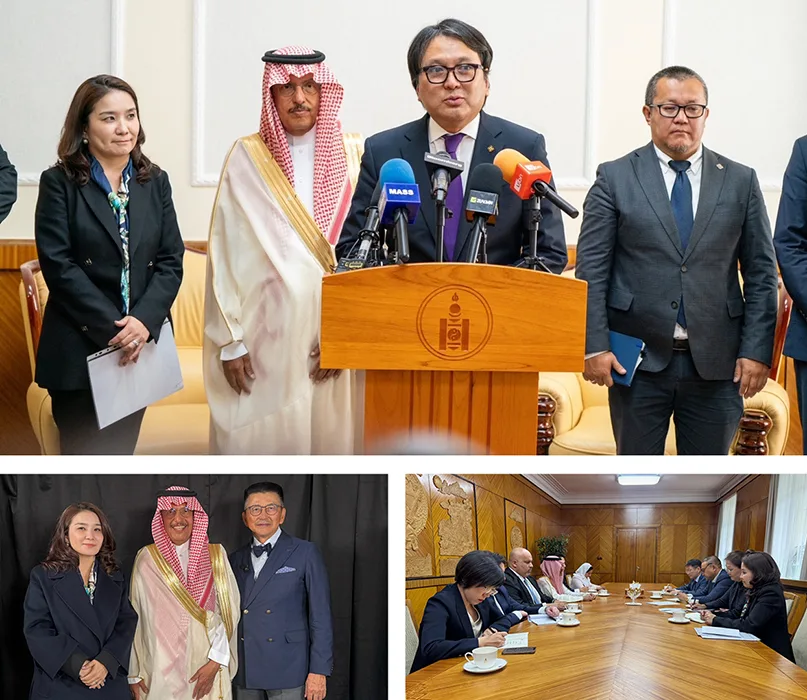
One example of this collaborative model is ACWA Power’s entry into Mongolia in partnership with Sunsteppe Power.
Together, we are demonstrating how international investors and local developers can align to deliver large-scale renewable projects, combining global technology and financing with local execution and stakeholder engagement. This approach is key to unlocking Mongolia’s renewable potential and attracting long-term sustainable capital.
To turn Mongolia’s renewable potential into reality, we are now working with ACWA Power, who is studying 10 gigawatts (GW) of renewable energy investments in collaboration with Sunsteppe Power.
This partnership embodies the model we aim to scale – global capital and technology joining forces with local expertise to deliver a transformative clean-energy project.
How can green project finance result in real environmental impact?
ZL: For green finance to be credible, the environmental impact must be measurable and verified. Each project should have clear, specific key performance indicators (KPIs) such as reductions in emissions, improvements in energy efficiency, or added levels of renewable capacity. Independent audits and transparent reporting are essential to prove that the outcomes are genuine.
Strong governance and public disclosure give investors and communities confidence in the results. Green finance should also support long-term benefits for local people, such as job creation and skills development. When projects deliver both environmental and social value, they become truly sustainable.
In Mongolia, we are working to introduce stronger monitoring systems for renewable energy performance and environmental, social, and governance (ESG) compliance, ensuring projects continue to meet their environmental targets over time.
What were the key factors that contributed to the success of Mongolia’s largest solar photovoltaic installation in the Gobi Desert?
ZL: The Gobi Desert project succeeded because it combined careful preparation, strong partnerships, and clear risk-sharing.
International expertise was matched with local ownership, and all stakeholders shared the same goal of delivering a landmark renewable energy project for Mongolia.
The project was based on solid technical studies, well-structured PPAs, and financing from a mix of international and domestic lenders. Meeting international environmental and social standards helped build trust with investors and reduce risk.
The experience proved that Mongolia can manage complex renewable energy developments efficiently, set a new benchmark for the country’s clean energy ambitions, and encouraged more investors to view Mongolia as a serious player in the sector.
It also gave investors confidence that the country is ready to deliver complex, high-impact clean energy projects, a message that continues to resonate as we pursue new partnerships such as the EIB agreement.
Finally, what are some key strategies that nations can implement to ensure green investments effectively contribute to their economic and environmental goals?
ZL: I think a clear, national strategy that links climate policy with economic planning is essential. Governments need to define how investment in renewables, grids, and clean technology supports wider economic objectives such as industrial growth, job creation, and regional development.
Consistency across ministries is also important. When energy, environment, and finance authorities coordinate their policies, investors receive clear and consistent signals, which helps avoid conflicting regulations and speeds up project delivery.
Nations should also invest in education and workforce training to develop domestic skills in clean industries. Building local expertise ensures the benefits of green investment stay within the economy.
Finally, transparency and accountability are crucial; strong monitoring and public reporting systems build trust and encourage long-term partnerships.
When countries embed sustainability into every layer of economic decision-making, green investments become a reliable engine for both growth and environmental progress.