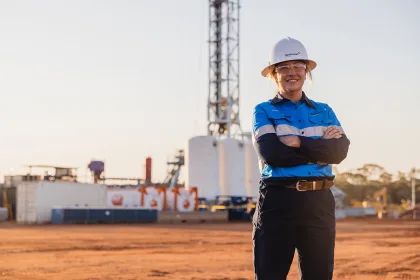





In the face of evolving market dynamics, Roc-Drill has successfully navigated the challenges of the mining sector with its unmatched ability to adapt. Managing Director, Charlie Massarella, delves into the company’s strategic integration and innovative operations.
GROUNDBREAKING RESILIENCE IN A ROCKY CLIMATE
An established provider of specialist drill-and-blast services to the mining and resources sector, Roc-Drill aims to set the industry standard across Australia.
Since its inception in 2012, the company, initially a family-owned business founded by Nigel De Veth, was acquired by Norcliffe in 2021, along with Enerflow, and has grown into a national leader in drilling and blasting services.
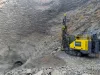
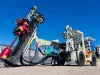
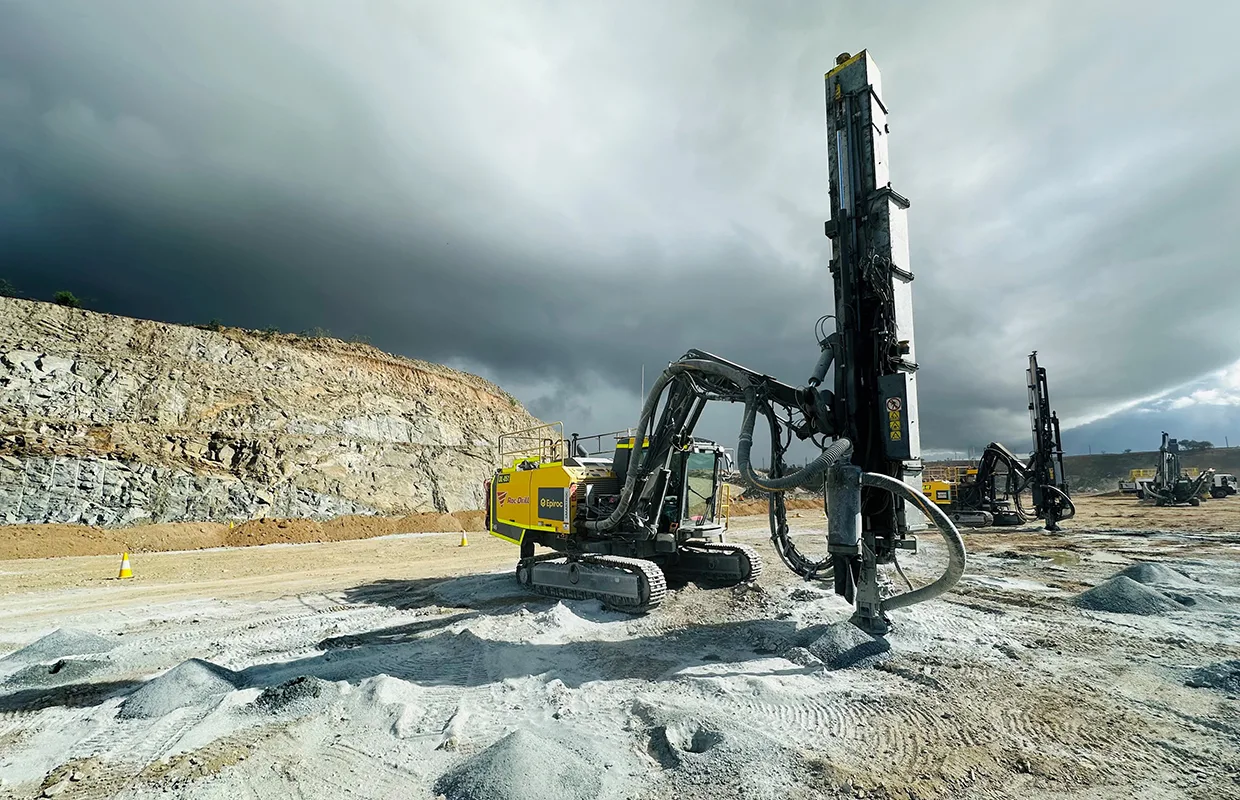
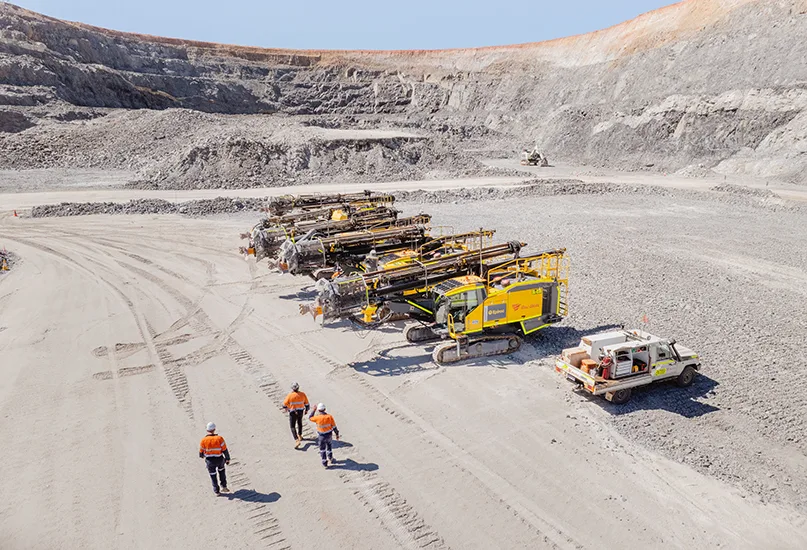
Employing approximately 180 individuals, Roc-Drill currently has around 40 operating drills, with a primarily Epiroc fleet, including large-platform Pit Viper drills as well as many smaller SmartROC D65 and T45 machines.
The company focuses its drilling operations in Western Australia (WA), the Northern Territory (NT), and Queensland (QLD).
Roc-Drill is involved in significant projects, including the McArthur River Mine with Glencore in the NT, the Ravenswood Gold Mine in North QLD, and a reverse circulation (RC) drilling programme with Meeka Metals at its Murchison Gold Project in WA.
Although it has a history of working internationally in countries such as New Zealand and Papua New Guinea (PNG), the company’s current focus is largely within Australia.
“Whilst we previously worked at several mines in the WA Goldfields region, some projects have now concluded, notably one impacted by the downturn in lithium demand,” introduces Charlie Massarella, Managing Director.
Elsewhere, Roc-Drill initiatives include the Carmichael Mine, the Lady Annie Anthill Project, which involves collaborations with Orica and Austral Resources, and the early stages of the Eva Copper Mine Project.
A JOURNEY OF STRATEGIC INTEGRATION
Massarella informs us that Norcliffe’s acquisition benefitted Roc-Drill by introducing the idea of vertical integration.
“In late 2020, I founded Norcliffe with a vision to bridge the operational gap between Australia’s East and West Coasts, which function almost like separate countries.”
Transitioning between the two coasts was challenging, prompting the decision to acquire a mining services company on both, resulting in a production drill-and-blast business on the East Coast, whilst in the West, the dry-hire and maintenance and technical refurbishment of drill rigs were the focus.
“Having a client base on both coasts, we strategically and successfully moved Roc-Drill’s operations to the West, quickly securing three projects by leveraging the existing labour, facilities, and equipment from Enerflow,” he outlines.
Indeed, the acquisition was advantageous because if Roc-Drill had pursued the projects independently, it wouldn’t have benefitted from the existing facility, presence, and support of the Enerflow brand and infrastructure.
As such, Roc-Drill effectively navigated the challenges of transitioning from a family-run business to a more corporate structure.
“Over time, we upgraded systems and processes to accommodate our rapid growth. The period from 2021 to 2023 marked a remarkable trajectory for Roc-Drill, reflecting our successful integration and scalability in the industry,” Massarella prides.
With a dedicated team, the company navigated any challenges posed by the acquisitions to ensure projects were delivered.
Furthermore, establishing a board with Neil Warburton as the Non-executive Chairman, bringing extensive experience in the Australian mining sector, and Adam Giles, a Non-executive Director and former Chief Minister in the NT, adds valuable expertise and support, crucially shaping the company’s direction.

“The period from 2021 to 2023 marked a remarkable trajectory for Roc-Drill, reflecting our successful integration and scalability in the industry”
Charlie Massarella, Managing Director, Roc-Drill
NAVIGATING MARKET CHALLENGES
Roc-Drill has navigated a difficult mining market characterised by rising costs, inflationary pressures, a tight labour market and changing industry trends.
“The COVID-19 pandemic resulted in significant volatility in the sector, with companies like Epiroc experiencing dramatic price increases for parts. We had two separate eight percent hikes in one year.
“We price our jobs with rise-and-fall mechanisms that generally align with the Australian Bureau of Statistics (ABS) indices, like the Consumer Price Index (CPI),” informs Massarella.
Whilst the CPI has risen, as well as the relevant labour and parts indices, they haven’t kept pace with real-world inflation rates, especially within the mining sector.
“For example, some job prices were originally based on pre-COVID-19 pandemic data, failing to account for such substantial, near-unprecedented economic changes. Therefore, we’ve had to negotiate price variations by analysing the impacts of inflation trends.
“The pandemic disrupted operations and posed challenges for fixed-price contracts, prompting negotiations for better terms,” he elaborates.
The labour market challenges persist today, as skilled workers can be difficult to both find and retain.
For Roc-Drill, the Ravenswood Gold Project addresses this by encouraging employment of local, entry-level personnel, who are brought in as general drill support labour providing a pathway into the mining industry and thereby creating a reliable workforce.
Recruits progress through drill training levels one to three, fostering loyalty and attracting new talent to the mining industry, whilst experienced trainers earn accreditations to mentor younger employees.
“This process not only equips new drillers with essential skills but creates opportunities for growth within the organisation,” he points out.
“The market is pretty tight at the moment, there’s a downturn in lithium and nickel, particularly in the drill-and-blast sector. There is also price sensitivity as mines aim to reduce costs whilst ensuring contractors can still deliver.”
Evidently, as the mining industry continues to evolve amidst complex market fluctuations, Roc-Drill’s approach serves as a valuable model for balancing cost management with investment in human capital.
ENHANCING EFFICIENCY
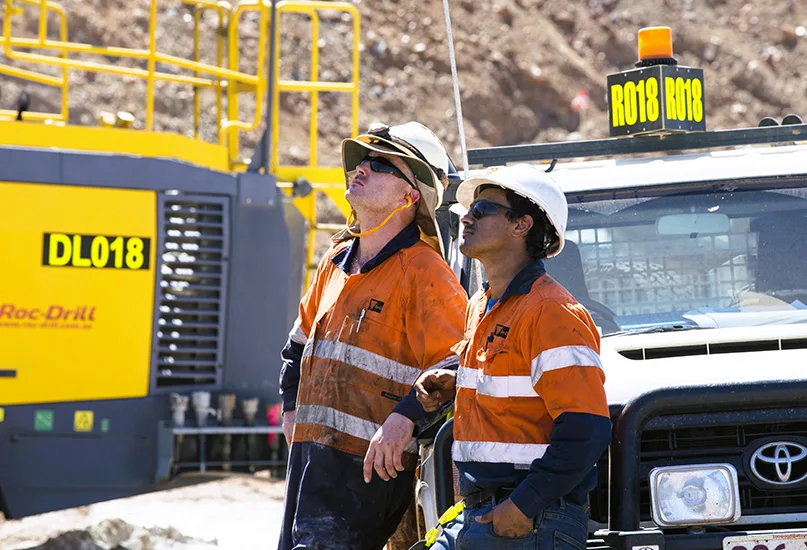
As new innovative technologies and cutting-edge practices emerge, Roc-Drill is looking to integrate them into its operations to enhance efficiency.
“We have a technology services manager exploring multiple initiatives. We use CorePlan software and its digital portal to capture live data from our RC-grade control drills,” explains Massarella.
“Additionally, we use tablets to reduce manual data entry and improve visibility for both our clients and us. We’re also discussing options for rolling out a similar system to our entire blast hole drilling fleet.”
Currently, Roc-Drill is exploring an innovative solution across the entire mining cycle with a European software group that will enable live dashboards and blast simulations, with a representative recently on-site to assess its functionality.
Additionally, the company uses web-based dashboards to monitor production and drill availability in real time, providing insights that enable informed decision-making from anywhere in the world.
“I have also been in discussions with original equipment manufacturers (OEMs) regarding advanced preventive maintenance strategies,” Massarella divulges.
“We are just beginning to explore how this software could enhance our predictive capabilities and support our maintenance plans by alerting us when equipment shows signs of failure. Whilst some of these new tools are in their early stages, we have started utilising CorePlan and the dashboards extensively.”
“Supporting the community and employing locals are significant focuses for us in all our operations”
Charlie Massarella, Managing Director, Roc-Drill
OPERATIONS AND OPPORTUNITIES
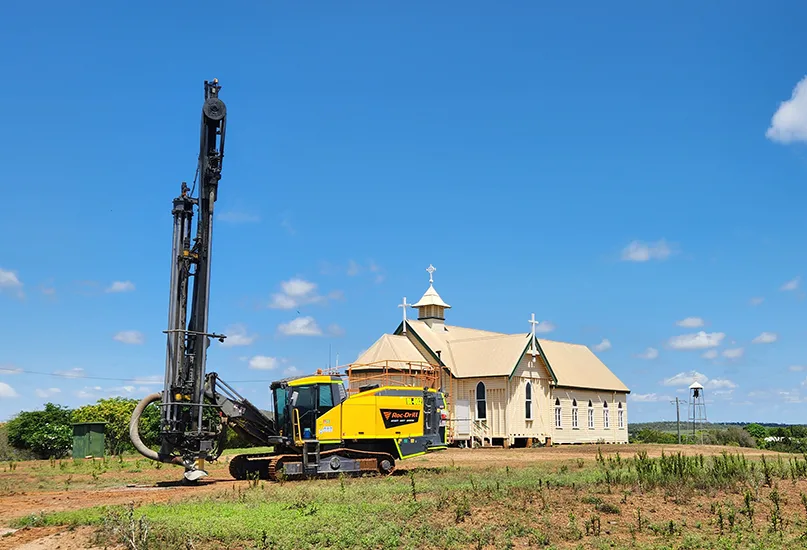
Recently, Roc-Drill completed a significant project for Chinova Resources, marking the third collaborative effort between the two companies.
“The latest initiative, Starra 222 and 254, was executed in conjunction with Orica, with us handling the drilling and Orica managing the blasting.
“We’ve recently secured two new projects: one with Meeka Metals and another with Jubilee Metals Australia. I’m excited about the opportunity to collaborate with the company’s team, as I believe it will be a promising partnership,” Massarella enthuses.
The gold sector also presents promising opportunities with record-high prices.
“Many gold projects that were previously deemed unfeasible due to the commodity price and lower reserve grade are now becoming viable for both major projects and smaller satellite pits.
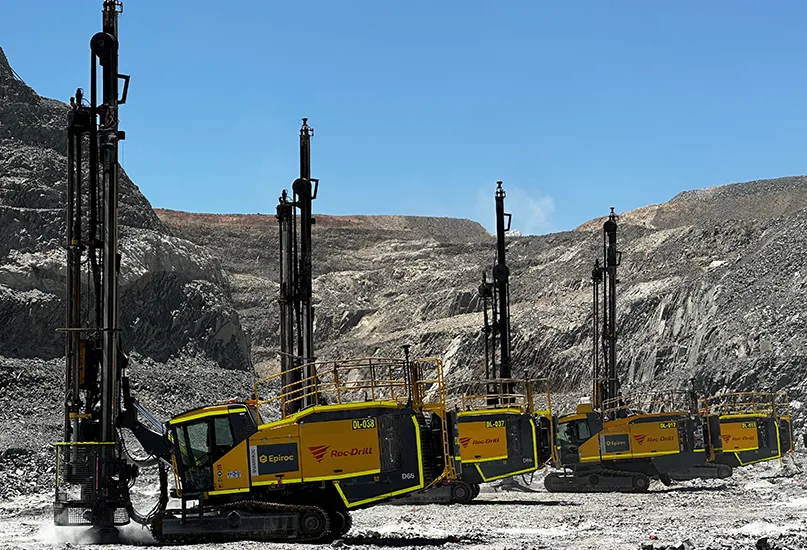
“This shift presents a growth opportunity for us, particularly in WA, with prospects emerging in QLD as well.”
After a significant expansion phase driven by acquisitions, Roc-Drill has stabilised its operations and is in a strong position.
“During this time, we concentrated on reducing our debt. However, we faced market challenges due to downturns in the nickel and lithium markets, which affected our business.
“To address this, we plan to introduce new projects that will aid further growth. Our primary objectives are to continue providing exceptional service to our clients and secure additional work that will increase our top-line revenue,” Massarella finishes resolutely.