



The Department of Defence is at the heart of Australia’s national security and prosperity. Having recently assumed office in May 2025, the Hon. Pat Conroy MP, Minister for Defence Industry and Minister for Pacific Island Affairs, outlines his roles and responsibilities, the Australian government’s investment to modernise the country’s defence capability, and the establishment of Project Land 156.
Q&A WITH THE HON. PAT CONROY MP, MINISTER FOR DEFENCE INDUSTRY AND MINISTER FOR PACIFIC ISLAND AFFAIRS
Firstly, could you introduce us to the Department of Defence and its primary role?
The Hon. Pat Conroy MP, Minister for Defence Industry and Minister for Pacific Island Affairs (PC): The Department of Defence (Defence) is at the heart of Australia’s national security and prosperity.
Every day our public servants, sailors, soldiers, and aviators help shape Australia’s strategic environment in our national interest. Their work and service strengthen our national posture, increase our self-reliance, and enhance the lethality and readiness of our defence capabilities.
Defence ensures Australia is ready and equipped to respond as we face the most challenging strategic outlook since World War II.
Late last year, along with Deputy Prime Minister, Richard Marles, I announced a significant step towards ensuring Defence delivers the capabilities, skills, and workforce it needs to meet Australia’s strategic circumstances, with reforms that include the establishment of a dedicated agency designed to strengthen and streamline acquisition and sustainment activities.
Since May 2022, the government has provided the biggest increase in defence spending in Australia’s peacetime history, with what is now an additional AUD$70 billion over the next decade. This includes record spending on acquisition and sustainment.
With this record funding comes the need to ensure that Defence continues to demonstrate value for money. Once fully established, the new Defence Delivery Agency (DDA) will integrate three existing Defence capability delivery groups – Capability Acquisition and Sustainment Group; Guided Weapons and Explosive Ordnance Group; and Naval Shipbuilding and Sustainment Group.
DDA will report directly to ministers and have control over its budget, enabling coordinated and holistic delivery of defence capability and growing our sovereign defence industrial base.
The government will appoint a National Armaments Director to lead the new agency, who will be responsible for providing advice to the government on acquisition strategies and the delivery of acquisition and sustainment projects following government approval.
The increasing complexity of Defence capabilities, systems, and platforms requires a systematic rethink of the capability development and delivery system.
This is about setting Defence up for success so we can modernise the Australian Defence Force (ADF) in line with the National Defence Strategy whilst ensuring we spend taxpayers’ money wisely.

“Defence ensures Australia is ready and equipped to respond as we face the most challenging strategic outlook since World War II”
The Hon. Pat Conroy MP, Minister for Defence Industry and Minister for Pacific Island Affairs, Department of Defence
What are your responsibilities as Minister for Defence Industry and Minister for Pacific Island Affairs?
PC: As the longest-serving Minister for Defence Industry since the 1970s, I am responsible for delivering the capabilities our ADF needs to keep Australians safe.
From an historic increase in Australia’s missile manufacturing capabilities to more than doubling the Royal Australian Navy’s (RAN) major warship fleet, every day I work to accelerate capability delivery to meet Australia’s strategic challenges.
A key part of my work includes a shared responsibility for the Defence budget, which we update biannually through the Integrated Investment Program.
Further, central to my mission is uplifting Australia’s sovereign industrial base, driving innovation, and creating highly skilled, well-paid manufacturing jobs for Australian workers that aren’t just for the next few years, but the next generation.
As Australia’s longest serving Minister for Pacific Island Affairs, and the only to serve in Cabinet, my focus is on listening to the priorities of the Pacific family – and delivering on them.
That has been my mission across over 30 visits to 12 Pacific countries – because here in Australia, our future is tied to that of the Pacific family. A more stable, secure and prosperous Pacific is central to Australia’s national interest.
Listening and acting on Pacific priorities means acting on climate change through initiatives like the Pacific Resilience Facility and Pacific Climate Infrastructure Financing Partnership and refocussing Australia’s international development programme on our region.
It also means delivering groundbreaking new agreements that uniquely respond to the priorities of our neighbours – from the National Rugby League (NRL) deal with Papua New Guinea (PNG) to the Falepili Union with Tuvalu and our treaty with Nauru.
You recently assumed office in May 2025. How have you found your new roles so far and what have been the most exciting and challenging aspects?
PC: The most exciting opportunity that lies at the heart of both portfolios is the opportunity of continuity.
I have the chance to drive delivery and lock in reforms that advance Australia’s national security and prosperity.
From our recently announced defence reforms that establish a dedicated agency to strengthen and streamline acquisition and sustainment, to driving the implementation of the PNG NRL deal – the opportunity to drive change from inception to implementation is rare in politics. I have the chance across both portfolios to make it happen.
You will hear me say this a lot, but here in Australia we face the most challenging strategic outlook since World War II.
To meet that challenge, the capability decisions we make and relationships we build are critical. In the defence industry, the projects we oversee are the most complex of any department – and their delivery is often measured in decades, not months.
Making the right capability decisions today that will meet the threats of tomorrow is critical – and a central challenge to the work we do.
“I have the chance to drive delivery and lock in reforms that advance Australia’s national security and prosperity”
The Hon. Pat Conroy MP, Minister for Defence Industry and Minister for Pacific Island Affairs, Department of Defence
What is your take on the defence industry in Australia at the moment?
PC: Australia’s defence industry continues to grow year-on-year in line with the Albanese government’s record increase in defence funding.
Direct employment in the industry grew by 14.5 percent over our first term in office when compared to the final year of the former government.
In 2021-22, the value of defence contracts to Australian industry was AUD$24.9 billion, and in 2023-24 it was up over AUD$32 billion. This data tells part of the story, but the growing international interest in Australian defence science and innovation tells more of it.
We know countries around the world are looking more and more at the cutting-edge capabilities being built here at home. That is why we have established the Australian Defence Strategic Sales Office to boost our exports of defence equipment.
This is a joint endeavour between Defence, industry, and other government agencies, and it’s all about maximising our competitive advantage with a focus on five sovereign capability and production lines.
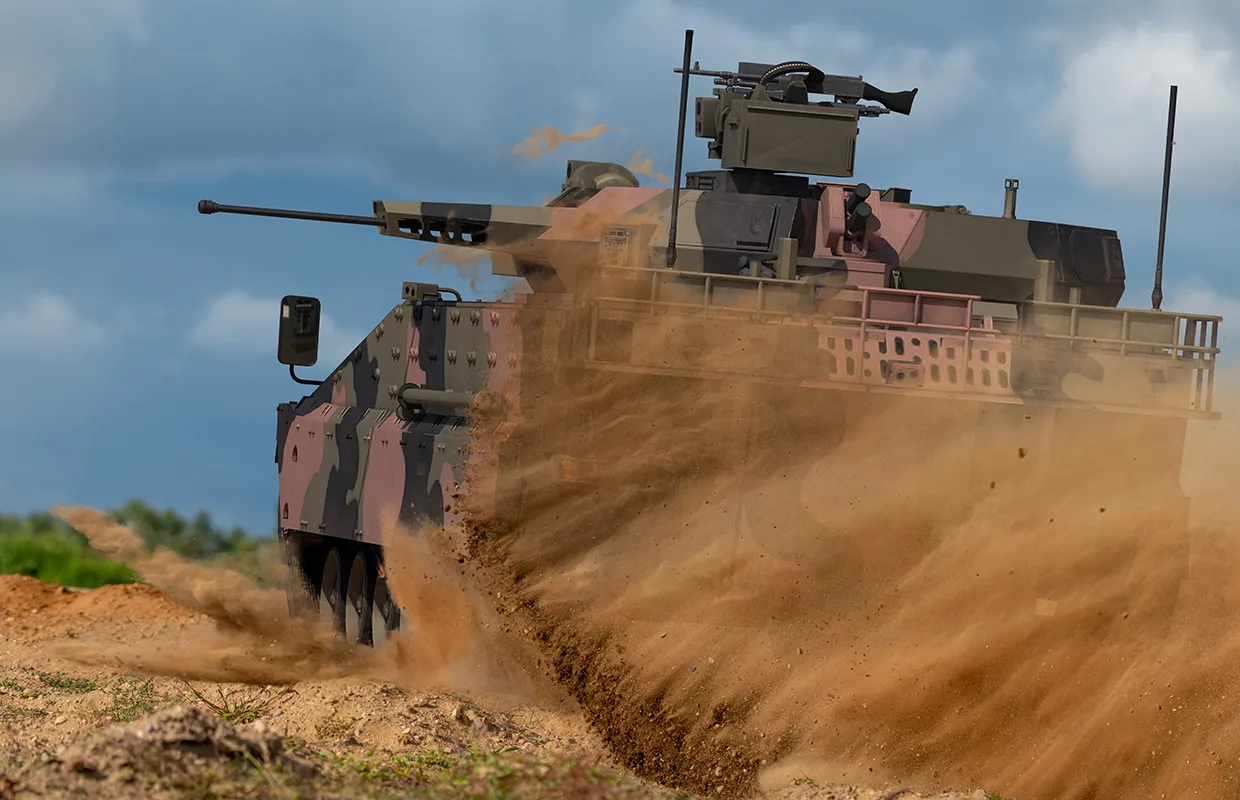
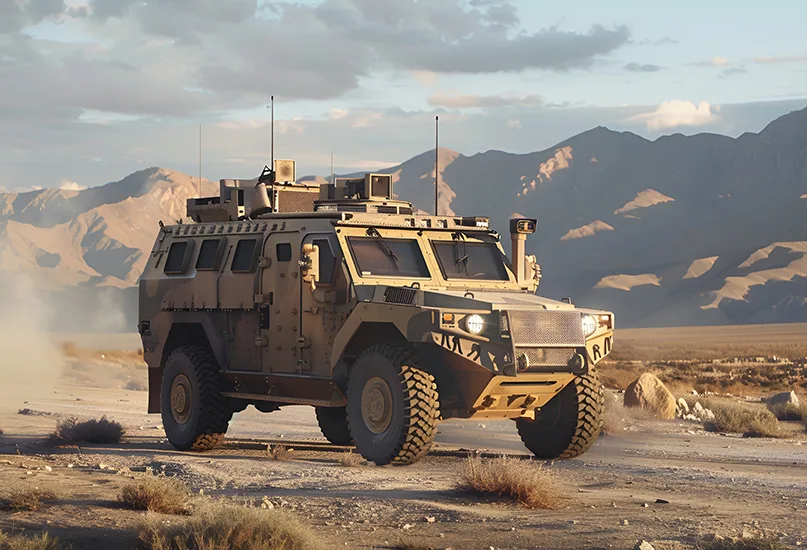
These are the Bushmaster Protected Mobility Vehicle (PMV), Hawkei PMV, Boxer Heavy Weapons Carrier, AS9 Huntsman, Redback Infantry Fighting Vehicle, MQ-28 Ghost Bat, and Jindalee Operational Radar Network.
With more Australians working in our defence industry, more contracts going to Australian industry, and more international interest in Australian capabilities, our defence industry is going from strength to strength.
Can you tell us more about the Australian government’s significant investment to modernise the country’s defence capability?
PC: We are delivering the largest peacetime increase to our defence budget in Australian history, with an extra AUD$70 billion over the decade compared with what we inherited when we came to government.
This record investment is driving modernisation right across the ADF to make sure we have the capabilities needed to keep Australians safe.
This means investing in our new General Purpose Frigate fleet and the Australian-made Ghost Sharks and MQ-28 Ghost Bats – the best of their kind in the world.
It also means investing in AUKUS – a trilateral security partnership between Australia, the UK, and the US – and continual naval shipbuilding with the redevelopment of the Henderson Shipyard in Western Australia and establishing a sovereign missile manufacturing capability under the Guided Weapons and Explosive Ordnance Enterprise.
These investments, and so many others like them, will mean our navy, army, and air force have the capabilities they need – now and into the future.
What about the establishment of Project Land 156? How will this continuously deliver counter-drone capability for the ADF and ensure Australia stays ahead of the evolution cycle in relation to counter-drone technology, giving the ADF the capabilities it needs?
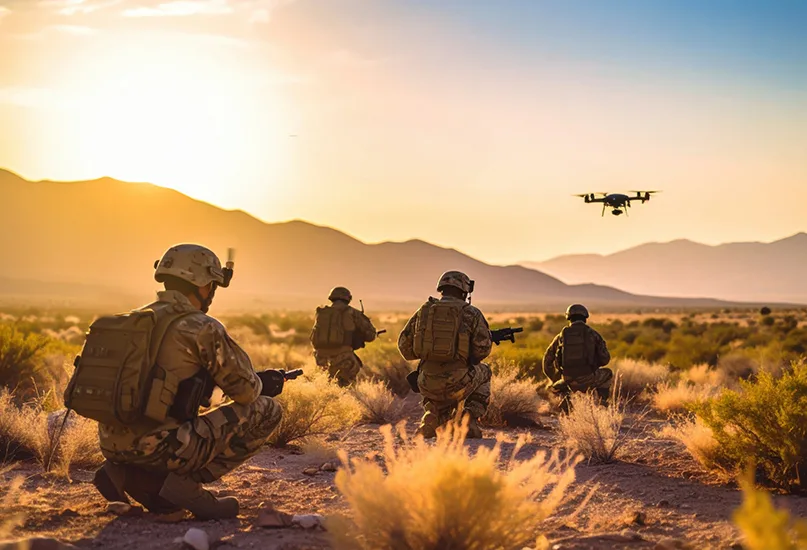
PC: Project Land 156 is all about delivering the counter-drone capability our ADF needs to protect our sailors, soldiers and aviators – as well as the assets they use and the bases they live on.
To make it happen, the Albanese government is investing AUD$1.3 billion over the next 10 years to continually acquire the cutting-edge technology we need – with this project acting as both a benchmark and blueprint for how we will deliver speed to capability.
At the heart of Project Land 156 is a continuous modernisation model with rolling investments that will make sure Australia stays ahead of the technology development cycle.
The technology development cycle for drones is not measured in years, but months, and using a traditional procurement model would have risked these counter-drone technologies being obsolete before they entered service.
That is why Defence adopted an innovative new contracting model for this project, one that will allow us to be agile and move at the speed of the threat to rapidly acquire and integrate the latest sensors and effectors as new threats emerge.
Industry has been asking for this kind of approach, and Defence has listened. This model of delivery has meant after we established Project Land 156 in February 2025, we issued first contracts in July 2025, announced the project’s Systems Integration Partner in August 2025, and conducted a successful live fire demonstration of counter-drone systems in December 2025.
This highlights the rapid pace we are moving at, and with the continual release of funding, we will see small to medium-sized enterprises (SMEs) continue to deliver the cutting-edge technology our ADF needs – now and into the future.
Why is counter-drone technology so critical to keeping ADF members safe?
PC: Whether it’s soldiers on base or sailors at sea, equipping the ADF with cutting-edge counter-drone technology means protecting military personnel, assets, and infrastructure.
By continually investing in this technology, we’re equipping the navy, army, and air force with the tools they need to sense, disrupt, and destroy drones.
Project Land 156 demonstrates the pace we are moving at in acquiring the counter-drone technology we need, building on current ADF capability and setting it up for the future.
Procurement is also a core defence function. What vital contribution does it make to departmental and ADF capability?
PC: The challenges we face in defence procurement are not unique to Australia.
Defence projects are some of the most complex undertakings by governments around the world, and given the amount of money involved, and the strategic circumstances we face, Australians must have confidence that every dollar goes towards improving defence capabilities.
The Defence Strategic Review found that Defence’s capability acquisition system was not fit for purpose. Thus, in our first term, we implemented a series of reforms to procurement and project oversight within Defence – but more needed to be done.
That is why we are implementing further urgent, critical, and foundational reforms to Defence that will strengthen acquisition and sustainment and deliver the integrated, focussed forced outlined in the National Defence Strategy.
With a new DDA to be led by a National Armaments Director, we will see a more coordinated and holistic delivery of defence capabilities and continued growth in our sovereign defence industrial base.
In parallel, Defence will also centralise capability development functions to support clearer prioritisation, streamlined decision-making, and accountability for new capability proposals.
Collectively, these reforms will set Defence up for success as we modernise our navy, army, and air force, and get it done with the confidence of taxpayers.
How are initiatives such as Project Land 156 and wider procurement reforms shaping the next phase of Australian defence manufacturing?
PC: From the continuous modernisation blueprint of Project Land 156 to our capability development and delivery reforms across Defence, we are building a more resilient and innovative industrial base that aligns with our strategic priorities and creates more opportunities for Australian businesses and workers to contribute to national security.
This is at the heart of what a defence future made in Australia is all about – and we will continue to listen and work with our industry partners to deliver the cutting-edge capabilities we need to keep Australians safe.
Finally, are you optimistic about the future of the defence industry in Australia?
PC: The short answer is yes; the long answer I can give you by looking at two particular projects.
On a smaller scale, we have the MQ-28 Ghost Bat, an Australian design that is being engineered and manufactured right here at home and represents the most advanced, cutting-edge collaborative combat aircraft in the world.
It transforms a single fighter jet into a formidable team – capable of not only surveillance but also engaging adversaries. It is the future of air combat, and the Albanese government is investing AUD$1.4 billion to deliver it.
The MQ-28 Ghost Bat programme showcases the best of Australian ingenuity and proves our defence industry can lead the world.
On a larger scale, through AUKUS, we are rebuilding Australia’s naval shipbuilding capabilities. This represents a generational uplift of our industrial base, with over 10,000 direct jobs supported over the next two decades and continuous opportunities for SMEs across the country.
With these businesses not only contributing to AUKUS here in Australia but providing parts to US and UK submarines through pathways we have created like the Defence Industry Vendor Qualification Program, these are opportunities and jobs not just for the next few years – but for generations to come.
Through AUKUS, we will continue to see defence industries across Australia, the UK, and the US work, learn, and innovate together – making us stronger than the sum of our parts.
With over 100,000 Australians working in the defence industry today, and tens of thousands more to come, from the MQ-28 Ghost Bat to AUKUS, we are building a defence future made in Australia.