




Clinton Evans, Managing Director – Oceania at Hapag-Lloyd Australia, discusses the company’s recent activities in the region, with particular emphasis on its strategic partnership with Maersk to form Gemini Cooperation, which heralds a new era of productivity for the global supply chain sector.
AUSTRALIA’S GATEWAY TO GLOBAL SHIPPING
Having grown up in Richards Bay, South Africa – where the majority of local businesses relied on its renowned port – Clinton Evans, Managing Director – Oceania for Hapag-Lloyd Australia, was exposed to the supply chain industry from a very young age.
“My first actual shipping experience was at the age of 16, when I worked over the school holidays to fit container lugs on a multi-purpose vessel.
“I vividly recall standing on top of the stack at the end of my overnight shift as the sun rose over the harbour, thinking to myself how excited I was and how interesting I found shipping and logistics, and that I wanted a career in this field,” he opens.
Evans subsequently continued to work in port environments, increasing his exposure, which eventually led to him working in various supply chain roles across Africa, the Middle East, and eventually the Asia Pacific (APAC) region as his career unfolded.
Today, in his position as Managing Director, Evans has seen APAC’s supply chain sector undergo major shifts.
The COVID-19 pandemic, for example, triggered a rethinking of inventory strategies, with many companies moving away from strict just-in-time models and towards higher destination stock levels to buffer against disruption.
Geopolitical tensions across the Middle East and Ukraine, meanwhile, in addition to recent US tariff developments, have further challenged global routing and transit schedules.
“At the same time, the industry has become more agile and resilient as a result,” Evans optimistically notes.
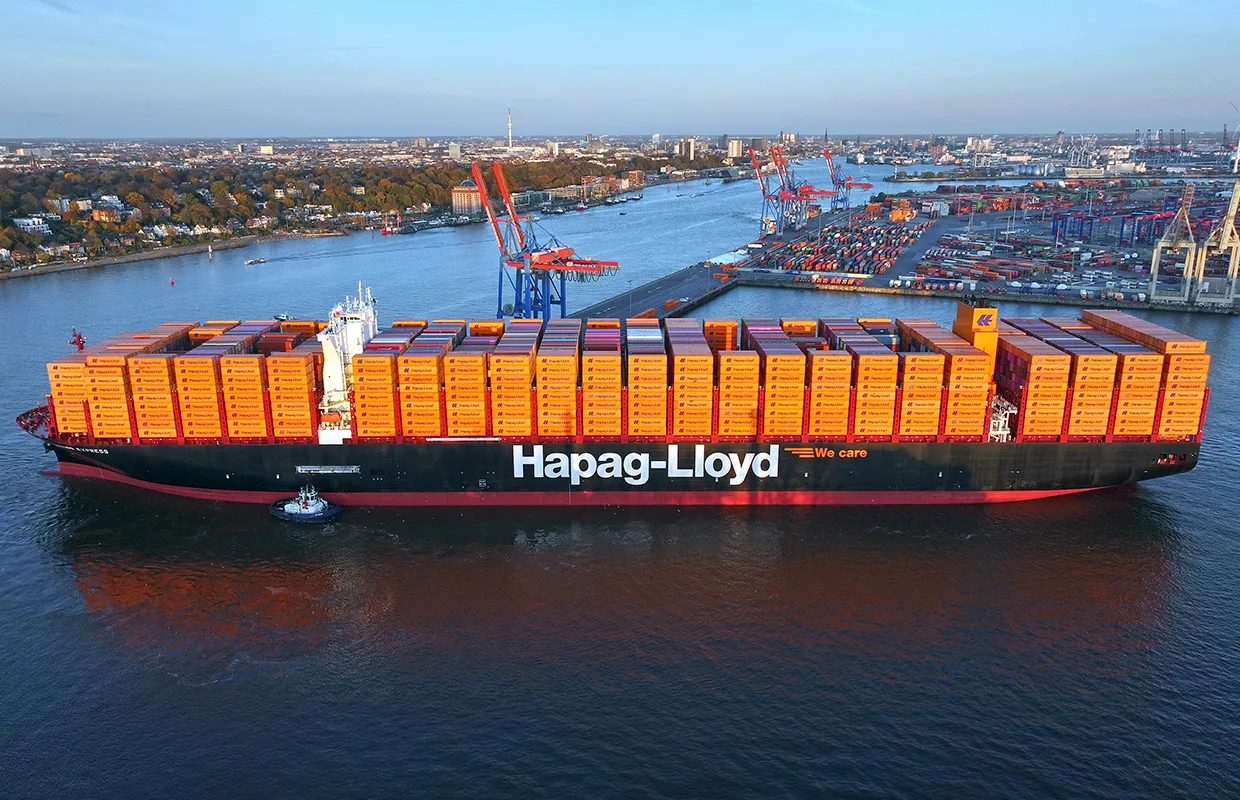
With its parent company overseeing a fleet of 313 modern container ships and boasting a total transport capacity of 2.5 million twenty-foot equivalent units (TEUs), Hapag-Lloyd Australia is ideally equipped to lead APAC’s supply chain sector towards a new era of success, defined by resilience, agility, and sustainability.
GOOD THINGS COME IN TWOS
Having strategically aligned itself with Maersk, the world’s largest container shipping company, Hapag-Lloyd officially launched Gemini Cooperation (Gemini) in February 2025 – a long-term operational partnership to create a joint ocean network, primarily focusing on East-West trade routes.
Through the cooperation, Hapag-Lloyd is aiming to achieve over 90 percent schedule reliability, enhance flexibility, and promote sustainability across the global container shipping landscape.
“The launch of Gemini has been a key enabler for us in achieving schedule reliability, restoring confidence in our supply chains, and supporting a more predictable flow of goods,” Evans insights.
The service deploys fuel-efficient vessels and enables smoother network execution, reducing the need for fuel-intensive speed-ups and supporting sustainable, dependable operations for customers.
Elsewhere, Strategy 2030 is Hapag-Lloyd’s comprehensive roadmap to retaining its status a leading global container line, guided by five key pillars, which is emerging as a key focus for the company both internationally and in Australia.
“Strategy 2030 reflects our clear ambition to be our customers’ undisputed number one for quality whilst driving sustainable, profitable growth,” he tells us.
Building on the foundations of Strategy 2023, Hapag-Lloyd has refined its strategic pillars, which now focus on strengthening its core business, market position, service quality, environmental responsibility, and operational efficiency.
“Implementation happens through a strengthened set of Quality Promises, which translate our strategy into measurable customer outcomes,” Evans assures.
Earlier this month, the company introduced its newest global promise – Equipment Availability – ensuring its customers receive the equipment stated in their booking confirmation by leveraging Hapag-Lloyd’s global depot network.
With these pillars in place, the company now offers 10 global Quality Promises, including Loaded as Booked, Schedule Reliability, Accurate Arrival Notification, Fast Booking Response, Accurate Invoicing, Effective Case Resolution, Ease of Doing Business, Always Accessible, and Swift Bill of Lading (B/L) Delivery.
“These promises are embedded in our global operations, supported by clear key performance indicators (KPIs), dashboards, and regular customer surveys.
“Together, they guide how we design our network, deploy our fleet, invest in technology, and engage with our customers – all with the goal of delivering higher reliability, greater transparency, and the best service in the industry,” he prides.
“The launch of Gemini has been a key enabler for us in achieving schedule reliability, restoring confidence in our supply chains, and supporting a more predictable flow of goods”
Clinton Evans, Managing Director – Oceania, Hapag-Lloyd Australia
DECARBONISING THE FUTURE
Despite geopolitical and regulatory uncertainties, Hapag-Lloyd is moving forwards with determination in terms of its decarbonisation efforts.
This is due to the company’s belief that the actions it takes today define its ability to operate sustainably and competitively in the decades ahead.
“At Hapag-Lloyd, we consider decarbonisation to be a shared responsibility, meaning we prioritise vendors and partners who share our sustainability ambitions and can support transparent, measurable emissions reductions across the entire supply chain,” Evans reflects.
Doubling down on the company’s unwavering dedication to quality, sustainability, and customer satisfaction, Strategy 2030 places decarbonisation high on Hapag-Lloyd’s agenda.
“We have set ambitious decarbonisation targets within the strategy – by 2030, we aim to reduce our absolute fleet emissions by around one third compared with 2022 and improve our carbon intensity by more than 50 percent,” he explains.
Looking ahead, the company is committed to becoming fully net zero by 2045 – five years ahead of the International Maritime Organisation’s 2050 goal and fully aligned with the 1.5 degrees Celsius (°C) pathway of the Paris Agreement.
“To achieve this, we are focusing on fleet efficiency, network optimisation, and the introduction of alternative fuels” Evans details.
As such, Hapag-Lloyd’s newbuilds are already 30 to 40 percent more fuel-efficient and it is preparing for the broader use of low-carbon fuels such as liquefied natural gas (LNG) and methanol, with further potential pathways including ammonia.
Australia plays an important role in this transition, as Hapag-Lloyd Australia continues to work closely with customers and partners across the region to drive down emissions in supply chains and expand availability and uptake when it comes to greener fuel options.
ELIMINATING INDUSTRY PAIN POINTS
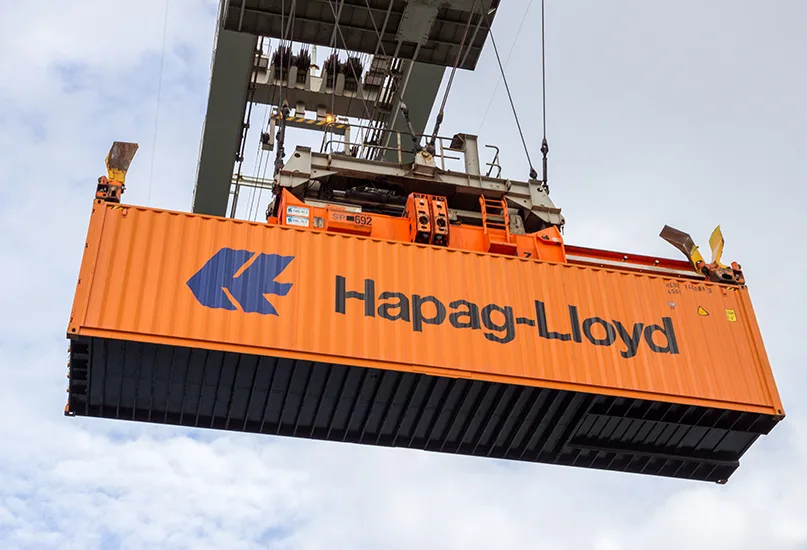
Offering integrated brown marmorated stink bug (BMSB) fumigation and inland delivery services, Hapag-Lloyd Australia is able to facilitate efficient, compliant, and high-quality containers in the region.
“Our integrated BMSB fumigation and inland delivery offering was introduced in response to two clear needs – growing customer demand for true door-to-door capabilities and the recurring challenges shippers face during Australia’s strict BMSB season,” Evans shares.
By expanding beyond port-to-port and strengthening its inland product, the company has developed a solution that provides customers with a seamless, compliant, and reliable end-to-end process.
Together with certified fumigation partners at all major ports across the country, Hapag-Lloyd Australia offers tailored fumigation and last-mile delivery for shipments that require treatment upon arrival.
“This is especially critical when fumigation cannot be performed at origin – for example, due to weather restrictions or when certificates expire in transit,” he tells us.
“Without our integrated solution, customers would often need to divert or even re-export containers for treatment, adding significant costs, delays, and operational complexities – our product eliminates these pain points,” he delights.
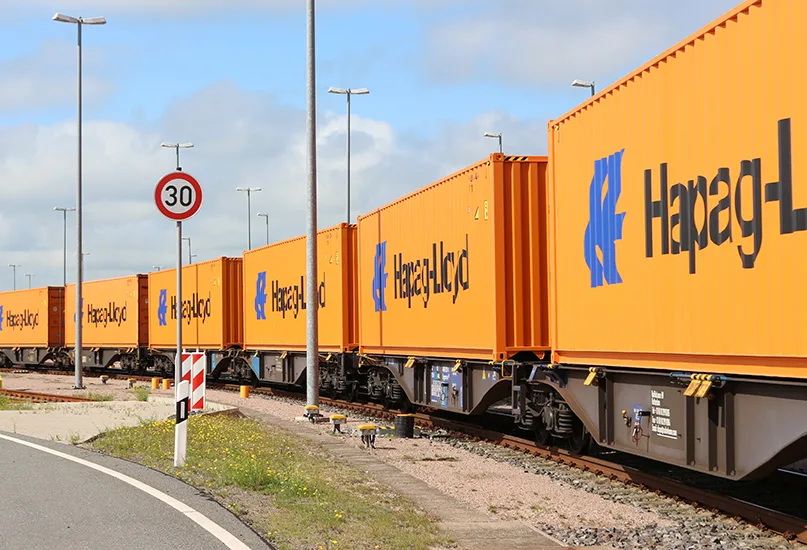
Containers move directly from vessel discharge into compliant fumigation, followed by on-carriage transportation to their final destination, all managed through a single point of contact.
“With fast turnaround, on-port facilities, customs coordination, and reliable inland haulage, we help maintain supply chain continuity during the high-risk BMSB season,” Evans adds.
This is Hapag-Lloyd Australia’s first year offering the service, and customer uptake has been strong.
As such, the company will continue refining the product to add further value and make the process even easier for customers in the coming BMSB season.
“We have set ambitious decarbonisation targets within the strategy – by 2030, we aim to reduce our absolute fleet emissions by around one third compared with 2022 and improve our carbon intensity by more than 50 percent”
Clinton Evans, Managing Director – Oceania, Hapag-Lloyd Australia
WELL-BEING AT THE CENTRE
With the well-being of its teams – both off and onshore – closely aligned to Hapag-Lloyd’s enduring values and organisational culture, the company is determined to provide a positive working environment for its employees.
As such, it has implemented a global hybrid working strategy, which includes three days at the office and two days working from home, aimed at supporting staff in achieving a healthy work-life balance.
“We are also continually reviewing processes and practices as well as incorporating technology and best practices to reduce or eliminate cumbersome and repetitive tasks to manage workload and enable our teams to focus more on interesting, value-creating tasks,” Evans reveals.
A clear focus on outcomes and results, which are clearly communicated, agreed, and regularly reviewed, enables the team to manage their workload and focus their time and attention on defined objectives.
In addition, the Hapag-Lloyd Australia head office has recently been relocated from Pyrmont to Sydney’s central business district (CBD), which has led to many staff seeing a major reduction in their commute time.
“Our prior location in Pyrmont added, on average, 25 minutes each way to our office employees’ already long commutes, whereas today they’re within a two-minute walk from the city’s Central Station,” he emphasises.
This not only resulted in significantly reduced commute times but also the added benefit of staff being able to do their grocery shopping before, during, or after work on days they are in the office.
“We have also introduced a full-time work-from-home policy for our commercial and sales staff based in Brisbane and Adelaide.”
The company’s annual employee engagement surveys act as a gauge for its overall performance in terms of organisation, location, office, team, and departmental feedback, which can be reflected on in relation to work-life balance.
“This also enables us to obtain valuable input from the team in terms of what can be done to achieve a healthy balance,” Evans adds.
FUTURE FOCUS
Looking ahead, Hapag-Lloyd Australia’s priorities will continue to be closely aligned with Strategy 2030.
“These strategic enablers will serve as a guiding light in terms of how we will successfully navigate what looks to be a challenging year ahead,” Evans reflects.
From an Oceania perspective, the priorities for 2026 will be to leverage Gemini’s service schedule reliability to further strengthen the company’s Asia-Europe presence and market share.
With a global network of 26 mainline services and 32 dedicated shuttle services, covering key trade routes across Asia, Europe, the Transatlantic, and the Middle East, Gemini’s network will be optimised in the next 12 months.
The service also plans to deliver a schedule reliability of above 90 percent – significantly higher than the industry average – which is expected to be fully realised and maintained throughout 2026.
Elsewhere, the company will continue to focus on quality and consistent achievement of its Quality Promise targets and, as part of this, look to further improve upon the October 2025 Customer Experience Survey, with a net promoter score of more than 59.
Additionally, in the wake of steadily increasing operational costs in recent years, cost management and unit cost reduction remain top priorities.
“We will also continue to grow our inland and carrier haulage offering, including fumigation and last-mile delivery, in line with growing demand and organisational aspiration targets,” Evans concludes.