



- Developing new materials for circular design
- What is Sony’s Original Blended Material?
- What are the key uses and benefits of Original Blended Material?
- Triporous turns agricultural waste into functional carbon material
- Potential applications of Triporous
- Design as a platform for sustainable materials
- Milan Design Week installation explores future materials
Developing new materials for circular design
What is Sony’s Original Blended Material?
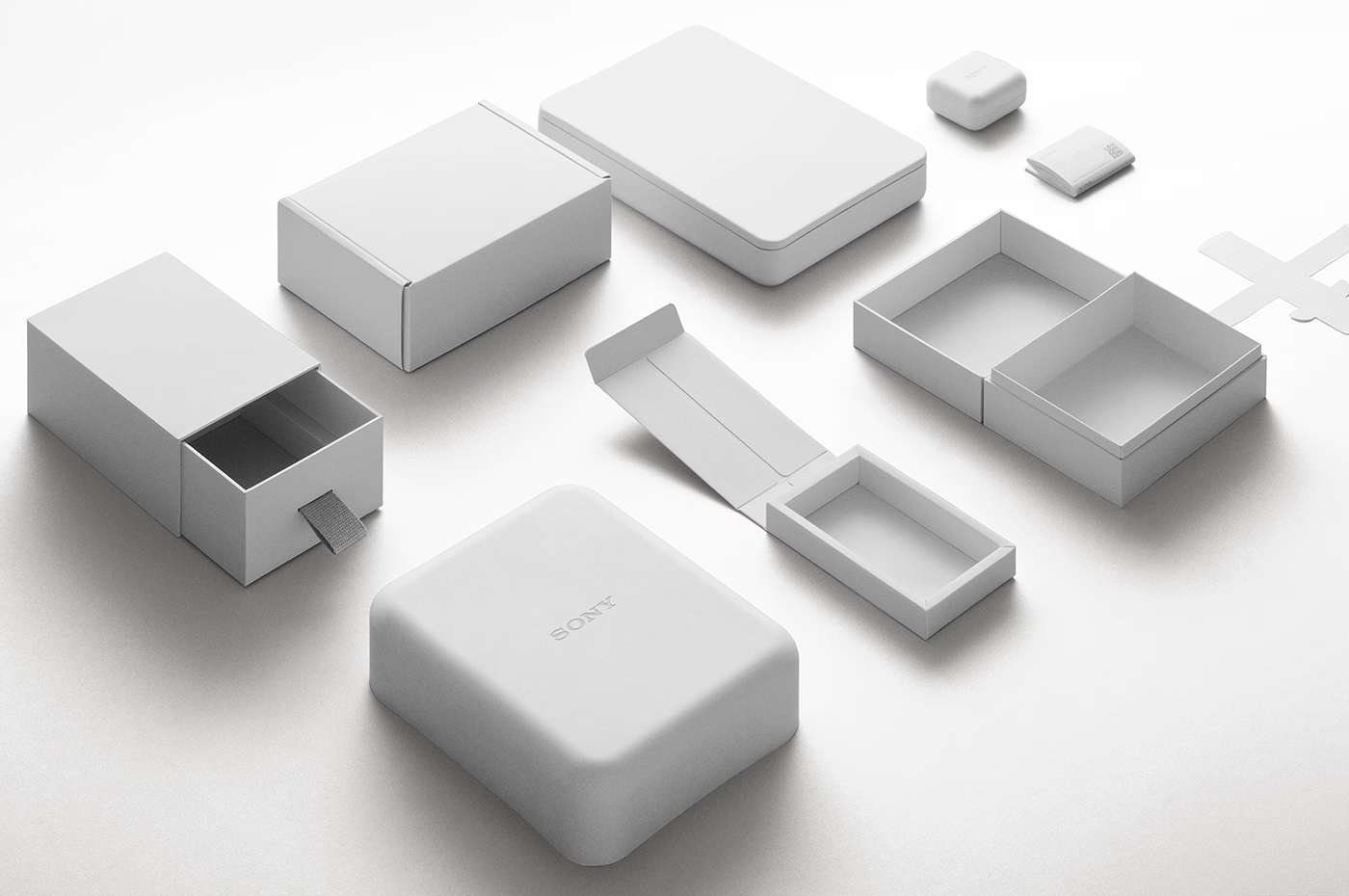
Original Blended Material was initially developed for use in product packaging. By combining bamboo, sugarcane fibres and recycled paper, the material delivers a paper-based solution designed to support effective material circulation. Its use has expanded beyond packaging to include applications such as business cards and exhibition fixtures across Sony Group companies.
The material can also be moulded into different forms by adjusting the size and structure of its fibres. This allows it to be processed into compressed boards through heat pressing or formed into cord-like structures by thinning the fibres. In some applications, Sony has incorporated a plant-based binder derived from corn stalks and wheat straw to reinforce its environmentally conscious design.
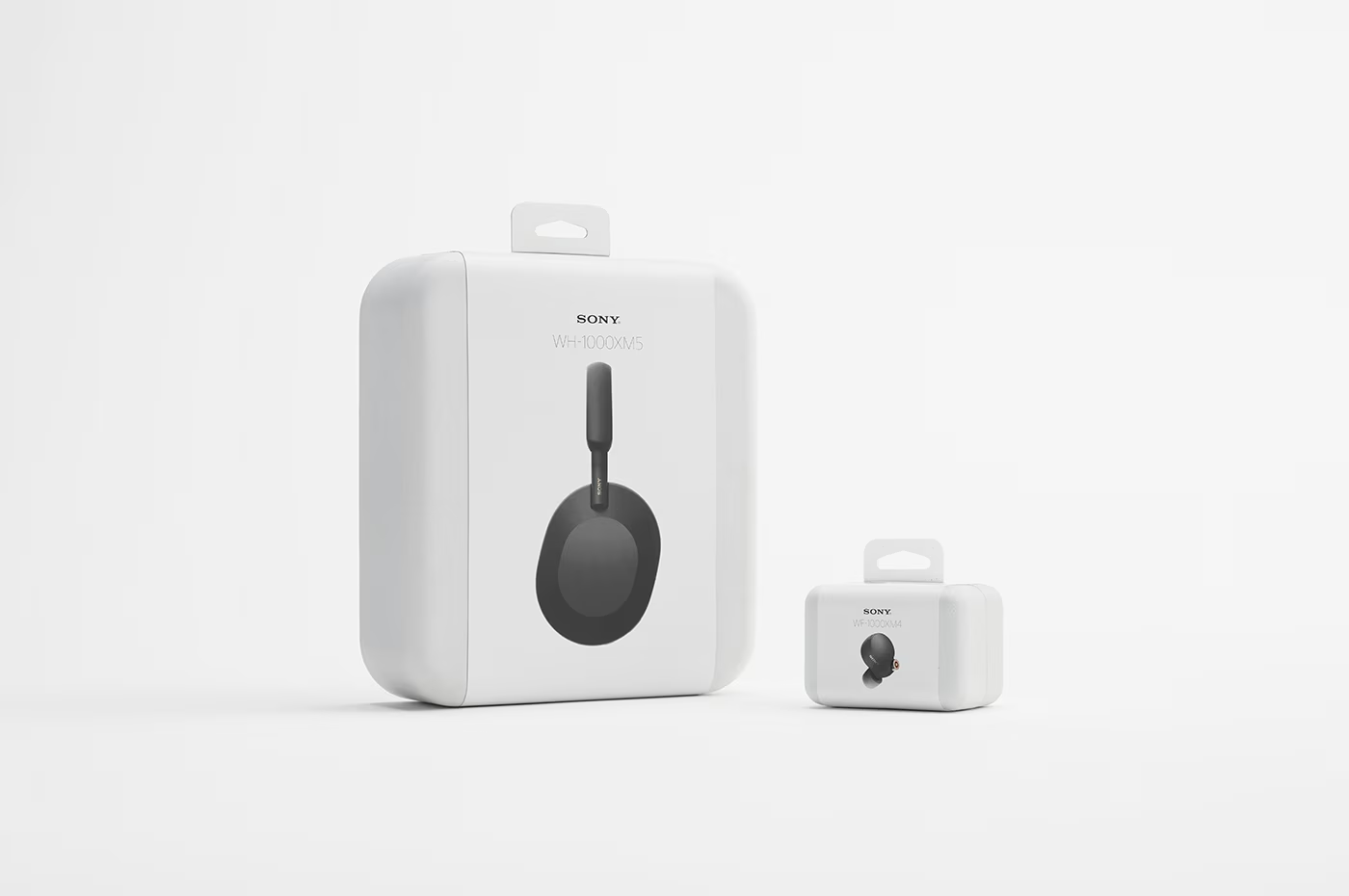
The material is made by blending bamboo, sugarcane fibres and post-consumer recycled paper, creating a durable and recyclable paper material that can be moulded to suit a wide range of packaging formats. The use of rapidly renewable plants such as bamboo and sugarcane helps reduce reliance on traditional wood pulp and supports more sustainable resource use.
By combining recycled fibres with longer plant fibres, Sony has developed a material that maintains structural strength while enabling versatile packaging designs. The approach also helps reduce plastic use and encourages more effective recycling by using a single paper material across different packaging components.
What are the key uses and benefits of Original Blended Material?
- Plastic-free packaging alternative – designed to reduce reliance on petroleum-derived plastics in product packaging.
- Made from renewable and recycled resources – combines bamboo, sugarcane fibres and post-consumer recycled paper.
- Supports material circulation – using one paper material across packaging components simplifies recycling and material recovery.
- Versatile and mouldable – can be formed into many packaging elements including outer boxes, inner boxes, cushions, sleeves and protective sheets.
- Lower resource impact – uses fast-growing plants such as bamboo and sugarcane rather than relying only on wood-based pulp.
- Reduced ink and colouring needs – text and logos can be embossed directly into the material.
Triporous turns agricultural waste into functional carbon material
Sony has also developed Triporous, a naturally derived porous carbon material created from rice husks.
Rice husks are produced in large quantities as agricultural by-products. Japan alone generates around two million tonnes annually, while global production is estimated to exceed 100 million tonnes each year. By converting this biomass into Triporous, Sony aims to support the transition towards a more recycling-oriented society.
The material’s patented microstructure enables a range of potential applications, including water purification and air purification, highlighting its potential as a functional sustainability material.
Because of these properties, the material is being explored for a wide range of applications, from water purification and air filtration systems to products in sectors such as textiles, food, cosmetics and electronics. Sony is also licensing the technology so other companies can integrate Triporous into their own products and environmental solutions.
Potential applications of Triporous
- Water purification systems capable of removing pollutants, viruses and bacteria.
- Air purification and deodorisation, helping adsorb industrial gases, odours and pollutants such as particulate matter.
- Environmental cleaning filters for wastewater treatment and other industrial applications.
- Textiles and apparel, including fibres designed to absorb odour molecules in clothing.
- Product applications across multiple industries, including cosmetics, electronics and consumer goods.
Design as a platform for sustainable materials
Sony’s Creative Center continues to explore how design can help unlock new value from these materials and broaden their potential applications.
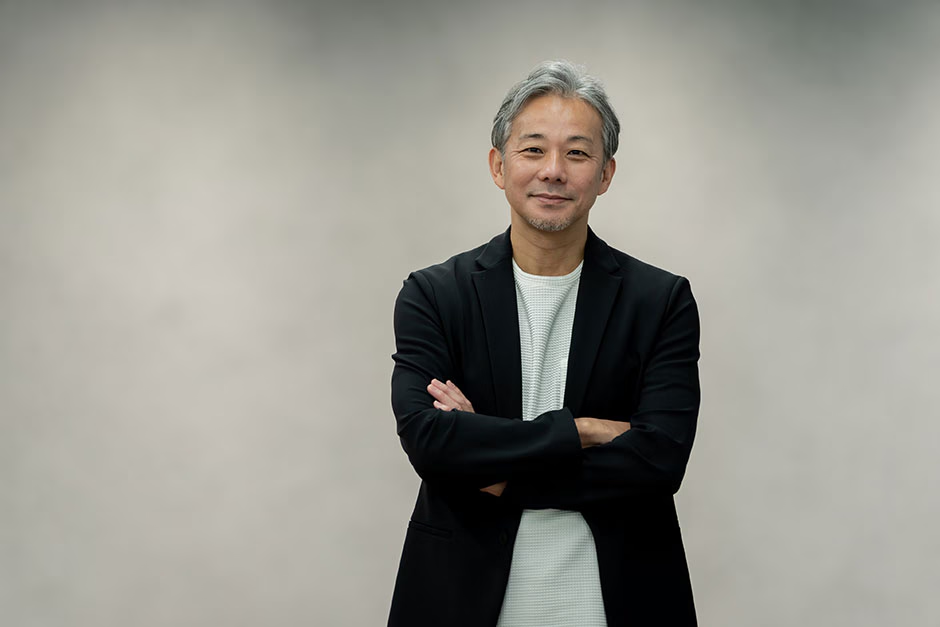
“At Sony, design stands on the philosophy to “Create New Standards”. We envision new paradigms, give meaning to ideas, and engage globally — a process that resonates with a diversity of values, bringing new standards, or the future, into being,” says Daisuke Ishii, Head of Creative Center, Sony Group Corporation. “With ESQUISSE, we explore the hidden potential within materials and connect them with diverse disciplines, seeking to create new experiences that resonate emotionally while contributing to a more sustainable world.”
Milan Design Week installation explores future materials
Sony will showcase these materials at Milan Design Week 2026 through an installation titled ESQUISSE – A dialogue with materials for the future, presented as part of the FuoriSalone 2026 – INTERNI MATERIAE exhibition.
Hosted at the University of Milan from 20–30 April 2026, the installation explores how materials can connect different disciplines and creative practices.
The exhibition will feature furniture and spatial elements made from Original Blended Material, alongside cushions and rugs created using Triporous. The installation aims to highlight the tactile and expressive potential of these materials while exploring new applications beyond their current uses.
Collaborative pieces designed by Milan-based designers Setsu Ito and Shinobu Ito will also be included, reflecting the multidisciplinary dialogue around materials, design and sustainability.